
- Introduction
- Getting Coffee With Rep. Sarah McBride, America’s First Trans Congresswoman
- Will Tomorrow Be Different?
Introduction
This article is a response to Julia Serano’s #LGBTQNotGoingBack call-to-action, which was laid out in this article about a week and a half ago. In that article, Serano wrote “I encourage you to make it personal,” and that’s what I intend to do here.
We live in a merciless 24/7 meat grinder of a news cycle, especially when such titanic forces of bigotry have sprung into active motion, but I still have been lingering on the act of violence – discipline, obeisance, interpellation, whatever you want to call it – that led Serano to issue the call in the first place: Rep. Sarah McBride’s acceptance of the hostile terms laid out against her by House Republicans. It’s fair to say that the Overton Window has careened to the right over the last two weeks – yes, it has only been two weeks – and it was already moving before then. What you may not know is that mere minutes after Rep. McBride issued her statement, I was preparing to release a long article defending McBride’s position and condemning the transphobia against her. The article was edited, formatted – basically all I had to do was write alt text and send.
I had prepared to defend Sarah because I thought that Rep. McBride was preparing to defend me. To say that I was gutted, then, by having the rug pulled out from under me at the last second was an understatement.
I canned the article.
Things have only devolved further since then.
As a twenty-three year old with a following, this website puts me in the relatively uncommon position of being able to both speak as a politically involved member of Gen-Z and as someone who has a fairly large public platform. I was a trans kid – not that long ago, too. I came out under Trump when I was fifteen. And while my expertise on transfeminine literature has been the primary basis for writing articles like my dissection of anti-trans censorship under Project 2025, the article I wanted to publish about Rep. McBride came from a much more personal place.
I met Rep. McBride when I was sixteen, and got the chance to sit down with her one-on-one and tell her about my aspirations and my political prerogatives. While our interactions were brief, they had an enormous formative effect on me, and were part of the inciting forces which would ultimately lead me to create this blog. Sarah was a role model in my adolescence, one of the only visible trans women that I had ever met. Her acknowledgment, her praise, her affirmation of my gender and selfhood, that I could still be successful as a trans woman in the world – I needed that in high school, and she was the one who gave it to me.
This election cycle, I worked youth voter turnout in Philadelphia, in what was supposed to be the closest race in the country, the one that would decide the election. I was boots on the ground for weeks advocating for Kamala Harris. She lost, obviously, and it’s torn down a lot of my lingering childhood illusions. The McBride situation has torn down even more.
What a lot of older trans people don’t see is that I grew up in an environment where there was a reasonable expectation that politicians like Harris and McBride would stand up for my rights. I was in fourth grade when Joe Biden came out in support of same-sex marriage, and it was legal before I knew what the word ‘transgender’ meant. One of my earliest queer memories was my entire summer camp bursting into literally five straight minutes of raucous applause when the news of Obergefell broke. I knew that parts of the country were anti-trans, yes, but I grew up in Washington, DC, and I never felt any of the impacts.
Privilege, yes.
Of course I was privileged – I know that now.
But that doesn’t change the fact that my entire school supported me when I came out as trans – I immediately was able to bunk with the girls on a school trip, everyone used the proper name and pronouns, I was never called a slur.
That doesn’t change the fact that I was able to access puberty blockers at fifteen and estrogen at sixteen, and managed to avoid the most deleterious impacts of male puberty, which would have wrecked my mental health.
That doesn’t change the fact that not one singular member of my family has ever been transphobic to me; it took them a while to get on board with the medical stuff, but I am loved and accepted and safe at home.
That doesn’t change the fact that I have never experienced anti-trans violence, not by another’s hand or fist. I have never been hit or beaten or raped for being trans. I could walk alone at night as a kid and I felt safe doing so.
That doesn’t change the fact that I have been able to exist publicly and freely as a young trans woman; to access the same careers and opportunities as my peers have; to talk about trans issues at home and in class and on the internet; to be myself, as I want myself to be, without real constraints or discrimination.
And let’s look at it from an intersectional lens – I’ll be the first to bring that up. I’m a rich white woman. I grew up in an affluent family in Washington, DC. I’m lucky, and I was largely shielded from the violence and discrimination other trans people my age faced. I got to have a childhood, and there’s a lot of trans people out there who didn’t.
But isn’t that what we’re fighting for? For all trans kids to have that safe and happy childhood, no matter their race, status, class, or background?
Trans liberation is not an abstract ideal, for all it is a systemically asymmetrical one. The gains made by trans activists over the last decade and century are not metaphorical. There was real, material progress made in the lived experiences of trans people both here and around the world, and I was just the lucky kid who had the good fortune to grow up in the shade of other people’s trees.
I don’t just want that for myself – I want it for everyone. Nobody should face discrimination in childhood. Nobody should grow up wondering if they’ll still have a home and a family by the time they’re eighteen. I wondered that. And I was fortunate, my parents learned and taught themselves and grew, but there are kids who don’t get that, even ones in very similar situations to me. One of my high school friends – similar background, also white and affluent and trans – got kicked out of the house and was homeless because her mom found out she was trans.
That could have been me. It could have been any of us.
If Republican lawmakers get their way, then a happy and safe childhood like the one I had would become not just unlikely, but legally and socially impossible. And while some Democrats have come out in support of our community and others have been shamefully willing to go along with the bigotry, the vast majority have been silent.
To any Democratic politician or partisan who may be reading this: I was able to have a good childhood because of your political support and action. Pro-trans Democratic politics are the reason I was able to receive medical treatment for my endocrine disorder when I was a teenager. Testosterone made me crawl out of my skin. It made me so fucking miserable that I could barely function as a human being, and puberty blockers saved me from that living hell. Your policies enabled that, and possibly saved my life. This is not conjecture – there is a significant body of research that indicates how a lack of support and medical care murders trans children.
I got that life-saving treatment, and there are a terrifying number of people in this country who wish that I hadn’t.
They want me dead.
Don’t let the MAGA believers distract us from the real conversation and stakes here. This is a matter of life and death for trans kids especially, and if they get their way, the entire transgender community at-large. They started years ago. Trans kids are already dying.

When Sarah McBride announced that she would comply with the Republican bathroom ban, it was an absolute gut punch. What happened to the woman who took a public stand against North Carolina bathroom bills when I was a kid? Why had she given up on her conviction that bathroom bans were wrong and ought to be stood against, no matter the personal cost? Why had one of my childhood role models given up on the reasons I looked up to her?
Why had she given up on me?
The Overton Window shifts where fascists drive the conversation. Most of the Left has already given up on Sarah McBride as a lost cause, and the Right is more than happy to claim the victory and move on to their next marginalized target-of-the-week.
But just because Sarah McBride may have given up fighting for me doesn’t mean that I have lost my conviction to fight for her, and for all trans people affected by stupid bathroom bills, and puberty blocker bans, and legal segregations in sports and healthcare. Rep. McBride may have lost sight of her conviction in trans liberation and legally enshrined civil rights for trans people when she took office, but that doesn’t mean that our community needs to as well.
So yes, I am using this article to publish the defense of Rep. McBride that I was initially going to before Sarah threw up the white flag without a fight. Frankly, I don’t like Rep. McBride very much right now. I loathe her stance on Gaza, I feel deeply hurt and betrayed by her equivocation to transphobia, and everything about this experience has left me deeply jaded about establishment politics.
But just like Sarah’s job wasn’t just to defend herself but all trans people, my decision to publish this article is not a defense of Rep. McBride and her politics, but a defense of the dignity and civil liberties of all trans people. It is a defense that still matters whether Rep. McBride chooses to prove me wrong or not. Even if Rep. McBride will not defend her own rights and dignity, I will continue to do so anyway, not because it is an attractive or compelling stance, but because I believe that trans people deserve rights and civil liberties whether the public opinion or political zeitgeist defends them or not.
Getting Coffee With Rep. Sarah McBride, America’s First Trans Congresswoman
Bethany Karsten, planned publication date 11/20/24
Standing up in face of grief
Today (11/20/24) is Transgender Day of Remembrance, when we remember the members of our community who have been stolen by transphobic violence and suicide. I know that this day will hurt more than ever this year, when our community has lost so much and stands to lose so much more. Before I get into my experiences with Rep. McBride and my thoughts on the current wave of transphobic cruelty against her, I want to take a moment to observe that grief.
[I clipped and published the TDOR part of this article; you can read that here]
In typical Conservative fashion, the ire of American transphobia has already moved on to its next convenient target: Representative Sarah McBride (D-DE), the first transgender person ever elected to the United States House of Representatives. Congressional Republicans have mounted a cruel, malicious, and entirely superfluous hate campaign against trans women using bathrooms at the Capitol – yes, we’re back to the bathrooms issue. Again.
Today of all days, it hurts to stand up to this moment of rising transphobia. Today of all days, this assault weighs heavily on our communities, especially the most vulnerable among us. And let’s not mince words – this was NEVER about Representative McBride, just like it was never about Montana State Representative Zooey Zephyr, or any of the other trans women in the public eye who come under transphobic assault. The Republicans wield their bigotry as an instrument of violence and hatred, a wedge of division. By making their transphobia a theater of the individual, by centering white trans women in positions of power and authority rather than the sex-working trans women of color who disproportionately experience the effects of transphobic violence and assault, they seek to distract us from the broader social issues at work.
We should have today to grieve, not to fight.
And yet.
Sarah McBride is not a person in the imagination of House Republicans – she is a figure, a symbol of the broader trans liberation movement which can be deployed, warped, twisted, and weaponized with impunity against both Liberal Democrats and trans people at-large.
Although their intentions certainly come from a good place, I have seen many on the Left and within the Democratic caucus committing a similar rhetorical move – whether it be centrists posing the trans community as a threat to Democratic electoral politics, liberals framing McBride as a triumph of diversity and progress, or progressives panning McBride’s disappointing stance on the ongoing genocide in Gaza as a symptom of the broader failure of the Democratic Party in this election cycle. Each of these stances take a very different position on what Rep. McBride’s election means for the country – but what they all have in common with both each other and the Republican scapegoating is a stubborn refusal to interrogate the human dimension of this national harassment campaign against McBride or its real-life impacts on trans people both within and without the American government.
The vicious campaign of personal attacks and threats of physical harm against Rep. McBride’s person and body are not surprising, but the fact that we have allowed them to become normalized prevents us from countering them in any meaningful way. The muted silence and equivocation on the part of the Democratic national leadership, both now and throughout this campaign, has been deafening. I cannot help but notice the parallels between other historically marginalized trailblazers in Congress, like how in 1870 the vestiges of the Democratic Party sought to block Hiram Revels, America’s first Black senator, from taking office. This insipid form of moral hysteria is nothing new for the enemies of marginalized people in America – history does show, however, that if left unchecked by the opposition party, they do have the real potential to exclude the marginalized from the chambers of power in this country (see the complete lack of Black Senators between 1881 and 1967, a gap of 86 years).
What I want to do today is push back on this ever-increasing dehumanization of political opponents – a signature of fascism, of course – and take a moment to consider Rep. Sarah McBride from a more humanistic standpoint. I know that there are some on both sides of the political spectrum who consider humanization a privilege reserved for those whom they agree with, and I would push back on that paradigm. I disagree with Rep. McBride on a good deal of issues, including those within the trans community, but I also have had the privilege of meeting Sarah in person, and getting the chance to interact with her as a woman, not a politician. In this political moment where the mere presumption that Sarah McBride is a “woman” or a “person” has become a species of political speech, there is real political power in sharing this personal experience I have with Rep. McBride. We cannot begin to critique the politics of our leaders when we are stuck debating their very humanity.
In preparation for this article, I reread Rep. McBride’s memoir Tomorrow Will Be Different for the first time since 2019. And while this is certainly a political memoir, an activist memoir, a trans memoir, none of those are the strongest aspects of this book.
No, that honor belongs to McBride’s absolutely heart-wrenching recounting of losing her (transmasc) husband to cancer. It rests in the enormity of what Rep. McBride has already accomplished by the time she was my age – securing statewide trans anti-discrimination protections in Delaware, a White House internship, multiple successful political campaigns, becoming a national figure for trans rights and playing a pivotal role in President Biden’s decision to come out in support of gay rights on national television.

Or, as Rep. McBride recounts telling her friends in the aftermath of her loss: “I’m twenty-four, transgender, and a widow… That’s a lot for someone in this society to handle.”
Rep. McBride had political connections from a very young age, and her election to Congress is anything but a surprise. She had basically already won the election by the time she started her campaign. In her memoir, she recounts how, when her mother was distraught at her coming-out as trans, the Governor of Delaware, Jack Markell, called her to personally promise his support for trans legal protections in the state. I’d be willing to bet that the number of trans people in this country who can say as much is one. McBride is a close connection with the Biden family and was well-acquainted with President Biden’s son Beau, who tragically died of cancer in 2015 – right around the same time that McBride lost her husband to the same. Joe Biden, apart from his political career, is known for his emotional reminiscences of his son Beau, and has in years since taken Sarah under his wing as a protegee of fashions. After all, not many people can say that the sitting President of the United States of America wrote the introduction to their memoir.
Here’s what President Biden had to say about Rep. McBride in that introduction, by the way:
She’d remind us of all the people who came before her who lived their secrets until death, or risked their jobs, careers, and sometimes their physical safety when they came out, who never received the acceptance she did from her family and friends. My admiration for her sense of perspective and purpose grew when she interned at the White House, becoming the first transgender woman to ever do so and giving meaning to what Harvey Milk once said: “Hope will never remain silent.”
By then, the administration had ended the discriminatory law known as “Don’t Ask, Don’t Tell” so our gay service members could openly serve the country they love without hiding who they love. President Obama announced that our government would no longer defend the Defense of Marriage Act—and just a few days after Sarah wrote her coming-out essay, I went on Meet the Press and told America that love is love is love.
[…]
We are at an inflection point in the fight for transgender equality, what I have called the civil rights issue for our time. And it’s not just a singular issue of identity, it’s about freeing the soul of America from the constraints of bigotry, hate, and fear, and opening people’s hearts and minds to what binds us all together.
Joe Biden may be on his way out of the political sphere, but if there’s anyone in American politics who could be considered an heir to his political legacy, it’s Sarah McBride. That’s a heavy cross to bear, particularly in the face of a Democratic Party that seems ever closer to losing its belief in Biden’s “civil rights issue of our time.”
Representative Sarah McBride is a Delaware politician through-and-through – she invests her political identity deeply in the people who elected her, and her political outlook and her approach to social issues are informed both by her Delawarean birth and her long exposure to the inner circles of Washingtonian power. She is an establishment figure, a product of decades of political mentorship from prominent members of the Democratic Party, cushy jobs at prominent DC non-profits like the Human Rights Campaign and the Center for American Progress, extremely exclusive Capitol Hill internships, so on and so forth.
She also happens to be the first trans person in Congress.
None of this is a political judgment – it’s a statement of fact. In this moment of hyperpolarization and political anguish, I see so many people leaping for saviors. One way or another, people are trying to make Sarah McBride into something she’s not. But having some false or rosy picture of McBride helps nobody but the Republicans – the more the Left chooses to ignore who Sarah McBride actually is in favor of what they want her to be (to whatever end), the easier it becomes for the GOP to scapegoat her and turn those political gains into national anti-trans discrimination. I reject their disinformation campaign, and subject my hapless reader to my well-informed observations about her politics and career.
Sarah McBride is our only national trans congressperson. She’s the one that we’ve actually got, and like it or not, a lot of the government-establishment politics of the trans lib movement are going to rest on her shoulders moving forward.
So rather than falling back into the tired old reactionary cycles, let me tell you about my personal experience with Rep. McBride, and how it’s shaped my view of both her, politics, and trans rights today. In a political climate where so many people on both sides of the aisle are refusing to take Rep. McBride seriously as a politician or a woman, I intend to take this article as an opportunity to do the opposite, and consider McBride in all of her good, bad, and complexity.
Getting coffee with Rep. McBride
You’re going to need a little bit of context about my own transition and life history to get the full sense of this story.
I figured out that I was trans in January of 2017 as a newly minted fifteen-year-old. While I had begun to feel the effects of puberty, they had not set in fully yet, and within five months, I was on puberty blockers and had largely avoided the worst of male puberty. What you should also know – it took me almost a year and a half after starting blockers to finally begin taking estrogen, which meant that for about seventeen months of my life, I had zero sex hormones.
This is not healthy, and it massively fucked up my health and well-being. I still struggle with the mental scars from that period of my life.
I wanted to be on estrogen – I wanted it desperately, more than anything in the world. There are a lot of reasons why I didn’t get on it, none of which I can place the blame upon. Family, therapy, school, friends, summer camp: it all swirled nebulously into a big, fat NOT YET, and thus hormone-free I remained. Structural discrimination, gatekeeping, transphobia, and my own stubbornness all conspired to make estrogen an impossibility for a long time, and I suffered immensely as a result.
2018 was the worst year of my pre-pandemic life. By the spring of 10th grade, my health had seriously begun to suffer from not having access to basic HRT, my grades were in the toilet, I was so fucking depressed that I could barely do school. It was a bad time, and legitimately it did not begin to get better until I finally got on E that October.
To any bad faith idiots who want to take this as evidence that “puberty blockers bad” or some shit: being on puberty blockers was better than being on testosterone! At least when I was on the blockers, I could perform basic life tasks without having a panic attack or suffering from crippling dysphoria so bad that I had trouble getting out of bed.
Yeah, my experience with dysphoria was… rough.
The other thing you need to know about my childhood – I grew up rich and white in the richest and whitest part of Washington, DC. Both of my parents were feds in relatively high-ranking bureaucratic jobs – by the time Trump entered office, my dad had become a political appointee, and was promptly fired. I went to public elementary and middle school, which were primarily funded and seeded by the rich white local neighborhoods, and then was sent to private high school when the public demographics opened to a wider net. While I’m sure that nobody in my life would say this is how those decisions were made, they remain true statements which I can make about my personal history and education.
My private high school was very similar to many other schools on the DC private school circuit. Everyone was either rich, had a parent who worked a government job, or both. There were a vanishingly few number of scholarship kids who didn’t have that background, but they were simply treated as though they had money and connections anyway – and through the school, they did. You were never more than two or three degrees of separation from any major figure in the Democratic Party (and I had the good fortune to go to one of the schools for Democratic nepo babies, as opposed to Republican nepo babies, who were infinitely worse). It was more or less an incubator for baby Democrats to learn political strategy and networking skills which happened to also have some other students there too.
Anyone from DC will tell you that politics are inescapable, but I grew up more submerged in American politics than most – the federal government was not just an occupation or a political imperative, it was a lifestyle.
When I first encountered Sarah, it was right at the confluence of these two broad forces in my life coming to an unexpected head. It was April of 2018 – I had just endured the single most miserable year of school in my life. I was exhausted, a husk of myself. I had no close friends, though there were the glimmers of new friendships on the horizon. It had reached the point where I had honestly begun to not give a shit about whether other people knew I was trans or not and was growing more and more brazen with my secret, even though I still wasn’t going public with my womanhood just yet (that would take another full year). Because I had no estrogen, I still mostly looked like a boy with long hair – I wore my favorite metalcore band’s sweatshirt religiously, and I’m pretty sure most people just thought I was a metalhead and a nerd.
My school does a pride assembly, and Rep. McBride, who was then the National Press Secretary for the Human Rights Campaign, was set to be the distinguished guest speaker. While Sarah was undeniably one of the flashier speakers we’d gotten that year, she was far from the most famous – I’m pretty sure I saw at least two congresspeople and a Supreme Court Justice at school functions that year.
Let me set the scene for you. The main area of my high school is absolutely draped in pride flags and rainbows and cute little buttons. I’ve been in and around the GSA, of course, so I had a little hand in setting things up – we are kitted out and ready to go, and the rest of the school seems happy enough to go along with it. Rep. McBride delivered her speech to the entire school, students, faculty, and all, so the auditorium was packed to the absolute brim. I’m lurking near the back of the 10th grade section in my dysphoria hoodie, and it’s not like I’ve had a very social year by that point.
Sarah delivered an incredibly eloquent speech about queer liberation and her experience fighting for trans acceptance in the law, and I was so unbelievably nervous at being around another visible trans woman that I basically have no memory of what she said.
Then, in what most people in my life will agree is a very Bethany Karsten thing to do, I stood up in front of my entire school and asked a very eloquent question about the situation of trans rights in the US and the political prerogatives we needed to fight for.
My entire high school stares at me, then starts clapping in confusion (Their questions about queer issues, respectfully, were not very good.)
Sarah absolutely lights up at the front of the room.
After the Q&A is over, running on pure adrenaline and panic from having been Trans on Main in front of my whole high school, I wander up to Sarah at the front of the auditorium and wait for everyone else to leave.
When Sarah turns to me, she gives me this big personable smile, and that’s when I shyly confessed to her that I was a baby closeted trans girl and that she was one of the first out-and-proud trans women that I had ever seen.
And that’s when she gave me her business card and told me that I should come get coffee with her and tell her more about my interest in trans activism and political organizing (I doubt that’s what she actually said to me, but it’s pretty obvious in retrospect that that was what she meant).
I’ve carried that card around in my wallet ever since.
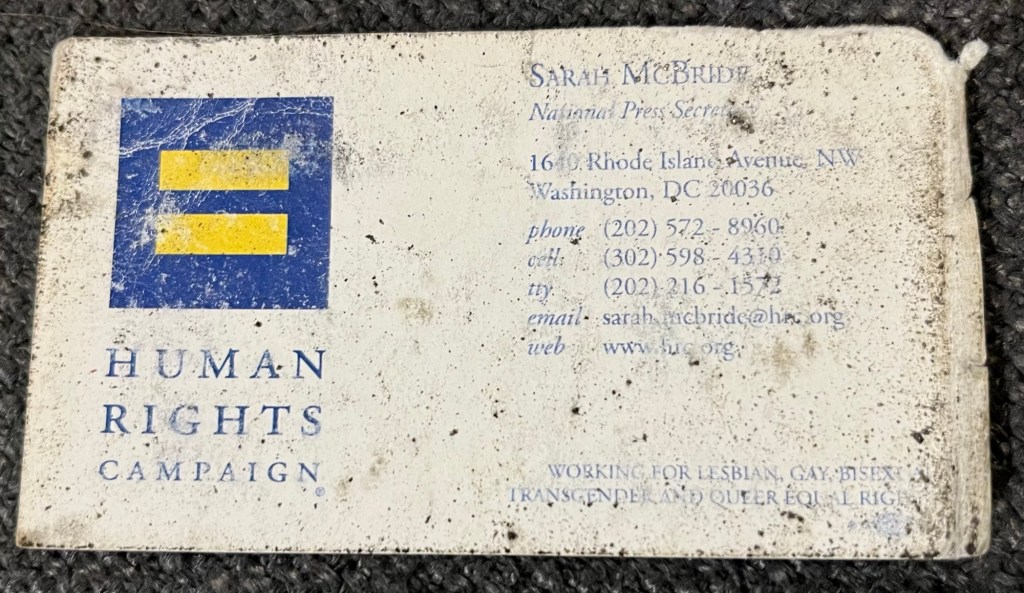
Looking back on this moment, having now read Sarah’s memoir (I hadn’t at the time), it’s pretty obvious that Sarah was trying to do for me what political figures like Jack Markell and Beau Biden had done for her. My liberal family members clearly knew it too, because they, especially my grandparents, got incredibly excited about the possibility of me getting mentored by THE Sarah McBride. Within two days, my grandpa (he’s reading this, I love you) had spun up a whole fantasy about how I would land an exclusive HRC internship and a job on Capitol Hill and would go on to become a staffer and a politician and probably the president too.
Being some dense combination of profoundly contrarian and socially inept, I smiled and nodded at my family and proceeded to interact with Sarah on my own terms, ignoring all of their well-informed advice.
Here’s what my email exchange with Sarah (then Ms. McBride to me) looked like:
Dear Ms. McBride,
Thank you so much for coming to speak at my high school today! I think having trans representation is a really important part of our pride week, and having you as a keynote speaker was the perfect way to give a broader view of LGBTQ+ issues to our student body. I’m glad I got the chance to meet you and speak to the rest of the school a little bit too.
If your offer still stands, I would love to get coffee sometime! My last exam ends on Thursday, June 7th, and I have two weeks in between before I leave for camp this summer. I’m flexible as to the particular day and time, so please let me know what works for you.
Sincerely,
Bethany (DEADNAME) Karsten
Yes, I included my deadname for some reason. Sarah emailed back:
It was so wonderful meeting you the other day! Thanks so much for your question and for coming up to me afterwards. Would some time on June 13th work for coffee? My office is at 17th and Rhode Island NW.
Two months later, after some renegotiation of the time, I headed to the Red Line on June 13th and made my way downtown to the corporate headquarters of the Human Rights Campaign to meet Rep. McBride for coffee. HRC’s HQ is an absolutely titanic steel, glass, and concrete building in downtown DC; I did not believe at first that it was my destination, having not fully grasped the entity I was dealing with, but meekly wandered inside nonetheless. I was completely underdressed – I wore that dysphoria hoodie religiously – and looked terribly out of place in the corporate lobby, with its big glass walls and its professional receptionists. The person at the front desk was very nice to me, though, and sent me off to sit in a chair by the elevator to wait for Sarah to come down.
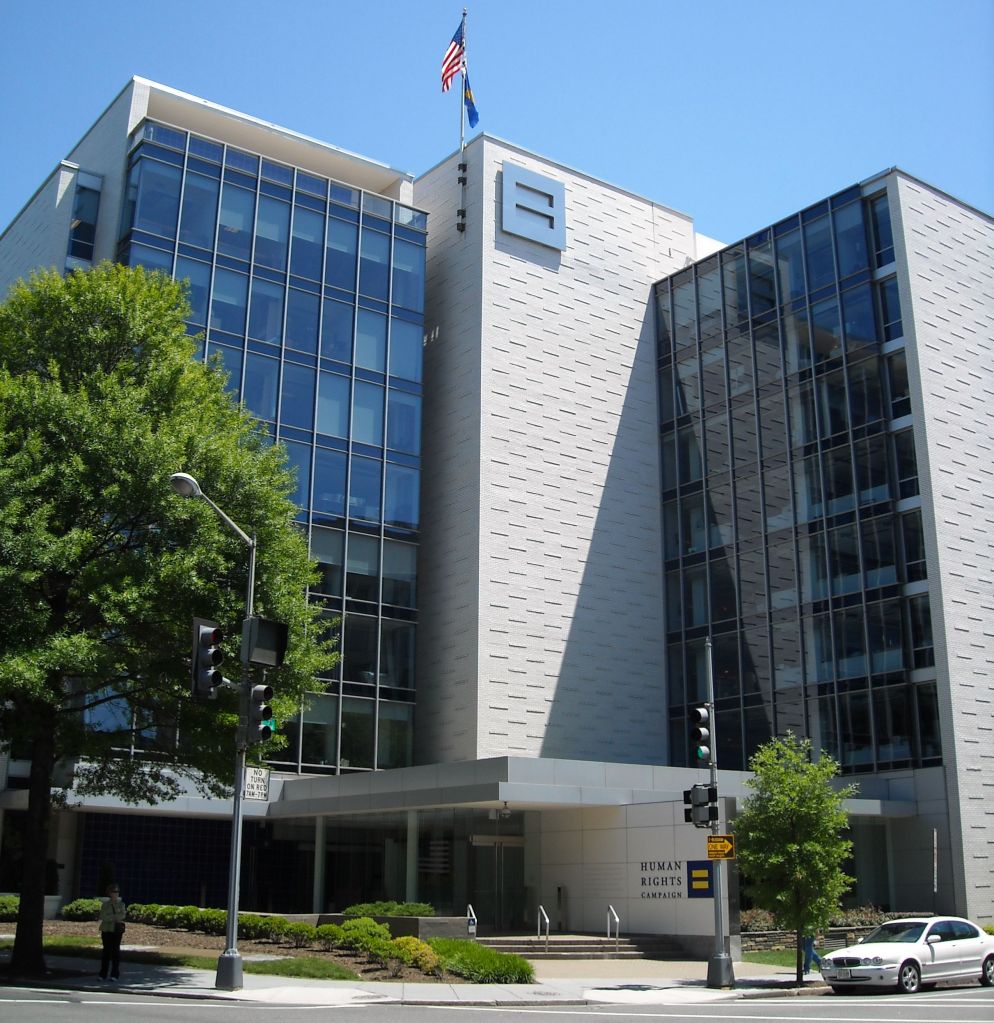
Nerve-wracking, but Sarah eventually did come down, and we trundled off to the coffee shop down the street.
Once we arrived, I was tasked with ordering drinks, and it’s here that I have a confession: I don’t actually drink coffee! It makes me queasy. So I get Sarah’s coffee order and ask for tea, only I don’t understand that “tea” could mean either hot tea (which I want) or iced tea (which I don’t), and I’m so nervous that I can barely get my words straight. I get iced tea, of course. I don’t like it, but I can’t tell that to Sarah, so I sit there and sip on the beverage and do my absolute best to pretend that I am a mature and competent adult who knew exactly what was going on.
I wasn’t ready for politics in 2018. I knew that on some level, even if I tried to put on a good face for Rep. McBride. So when Sarah asked me the money question – “So, tell me more about yourself” – I put on a big old smile and proudly proclaimed that I was going to be an author when I grew up.
Then I proceeded to spend the next fifteen minutes talking about my fanfiction.
It’s hilarious to look back on this now, knowing that this article will likely be read by thousands of people at the ripe old age of twenty-three. By any metric, I was right! I am a successful author! But it’s still so funny to realize that Sarah McBride, then the National Press Secretary of the Human Rights Campaign, now the first trans Congresswoman in American history, took time out of her busy day (during Pride Month no less) to listen to me monologue about my rarepair lesbian slashfic.
Sarah seemed rather bemused by the whole encounter, but she assured me that she would be happy to read my work someday, and wished me the best in my writing endeavors.
To be honest, I have no idea if Sarah remembers this random encounter with a trans teenager from over six years ago. But the fact that she was willing to take that time, and humor me even though I clearly wasn’t interested in the political work that everyone in my life wanted to pursue, made all of the difference in the world. There was a script in that conversation that I was supposed to follow about internships and jobs and careers that my dysphoric burnt-out soul wasn’t equipped to think about, and I tossed it out the window and went my own way. And Sarah McBride, this nationally recognized and respected figure, sat there and smiled and heard me out.
She took me seriously during a time in my life when few others did.
That had an enormous impact on me.
Now, of course, as I run a website entitled The Transfeminine Review and write a TDOR article about the biggest trans issue in the zeitgeist of the moment, it’s pretty clear that the little spark of political fire that Sarah saw in me when I was a kid was entirely spot-on. Sarah McBride heard me speak at the age of sixteen and knew immediately that this work I’m doing now was something I was capable of even back then. She recognized that in me before I recognized it in myself. And how could she not? Sarah had been trained to do it by the people who had made that same recognition for her, by Jack Markell and Beau Biden and Joe Biden who, despite their multifarious shortcomings, have always possessed a knack for recognizing the unique talents and potential of each person who comes across their path.
Sarah McBride may not have offered me a political internship, but in meeting me where I was at the time, she offered me a picture for what leadership and mentorship can look like in the public eye. Rep. McBride showed me a picture of the future where the work I’m doing right now was a possibility. It may have taken a few days, but that seed she planted in June of 2018 is an integral part of how I came to build this platform today
Reckoning with our leaders
You’ve probably grasped by this point that I was pretty oblivious to the world in 2018. Many of you already know that I have a dissociative disorder, and that particular week (due to a lot of factors), I was so dissociated that I still vividly remember it six years later. It was one of the worst weeks of dissociation of my entire life. I was out of it. And you can call that political naivete, you can call it ignorance, you can call it privilege, whatever. The words don’t matter as much. The point of the matter: I did not even remotely understand the magnitude of my encounter with Rep. McBride, and I certainly did not understand the complex political currents at play which surrounded our meeting.
When I met with Sarah, I didn’t understand how my access to her was largely only possible because of my wealth and my education. She was just the cool trans lady who came to speak at my school – nothing more, nothing less. I didn’t understand because, as a closeted, dissociated, heavily dysphoric trans girl, I had rendered myself completely incapable of seeing myself in the mirror for who I was. I could barely articulate my womanhood, forget my social situation. I thought my school’s emphasis on Diversity, Equity, and Inclusion was overblown, largely because I couldn’t fully participate in it from the closet.
At the time, I didn’t know anything about the Human Rights Campaign other than the fact that it was gay and supported trans people, which I therefore supported too. Imagine my initial disbelief, then, when I learned that many among the trans community loathed the HRC for their historical failures to support the trans community. My introduction to the HRC had been through a trans woman! But as I began to learn more about how HRC threw trans people under the bus by removing trans-inclusive language from the ENDA, as I began to learn more about the history of trans-exclusive feminism, my perceptions on the organization as a whole began to change. How do I reckon my distinctly trans experiences with Sarah McBride through HRC with the legacy of trans discrimination? How do I reconcile a legacy of discrimination with the work they do today, like the impassioned report on anti-trans violence that the organization published for this TDOR?
Here’s one thing I know about trans people: we’re good at holding grudges, and we have long memories. In the search for our titans – and this is a broader flaw of the Left – we often search for litmus tests of ideological purity, looking for martyrs and saints, finding (often dead) leaders to put up on a pedestal. Our living leaders, on the other hand, are often problematic, nuanced, messy, flawed human beings, and as a community, we’re not always the best at reconciling nuance in the public eye.
Sarah McBride played an enormously influential role in securing transgender rights in the state of Delaware. She helped push the national conversation of trans rights forward, she’s had a great influence on the Democratic Party. Her work has likely saved lives. So too did she have an outsized influence on my life, and is a real part of how I ended up where I am today.
And yet at the same time, Rep. McBride is a product of American establishment politics. She grew up as a scion of the system, and her political career had already begun in earnest by the time she started transitioning. In particular, I was troubled by her recent rightward shift on the Israel/Palestine conflict (see this Jewish Insider article for her exact stance) in which she indicated that her “staunch” support of Israel meant walking back her previous position that Israeli military aid should be withheld to force an end to the ongoing genocide in Gaza. She says herself in the article:
She emphasized that she’s “not running just to be the transgender member of Congress or not running just to make history,” but said that her election could “make a difference through cultural change that happens when you have an out transgender member of Congress.” […]
“I have to, as an elected official, recognize that there are going to be people who get elected to public office, who I not only vehemently disagree with, but who I disagree with on issues that are fundamental to my own dignity and humanity,” McBride said. “But in being elected to do this job — if I can find common ground with an individual who I disagree with on every other issue, but the one that’s before us — I won’t say no to collaborating. I won’t say no to finding a solution and a path forward.”
Rep. Sarah McBride is not going to be the newest member of The Squad. Though she may be a pivotal figure in the history of trans liberation, she is also a white woman and a political liberal. In many ways, Rep. McBride continued to run Biden’s campaign after Biden dropped out of the race – she represents perhaps what a younger, healthier second Biden term could have been, and her politics reflect it. While Delaware may be a deep blue state, it also has a long history of political moderation and normative conservatism. Rep. McBride represents the district she came from, and at the end of the day, that district is far from the most progressive in the Democratic caucus.
One of the defining quotes of modern progressivism is the 1970s-era call to action from Aboriginal advocates in Australia: “If you have come here to help me, you are wasting your time. But if you have come because your liberation is bound up with mine, then let us work together.” Another comes from Maya Angelou: “The truth is, no one of us can be free until everybody is free.”
On face, the two should always come hand-in-hand – but the course of politics never did run so smoothly.
This year on Transgender Day of Remembrance, it seems clear to me that this stupid fight in Congress over bathrooms is bound up with the freedoms and civil liberties of transgender Americans all across the country. We can no more afford to throw Rep. McBride to the wolves than she can afford for us. But by the same token, I have already received pushback before this article has even gone live against Rep. McBride due to her stance on Israel/Palestine. How can Sarah McBride be an meaningful ally for the trans community when she can’t take a meaningful stance on genocide? That’s the question I’ve seen people asking around the leftist sphere over the last few days, and one I empathize deeply with. Whose liberation are we bound up with? Whose liberation shall we see in return?
Here’s what I know: Republican transphobia is cruel and unjust, and the blatant bigotry that Sarah has already been buffeted with over the past few days must be fought again. We have to stand up as a community and condemn the vitriol, no matter how much it hurts on today of all days. And by the same token, it falls upon us to continue to hold Rep. McBride accountable for supporting the trans community both in Delaware and across the nation – the transgender Delawareans like herself that she speaks of so fondly in her memoir. It falls upon us to push her and the Democratic Party at-large to stand up for marginalized peoples both at home and around the globe, in America and the Middle East alike; to accept nothing short of liberation for those of us facing state violence. In this moment of fascist threat, Rep. McBride has the unenviable task of standing alone in the United States House of Representatives and articulating to a hostile majority why she and the rest of us deserve basic human rights, and honestly that’s a task I would wish on nobody.
I don’t have an answer for you today. I do not know the answer to the question of hate, the question of cruelty, the question of genocide. I don’t have an answer to the question of how year after year, so many trans people around the world can lose their lives to transphobic violence, nor to the question of why those threats seem to be getting worse despite our best efforts to the contrary.
But Sarah McBride is still the same woman who took me out to coffee all those years ago. And I’m still the trans girl who told her about my writing, and she believed in it.
Will Tomorrow Be Different?
Here’s the question that I want to pose – who in the modern Democratic Party would do for me and my generation of progressively-inclined young people what Jack Markell or Beau Biden did for Sarah McBride? Where is the future of the Democratic Party?
I’m not trying to make a statement of affiliation here. Rather, what I’m trying to ask: who in the Post-Biden Democratic Party would be willing to take time out of their schedule to call a parent to reassure them about their trans child? Who would be willing to take a precocious young trans person with organizing experience – and yes, I’m not blind to the parallels between my experience and Sarah’s – and mentor them from college to the House of Representatives? Let’s not mince words – Sarah McBride became the first trans representative because from her teenage years until today, elected Democrats in positions of power made an active effort to cultivate and uplift her as a future political scion. They looked at a trans kid well over a decade ago and said, yeah, you could be a Senator someday too.
Now elected Democrats are looking at trans kids and wondering if they should get to participate in high school athletics or use non-segregated bathrooms.
Sarah grew up very close to the levers of power in this country. She had the approval of the Biden dynasty and the entire Democratic Party of the state of Delaware from the moment she first involved herself in Democratic politics. I can only imagine what a nasty shock it must have been to finally reach Congress, the hallowed halls that had been promised to her since she was a child, only to discover that the Democrats who had “supported” her for her entire career were deafeningly silent when it came to treating her as an equal and a peer. What was she to do but go along with it?
Sympathy for the devil, yeah. But a symptom. A broader manifestation of anti-trans sentiment in this country.
In her memoir, Sarah writes extensively about how she passed Equal Rights protections for trans people in Deleware by convincing moderate Republicans over to her side. It’s the core tenet of her resume, it’s her strongest claim to fame. I have no doubt that in the coming weeks and months, no matter what internet leftists say about her, she will continue to quietly push on moderates behind closed doors and do what she believes she can do to protect trans rights under a Trump ascendancy. I really do think she’s telling the truth about that.
But it’s not enough.
It might have been enough in Delaware in the 2010s, but it’s certainly not enough in this national political moment we face right now.
I’ve seen plenty of trans people who’re perfectly willing to burn Rep. McBride at the stake and write her off as a lost cause. I’m afraid that my perspective on the matter is a little more pragmatic than that.
Undeniably there’s nothing to be done about the harm that Rep. McBride has already caused, nor the harm from people like Rep. Seth Moulton (D-MA) who’ve jumped on the transphobia bandwagon despite the loud dismay of their constituents.
But just because they have done harm in the past does not mean that they have to continue doing harm in the future. She may not be able to erase her spineless acceptance of the Republican’s planned segregation, but it is absolutely not too late for Rep. McBride to come out against anti-trans discrimination in a way that could have a real material impact on trans lives across the country. He may not be able to take back his cruelty toward the trans community who assuredly helped to elect him, but Rep. Moulton can still walk back his statements and take a stand for the civil liberties of trans people in the Commonwealth he purports to represent. And for the Democrats who have been silent until now, this is the moment to speak out, and speak loudly.
This is the message that I want to send to my Congresspeople: my Senators John Fetterman (D-PA) and the lame-duck Bob Casey (D-PA), who is regrettably going to be replaced by virulent transphobe David McCormick (R-PA), and my House Representative Brendan Boyle (D-PA-2).
If you’re reading this article, then I would urge you to find your own representatives and demand (politely) that they come out in support of trans people, both in their own state and around the nation. Call your representatives and tell them that LGBTQ+ people will not be going back to the state-sanctioned segregation of the 20th Century, and that if they refuse to take an active stance supporting transgender Americans, then they will not have your vote in their next election.
Anyone can do that, whether they pay attention to politics or not. If you want more specific suggestions, I would direct you to Julia Serano’s post, where she provides more information about how to find your reps and what to say to them, including call scripts.
To get through what’s coming next, it’s going to be important to understand your sphere of influence – what you can change, how much bandwidth you have, how to avoid burnout. I’ve chosen to stand up for the transliterary community and trans people in the publishing industry, but everyone has different skills they can bring to the table. If you want to know how you can get more involved through my platform, then you can read my lengthy action plan for resisting anti-trans censorship, or follow my handy guide for how to easily get started. I’ve got a printable zine of that anti-censorship action plan that you can distribute in person.
If you’ve never read a book by a trans person before, then I’ve created an accessible starter guide to finding the best gateway text for you. If you’ve never read a book by a trans person of color, then I’ve got a list of black transfeminine authors you should check out. If you want to learn more about the history of anti-trans censorship and discrimination, then you can check out my Brief History of Trans Literature series, which begins in the 1700s and follows the law through to the present day.
To my casual readers, that’s my call of action to you. Thank you so much for reading this article. Take care of the trans people in your life, and call your representatives today!
To any Democratic politicians, partisans, or organizers who may be reading this:
I feel betrayed. I know a lot of my peers do too. We’ve been told for our entire lives that Gen-Z will be the future of this country, and yet Democrats on the national stage have repeatedly broken their own promises and rendered meaningless their values in the face of ongoing national issues. In my opinion, it’s not that Donald Trump won this election – it’s that you lost our faith, the faith of the Progressive Gen-Z vote. You lost the quiet support of millions of liberals and progressives across this country through your refusal to take a meaningful stance on climate change during the 2024 election season, your refusal to take a meaningful stance on genocide during the 2024 election season, and your refusal to take a meaningful stance on trans issues during the 2024 election season. That’s neither an exhaustive nor comprehensive list – just the issues that turned the most people away from voting in my neighborhood and community. Sarah McBride was elected in no small part because of her prominent appearance at the 2016 Democratic National Convention. How many trans people spoke at the 2024 Democratic National Convention? Zero. But of course Liz Cheney gets to be the golden goose.
You tell us that our civil liberties are under threat, and then you support nationwide crackdowns on free speech and protest regarding Gaza, leading to the greatest regression of academic freedoms in your lifetimes, forget ours. You tell us that you will protect our rights, and then you waste entire terms worth of Senate and House control that could have been used to codify federal abortion rights and protect Roe vs. Wade. You promise that you will protect our futures against climate change, and then you continue to expand the American petrostate and impose ridiculous tariffs on cheap foreign solar power that can help us solve our moment of peril.
I know full-well that I am a wet dream as far as Democratic political organizing goes. I’m young, articulate, can speak with poise, take my own initiative, and I’m not afraid to get political or do the dirty work of democracy. I have a natural talent for speaking in a way that compels others to act. I’m from a minority group – trans, and also Jewish – but I’m also white and rich and very American. I am extremely well-educated and connected. Hell, I grew up in Washington, D.C. I basically went to boot camp for baby Democrats, I know this rigamarole.
My biography is very similar to Sarah McBride’s, and she’s now a Congresswoman.
And yet you stand on the cusp of losing my support altogether.
Why should I support a political party that won’t lift a finger to protect my rights? That’s the question that I and millions of other young people my age have been asking themselves, and it’s a question that you need to find an answer to.
I have political experience working adjacent to the Democratic Party now, and I know full well that you needed me this election. You did not have enough people to meet this moment. The money was there, but the enthusiasm was not, and so you fell back on the same marginalized groups as always, hoping that they would save you from the mess that President Biden got our whole country into with his decision to run for re-election at the unpopular age of eighty-two.
It didn’t work, but we tried. I tried. My friends tried.
We organized our asses off for you.
But apathy begets apathy. If you won’t stand up for the rights of marginalized and working-class people, then marginalized and working-class people won’t show up to the polls for you.
I am not an outlier in this sense. I am a mouthpiece. This is not my personal take so much as a culmination of the thousands of conversations I had with college-aged people throughout this whole election cycle. This is the word of mouth from the streets of West Philly. We’re fucking fed up.
I stood out in the cold for ten hours on Election Day trying to get people to the polls. I put skin in the game. I worked around the clock for basically a month straight. If you think I am going to do that in 2026 or 2028 for a Democratic Party that can’t be half-assed to defend the basic dignity of one of their own Congresspeople against a transphobic assault, then you are sorely mistaken about my generation and the values we hold. Sarah McBride has been a political darling of the Democrats for basically my whole political life. If you won’t even stand up for her, then why should I believe you’ll stand up for me?
The incredible group of young people who campaigned with me was incredibly diverse. Many were queer. Many were people of color. All of us were terrified of Trump, and now that’s a political reality that you’re leaving us to face alone. If you think that the apathy of the youth vote is bad now, then just wait until they’ve been through four straight years of getting thrown to the wolves.
It’s not too late to turn this around – and frankly, your political fortunes rely on it.
And finally, to Sarah:
I came very close to permanently shelving my article in your defense. I know that there will be those in the trans community, especially the leftists who already disliked your Middle East politics, who will never agree with my decision to publish it, and that’s something I came to terms with before I did so. You lost most of your goodwill with the trans community when you released that statement, and it’s gonna take meaningful change to earn it back.
But I still remember your passion when you spoke about trans rights at my school in 2018. I still remember watching your 2016 DNC speech. I still remember your consideration and support when you had coffee with me, and that’s something that’s empowered me for years.
I know you’re capable of it.
Washington changes people for the worse. I grew up there, I know it as well as anyone. I don’t know what’s been happening behind closed doors, I don’t know what conversations you’ve been having, what money you’ve been receiving, what threats have been made. I left DC because I knew I didn’t like who I was in that world, and you stayed. That’s where we are.
I hope you get the chance to come into your own and show the people of Delaware why you earned your spot in office. I hope that you can rediscover that flair for moving the needle on trans rights that gave you fame and power in the first place, because let’s be honest, we’re gonna need it. I hope, not because I think you will, but because I would prefer to live in a world where the only trans Congressperson finds a way to be more than a punching bag and a pariah.
I want to keep believing in you. I want to see in Rep. McBride the same role model I saw in Sarah six years ago.
Find your allies – people who will go to bat for your rights and our rights, not just America’s right to export arms to Israel. Make community with Zooey Zephyr and Danica Roem and trans legislators around the country. Talk to AOC and the other House Democrats who supported you when the rest of the country was ripping you to shreds. You may be the only trans person in Congress, but you don’t have to stand alone. I hope you can find that solidarity, no matter what comes next.
This open letter is entirely too personable to be addressed to a Representative of the United States of America, but I’ve always hated the caricatures that power makes of us. It’s been made clear enough that civility is little more than a farce when it comes to trans people these days. People make institutions, people create democracies, people can lead a nation down the merry road to fascism. Our stations change, but that never will.
I did become an author, just like I said I would. Part of me still hopes that you’ll see this and be proud for it.
Best of luck,
Bethany Karsten, Editor-in-Chief of The Transfeminine Review.

 The Transfeminine Review
Join the discussion! All comments are moderated. No bigotry, no slurs, no links, please be kind to each other.