This article was made possible by our wonderful Sponsors! If you want to contribute to essential transgender journalism like this, then please feel free to go support our work on Patreon – your contributions help us keep Academic Quality Scholarship like this 100% free and available to the general public.
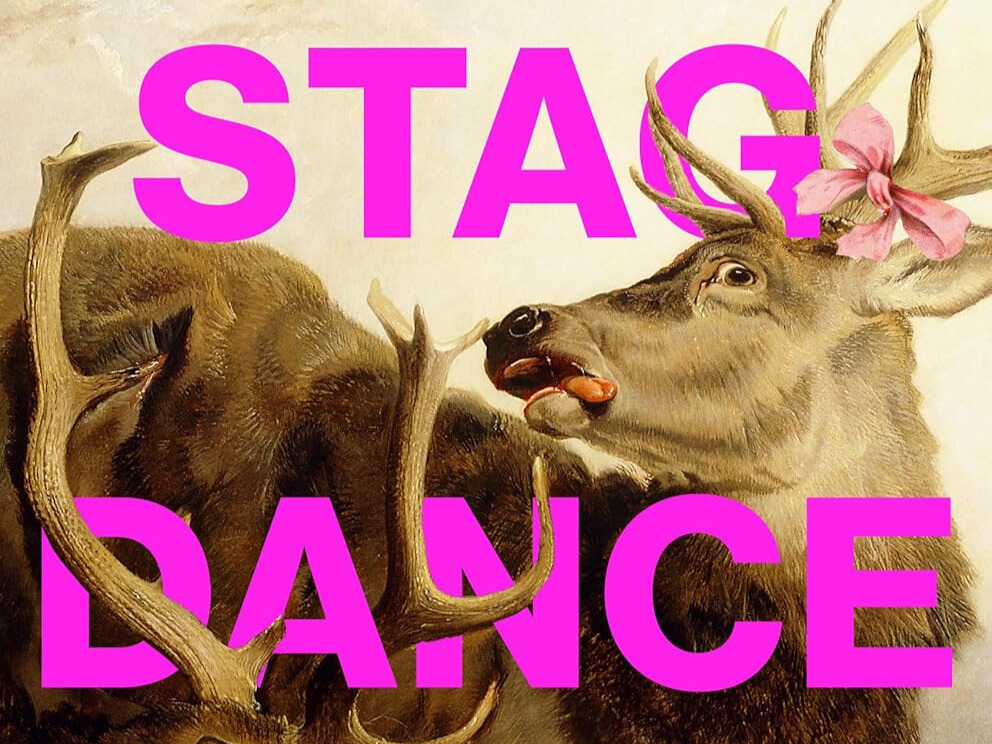
Stag Dance by Torrey Peters (Random House, 3/11/25) – [Website | Bluesky | Bookshop]
A new Torrey Peters book is always an event. Stag Dance may only be her sophomore effort, but her books hit with their audience in a way most other writers don’t – closer to a Sally Rooney than anything. People post about buying them, make jokes alluding to plot elements that would completely escape non-readers, argue if they’re more of an Ames or a Reese. Vogue just ran a feature interview on the book. With a certain demographic of reader – and not specifically trans women, either – Peters’s books connect and resonate.
A collection of three novellas and one short novel, Stag Dance rounds up her early indie publications while adding two new stories for long-time fans. It’s a nice package all around, flexing the range of her talents and ability to work in different genres while still putting her stamp on them all. New entries include the boarding school story The Chaser and the historical fiction of Stag Dance, bookended by two previously-published 2016 stories: the post-apocalyptic Infect Your Friends and Loved Ones and the erotic horror of The Masker.1
Infect Your Friends remains one of her most compelling stories and has a new resonance in a post-COVID era. A bioweapon that causes people to stop producing hormones has escaped containment and ravages the United States, causing society to collapse into polarized government forces and loosely organized militias. Peters moves between three eras: a love/hate romance between two trans women set roughly in the mid 2010s, the post-pandemic era where the narrator roams a desolate Iowa, and a cramped Seattle house the few hours immediately before the virus spreads. And as she does, she examines the ways trans people hurt and help other trans folks: the narrator bonds with a woman named Lexi early in her transition, but as she grows, the two clash and fall out. Then, years later, the two reconnect after the world’s gone to shit, forming a bond over T4T (trans-for-trans) relationships. As Zoey, another trans woman living in the wastelands puts it:

“It’s not a gang. It’s a promise. You just promise to love trans girls above all else. The idea – although maybe not the practice – is that a girl could be your worst enemy, the girl you wouldn’t piss on to put out a fire, but if she’s trans, you’re gonna offer her your bed, you’re gonna share your last hormone shot.”
The tension between Lexi and the narrator is where Peters’s characterization shines. Lexi is rough around the edges, drinks too much and likes to fire guns, while narrator comes from a higher rung of society and clings to brand names to show off their status: they wear Coach heels, knows their Eames and Baccarat, stays in the same hotels as the Los Angeles Lakers. While Lexi throws footballs and talks about fishing hook scars, the narrator slides into an ultra-femme style of sex work, playing the trophy wife for suitor. The tension between these two comes not from a clash of ideals, but from the wide class gulf the narrator thinks separates her from someone like Lexi, a tension one can see echos of between Amy and Reese in Detransition, Baby.
At times, Infect Your Friends feels like a dry run for some of the tricks and ideas Peters pulls off so well in her first novel: the overlapping timelines, the conflict between two trans women who once loved each other in a way they’ll never fully escape, crossing lines of money and class.
Meanwhile The Masker is a short, disturbing story about one person’s inability to accept themselves and the hurt they cause in the process. It follows Krys, a young person who’s unsure if they’re trans or just a crossdresser. They go to a convention in Las Vegas where they cross paths with Sally, an ex-cop and gruff trans maternal figure, and Felix, a rich fetishist who enjoys treating Krys like a doll.
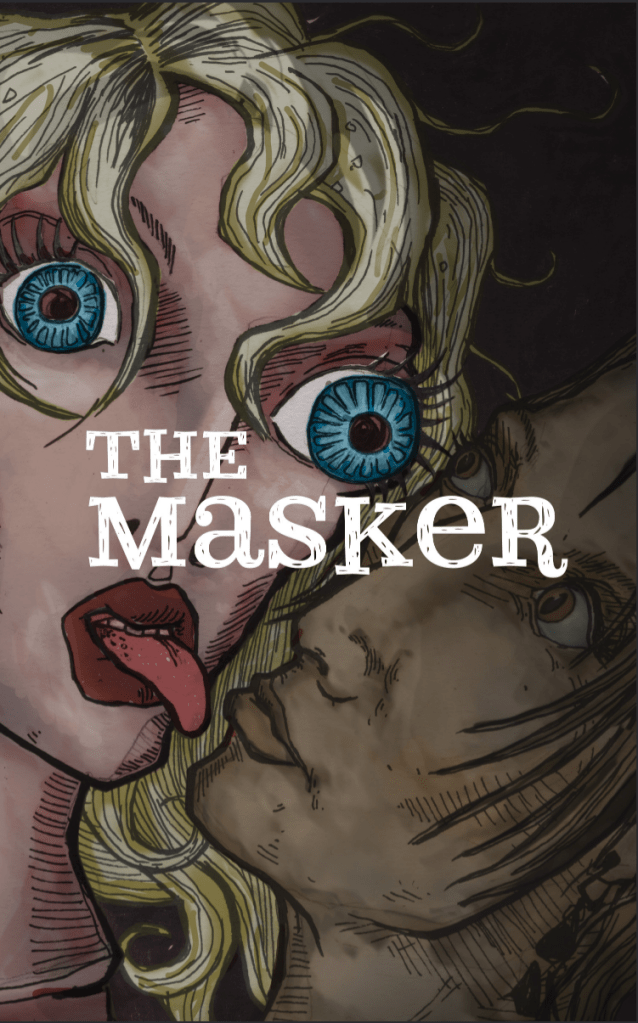
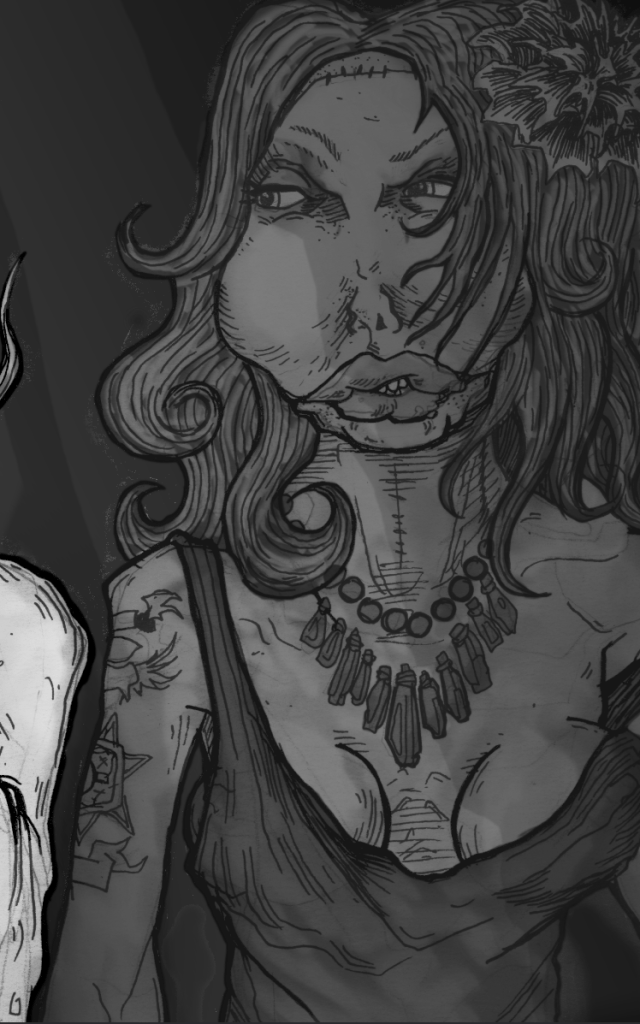
As Krys tries to figure their shit out, they get lost: “I’m in so much pink fog, it’s as if 1850s London were a city in Candyland.” With nothing to hang on to, they make a series of really awful decisions. By the end, the cops are involved and a life appears in tatters, with Krys just as messed up as they were before, their pronouns sliding back and forth and a gender identity they seem scared to grasp. This story launched Peters’s career on its original release and it’s mix of eroticism and horror is a messy stew that proved trans literature didn’t have to cater to cis expectations. Sadly, the illustrations by Sybil Lamb are not included in the updated volume.3


Both The Chaser and Stag Dance date from after Peters wrote Detransition, Baby, the former around the first springtime of the pandemic and the latter in 2023. The Chaser is maybe the weakest story of this quartet, but even so it’s a good queer teen romance at a remote Quaker boarding school: the narrator is rooming with Robbie, a flamboyant younger teen, and before long they start hooking up. When the doubts about their sexualities start arising, Robbie put them to bed:
‘I don’t need to touch you,’ I said, careful to drain all warmth from my voice. ‘I just thought maybe you don’t always want to be the girl.’ … ‘Trust me,’ he said. Suddenly we were on his turf, conversationally. ‘I always want to be the girl.’
In some senses, this story is the mirror image of Infect Your Friends (there’s even a memorable scene with pigs that comes at the other end of the story). Here we see a similar love/hate relationship with a needier butch protagonist who feels they’ve been done wrong by the more conventionally queer person. Is the narrator a chaser, someone who fetishizes trans women? Do they see Robbie as anything more than just a fetish to chase and eventually discard? Peters only peppers in hints that Robbie will eventually transition and the narrator won’t, but it’s left open by the end.
The bulk of this book is taken up by the title story. Described by Peters as a tall tale, it reads as so much more than that. Stag Dance follows outlaw lumberjack Babe Bunyan as he works with a renegade crew felling trees during a frozen winter. They’re illegally cutting timber, working deep enough in the woods to keep clear of inspectors, but also working under the pressures that come from being isolated and cut off from society. To ease the tension, camp foreman Karl Daglish proposes a stag dance where some of the men assume a feminine role – signified by wearing a triangle of fabric – and are courted and asked to the dance by the men. Babe immediately takes to it:
… I turned away in shame, because at that moment, I could feel the rising of my own pants, and an unwanted yearning in my chest as I looked at that little fabric hanging at the crook of Daglish’s legs.
By wearing this triangle, Babe goes from being a large and overly masculine figure – someone who calls where his cut trees will fall, and is spoken of in hushed tones – to someone closer the netherworld of living in between, like the queer and fey Lisen, “a pretty whistle punk from somewhere in Scandahoovia,” a feminine little man who is used for sex by the loggers in the off-hours. Before long, Babe loses the respect of his fellow loggers as he grows more and more attached to a feminine role, while at the outskirts of camp a strange light and noises are attributed to the Argropelter, a bigfoot-like creature that was once a man but is now possessed by spirits. Or as one jittery logger puts it:

“A wraith, a banshee, an apparition! And I’m guessing a spirit of the female persuasion, because, well, this axeman got to acting awful strange – talking in an odd voice, dressing queer, walking around as if intoxicated – and just breaking all camp custom.”
Throughout Stag Dance, Peters displays plenty of wit: the loggers at the remote camp speak in crude jests and archaic slang, but are quick with a joke, often at the Babe’s expense. We meet people with names like Left-Foot Hank and Johnny Jobs, and see a blanket toss go awry. And as the date approaches, Babe loses himself in becoming something approximating a woman, at least by his standards. It’s a slow burning story that caps off with a bang, easily the best thing in the book.
There’s something of a dictum that trans women have to do things better than cis women in order for mainstream acceptance: they have to look and act traditionally feminine when seeking a diagnosis to start HRT, or that their makeup and outfits must be more put together than society would expect from a cis woman. And so maybe Peters has to not just be as good as her peers, but she has to exceed them and write better than any of them.
Is this fair? No, patently not. But is it true?
Peters is a prose stylist with few peers among writers today. Between the razor-sharp clarity of her sentences, the way she effortlessly straddles multiple timelines and points of view, her uncannily adoption of dated vernacular, she can write circles around many of the other writers pushed by Big Five Publishers.
But that also puts a lot of undue pressure on Peters, too. At the time she published Detransition, Baby and was talking on Good Morning America5, she was being snubbed by the Pamela Paul-edited New York Times Book Review and pissed off British TERFs when recognized by The Woman’s Prize Trust6. She was being held up as something approximating the first major trans novelist7 when there had been ones before her: Casey Plett, Imogen Binnie, Jan Morris, among others. Not for nothing did she retreat from the spotlight and social media, only recently reappearing to promote her new book.
And so one wants to be fair when reading and writing about her work: she’s a novelist, and a very good one at that. But it’s easy to put her under a special kind of scrutiny that most cis authors never receive. Was Reese too mean? Is Krys bad representation? Does Babe Bunyan getting aroused at the thought of being a woman mean Peters is only giving ammunition to TERFs? These are not questions you’d ask a cis author, even ones who write about trans women like Rabih Alameddine or William T Vollmann. It can be easy to get lost in the trees of discourse that you lose sight of what makes a book like Stag Dance and a writer like Peters so special.8
Casey Plett once wrote about true literary equality as Sarah Shulman next to David Sedaris, and in that spirit I want to suggest Peters should be spoken about along the same lines as Joy Williams, another consummate stylist whose infrequent novels are always a treat. The two share a kinship for writing that straddles the outdoors – it’s telling that only The Masker largely happens inside city limits, and even then it occupies a sort of liminal space – and a knack for razor sharp, clear prose. They are both products of the University of Iowa’s fiction program9, too. Sure, there are differences: Williams has worked as a journalist and in non-fiction, while Peters has disowned an early personal essay and largely avoided the format since.
Regardless of comparisons, Stag Dance shows Peters at the top of her game and as a writer who is still growing and evolving. She’s able to move across genres, adopt an old vernacular without it coming across as forced or stilted, and write these messy, compelling stories about the ways trans people can love and hurt each other. It’s a book I could have easily read in half the time, but I found myself lingering in Peters’s world. I think you will, too.
– Roz Milner
Roz Milner (she/her) is a freelance writer who has written for the Toronto Star, Lambda Literary, PRISM International, Full Stop, and many other places. She is currently working on a book of short fiction. You can find more of reviews of trans literature on Muckrack.
SUPPORT OUR WORK ON PATREON | OUR SPONSORS
- Beth’s Notes: I was promised Glamour Boutique… *sobs* ↩︎
- If you’re curious and looking for the director’s cut, there’s a lot of interesting backstory behind this cover in this oral history: https://nyctransoralhistory.org/content/uploads/2021/11/NYC-TOHP-Transcript-094-Torrey-Peters_UPDATED.pdf ↩︎
- But I’m gonna make sure y’all see them anyway! Cause Sybil’s work slaps and the newbies need to know what they’re missing!!! ↩︎
- I understand why this might have been a liiiiitle much for the white cis lady bookclubs, but hey. It’s for the culture. Also the idea that some corporate exec at Random House probably had to sit down and have an analytical discussion about this for a while is hilarious. ↩︎
- It was a whole thing: https://www.goodmorningamerica.com/culture/video/gma-buzz-pick-detransition-baby-torrey-peters-78356150 ↩︎
- For anyone who wasn’t tuned in during that mess: https://www.vulture.com/2021/04/torrey-peters-responds-to-womens-prize-backlash-and-letter.html ↩︎
- Here’s an interview that literally called her ‘America’s Next Great Novelist: https://www.interviewmagazine.com/literature/can-a-trans-writer-be-americas-next-great-novelist-torrey-peters-thinks-so ↩︎
- For a recent transfeminine perspective on this, I would highly recommend “How to Read a Trans Fem Writer” by Kai Cheng Thom and Maya Deane: https://kaichengthom.substack.com/p/how-to-read-a-trans-fem-writer ↩︎
- For my audience who isn’t plugged into the traditional publishing sphere, the Iowa Writer’s Workshop is the most prestigious MFA program for novelists on the continent. Yes, it’s in Iowa. No, nobody’s ever been able to tell me why. ↩︎

 The Transfeminine Review
Join the discussion! All comments are moderated. No bigotry, no slurs, no links, please be kind to each other.