
For the last few months, I have been publishing a short review of every book I’ve read to my Patreon. It’s been a great way to both keep a more detailed record of my reading adventures and also to help me financially support this website.
Before I started my Patreon, I was paying 100% of website costs out of pocket – that includes digital maintenance, marketing, and most importantly my book budget, which lets me stay up to date with the publishing industry at large. Thanks to your generous support, TFR now entirely pays for itself! It’s an immense accomplishment to break even on a business within its first year, and I’m so very grateful to everyone who supports the website and helps me continue to spread transfeminine literature to the broader public.
The primary draw of my Patreon has been my reviews, which are available to any paying subscriber (starting at $4 a month). I don’t love paywalling any content, but I also can’t afford in the long term to fund my website unless I have a way to pay the bills.
However, in an overwhelming majority of 96%, my Patrons have voted to let me release my best reviews to the general public!
I’m not going to make every review public – a lot of them aren’t up to the standard of quality and length I maintain here, and I wouldn’t feel comfortable publishing 100% of my thoughts to the full audience. I don’t love every book, and as a critic, there’s a time and place to reserve your negative or middling thoughts for an audience that’s better equipped to understand them as opinion rather than dogma. Moreover, there are books where I simply don’t have interesting thoughts. I’m not going to publish an article that’s just 300 words that amount to ‘it was okay,’ so if you want to read my thoughts on every book, I would urge you to either join my Patreon at the lowest tier, or to check out my Masterlist, where I write a one-sentence summary of my thoughts on every book I read.
My general philosophy here is to publish reviews that I find to be of outstanding literary merit to the broader community, be they positive, negative, or somewhere in between.
In that vein, I wanted to begin my Patreon review series with arguably the most important review I’ve written this year, my three-star review of Lhuzie Fénix’s mindbending debut novel Autumnal Conductor. Thank you so much to everyone who’s supported me this spring – this article series was made possible thanks to you.
This article was made possible by our wonderful Sponsors! If you want to contribute to essential transgender journalism like this, then please feel free to go support our work on Patreon – your contributions help us keep Academic Quality Scholarship 100% free and available to the general public.
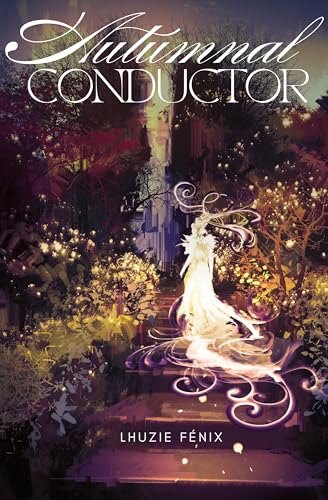
Autumnal Conductor by Lhuzie Fénix
Date: 3/3/25
Publisher: Cybernetic Coven
Genre: Extremity, Mythology, Horror, Gore
Website: https://www.cyberneticcoven.com/
Bluesky: @strigarosa
Purchase: itch.io
I genuinely don’t know where to start with the profound depths to which this book blew me away.
Here’s a place to start – the prose in this book is nothing short of genius. It’s very rare that I come across a book that makes me reach for the dictionary, but Lhuzie had me reaching once or twice a chapter. From a lexical standpoint, from a technical standpoint, her mastery of the English language is just breathtaking, and I was swept away in her voice from the first page.
I mean, just read the first paragraph:
The harvest demands attention; Proserpina’s presence ensures compliance. Beyond the reserved granaries and the browned-gold fields, she canters over warm soil and cut stalks; she stops to raise a turned head, letting Autumn wind fill her nares with coumarin and sweat. Her large dark eyes pop out the sides of her tau-shaped head, surveying the laborious domains the gods have entrusted to the pained toil of mortal brood. Down the hillside, where barley and rock-crawling vines met, humans faltered. With barely a trot, Proserpina was upon them — and a toothy whinny made clear how lacking she found their diligence. The mortals jilted into action, moving away from the approaching hooves as Proserpina demanded vivacity. Not fast enough; Proserpina whipped at them with braided snakes from her haylike mane and tails. Her indignant neighing was insistent, stopping only once all farmers had escaped her lateral gaze. Proserpina’s nostril flared as she lowered her head to the ground, crushing grains with her hooves and ruffling them. She grew bored, and went back to look for something to be displeased with – and what a generous serving graced her eyes!
People don’t write like that. It’s ornate, but not archaic; at various points, Lhuzie breaks out into a more modern vernacular, and it doesn’t feel like an anachronism, it feels like the callback to an older time. The way she phrases and articulates her imagery feels like something genuinely new. I don’t know what to call it, but it’s excellent. It’s so electrifying, and novel, and it makes this 146 page book feel like it was over 500.
Autumnal Conductor has some of the strongest imagery and descriptive writing I’ve ever read in prose. It’s utterly bizarre, and gross, and twisted, and apocalyptic, but even at its most nauseating moments, I had a vivid picture of the events on the page.
The best way I can liken the experience of reading this book is to playing an epic video game in total immersion. It’s the breathless storytelling and circularity of Hades, the pounding rhythm and bloody hellfire aesthetic of DOOM, the sweeping and sublime majesty of Shadow of the Colossus. The total dislocation and psychosis of Hellblade: Senua’s Sacrifice. I listened to the DOOM 2016 soundtrack while I read, and it made the experience so much cooler – I would highly recommend it if you’re into that.
Fénix’s grasp on Greek and Roman mythology is vast and delicious – it’s like reading a Maya Deane book, but through a lens darkly. She is fluid and effortless with her references, and it’s evident from reading that there is far, far more going on in the page than a first read can comprehend. The influence of The Hades Calculus is obvious, and I found shades of Persephone Erin Hudson here and there, but the structure and style of this novel is largely original, and superb.
Are there characters or plot? The characters are the plot; they crumble and birth and gnash, and fold in and out of each other; first, second, third person – it’s a hellish blend, impossible to follow, but to lose yourself in it is the entire point. Prosperina is Minos is Sisyphus, there is no difference. Flesh is a malleable thing in Fénix’s Tartarus; sustenance, molding clay, dust. Entire landscapes rise and fall as bodies of meat. Prosperina is a plural trans woman; she is a goddess; she is Hell itself; she is nothing.
This is the best work I’ve ever read in the genre I’ve christened “Weird Trans Extremity Fiction,” and it’s not even close.
As a story about Dissociative Identity Disorder, Lhuzie gives one of the most harrowing and accurate depictions of the nature and violence of headspace in all its mores and twistedness. This is a brilliant plural story – it never bothers to explain or justify itself, it never attempts to sugarcoat the brutality of its nature, it simply is. I have never read anything like it. It horrified me, it was a harrowing experience.
I felt seen.
This is a book that can go from a high literary voice that evokes some of the deepest thalassophobia I have ever felt:
There was more than ambrosia and Proserpina involved in the birth of the titans. There was also more than legacy and dominion. There were potential things, neverborn things, manifested things, dragged from who knows there and injected into Tartarus. Nasty, gleaming abscesses, growing and festering through the underworld.
There were things in the water.
Old things, new things, ageless things. Things beyond the senses, an entire world that could only exist in the deepest shadow, chaos that crossed over only where no light had ever touched; things whose very acknowledgement would destroy them — and you. Things the Leviathan fed upon, burgeoning infinite and queer.
And Pasiphaë had opened herself to them. She could feel their coils, the addled firing of baffled neurons they inspired, the pouring of dark insights. There was a shadow inside her mind too — and they could thrive there. Even now, cut off from the rest of Tartarus, Minos could sense the transformation of weather patterns and the poison flowing into the core of the underworld.
She understood, it had all come together. The three titans, the abscesses of ideological pus and polluted muck. They festered for long enough. They were not sent to kill the titans and claim their power, to become judges changing the underworld, to stand against Dis Pater.
They were to pop them open, to let the filthy taint pour out; Proserpina had given up the dream of freedom.
She was trying to kill the underworld.
To a total command of everyday trans slang within ten pages:
“Tartarus? I thought I pump and dumped that stock long ago.” Ubu fiddled with xer robotic fingers, avoiding to go further into the topic. “There must have been some miscalculations, you either are wrong or I got myself lost. See, before I found myself taking to the fat faggot Blåhaj-pony, I had my slave-engineers work their explosive collars out of my quirks. Purging out of the system all the baggage, all the flabby meat, all the annoying flaws of burdensome lizard-brain. I am perfected!”
It’s never forced.
There’s a term in music called a polyrhythm, which is when you’re playing two or more tempos at the same time. Simply put, it’s one of the hardest skills you can learn as a musician. The best ways that I can describe the prose of Autumnal Conductor is a literary polyrhythm – there is a constant counterplay between voicings, a dance, a combat, sometimes together, sometimes apart; they weave, and it’s done with such precision and technique that the tonal notes can emerge in lingering phantasms, fleeting shifts in paragraph and sentence structure, a word choice, an idle line of dialogue. It’s fucking brilliant.
Emotionally, this book hit me like a truck. I was afraid for a few chapters at the end that the ending might be a letdown, but Lhuzie was just drawing back to hit me harder at the finale.
I want to read it again. I want to read it five times. I want to write essays about it.
I barely feel like I’ve understood this book at all.
This is everything I want out of trans fiction. It’s not perfect – like I said, there was a chapter or two toward the end that felt like the book might not fully stick the landing. Moments of confusion, an exposition dump or two that could use a little editing.
But I’ll be damned if this isn’t up there with the best transfeminine fiction I’ve ever read.
⭐⭐⭐ 10/10

 The Transfeminine Review
Join the discussion! All comments are moderated. No bigotry, no slurs, no links, please be kind to each other.