
Introduction
After twenty-six days of voting, the 2nd Annual TFR Reader’s Choice Awards are finally here! Over 270 authors, editors, critics, and readers voted to decide the best transfeminine books of 2025, breaking our record from last year, and helping us to cap off trans publishing’s biggest year to date.
In an extremely difficult year for trans people, trans literature is a rare place where our community has unambiguously thrived. Four years after Torrey Peters’ Detransition, Baby became a household title, the wave of traditionally published transfeminine novels enabled by its success have arrived – dozens of novels found their way onto bookstore shelves this year, leading Mackenzie Wark to dub the phenomenon ‘Trans Fem Literary Springtime.’ 2025 saw two massive book tours this spring for Peters’ follow-up novel Stag Dance and Jeanne Thornton’s A/S/L, bringing literary events to indie bookstores across the country. Major speculative releases like Gretchen Felker-Martin’s Black Flame and Charlie Jane Anders’ Lessons in Magic and Disaster helped to round out the tour-de-force. This was easily the best year for transfeminine literary fiction of the 2020s, and the TFR Awards are the first major literary awards to document that triumph.
Indie and self-published authors also found major success this year. 2025 was the year that Casey Plett and Cat Fitzpatrick’s LittlePuss Press found its voice, publishing three excellent books – including Gendertrash from Hell, which brings the culture-defining zine from the 90s back into our contemporary conversation. Self-published transfeminist Talia Bhatt took us by storm with her generation-defining manifesto Trans/Rad/Fem, which broke radical new ground in our conversations around transmisogyny and global solidarity. New indie publishing projects have sprouted around the world, like Transistance Press, the first Oceania-based indie trans press, and Picnic Magazine, a New York City lit mag in the spirit of the Trans Ladies Picnics created by Topside Press founder Red Durkin in the 2010s. Collaborative self-publishing bundles have moved massive sales, like the Queer Lights in the Dark bundle this summer that made over $46,000, fueling the best year of sales ever for self-published trans authors. When indie fiction platform itch.io capitulated to payment processor censorship in July, trans authors joined a grassroots campaign against censorship, with daily calls to Mastercard, Visa, Stripe, and Paypal demanding a free and fair commerce for NSFW creators.
Across continents and borders, transfeminine authors have been on the front lines of the fight against fascism and literary censorship. Spitting in the face of the Horrors, the 2025 TFR Awards represents our community and culture at its absolute best.
This year, you nominated 86 eligible novels, an increase of twelve from last year’s total. Additionally, you nominated 53 serials, 44 short stories, 34 works of nonfiction, 21 poems, 20 poetry collections, and 8 short story collections, with a staggering 321 authors, editors, and industry professionals nominated across all categories.
It’s important to recognize, moreover, that this is only a microcosm of the broader field of trans publishing. For every transfeminine author nominated this year, there were several who weren’t. And of course, this only captures a small section of the broader domain of trans literature – there are hundreds of books not represented in these awards, and the field is bigger today than it has ever been before.
Your nominations were, of course, not evenly distributed – of our 321 nominees tonight, 175 of them were nominated for only a single category, around 54%.
The most nominated book this year was Stag Dance by Torrey Peters, which received nods in eight categories for its genre-bending novellas. The most nominated author was Tris Husband, with fifteen nods across a variety of categories for her impressive debut work in the noir genre and shortform erotica.
Other authors who led in the nominations race: Talia Bhatt (13), Emily St. James (12), Jemma Topaz (12), Kallidora Rho (12), Beth Leigh-Ann (11), Torrey Peters (11), Callisto Khan (11), Jeanne Thornton (10), Lhuzie Fénix (10), Zin Nabelle (10), and Yaffa As (10).
No authors ran away with the entire competition this year. Alyson Greaves’ record of thirty nominations remains entirely unchallenged – as do her win records. It’s going to be a long time before anything like the Dorley Sweep of 2024 happens again.
There can only be one winner in each category, and this year, The Transfeminine Review will recognize 30 authors and organizations for excellence in transfeminine publishing across thirty-eight categories.
In addition to the awards, The Transfeminine Review will also be honoring books and authors who, while they did not receive the winning vote in their category, distinguished themselves from the rest of the pack in the eyes of the voters. This award will be called “Distinction,” and it will appear on the awards page alongside the winners. Distinction will only be awarded when the vote tallies merit it. In the marquee categories that received nominations, longlists, and/or shortlists, distinction will be awarded at every stage of the recognition process (i.e. for the Best Fiction award, there can be ‘Distinction,’ ‘Longlisted with Distinction,’ and ‘Shortlisted with Distinction’).
Notably, this is a major improvement in diversity of field over last year, which only had 22 awardees across 34 categories. So great job, voters! You did better in 2025 at reading widely and celebrating lesser-known authors ❤
The most-voted category was Best Fiction, which received 225 votes across 81% of all ballots. The least-voted category was Outstanding Historical Fiction, which received only six eligible votes across 2% of all ballots.
The most votes received by any winner was 78, around 26% of all ballots, and a whopping 58% of the 134 ballots cast in that category. That category was not, however, the biggest blowout of the night – another book won its category by a margin of 42 ballots, taking home its prize with a respectable 54 votes and breaking last year’s record for the biggest blowout in TFR Award history.
Four categories went to my tiebreaking vote, including Best Poetry at a tying margin of 10 votes. When possible, I tried to break ties in favor of authors who would not have otherwise won an award this year.
Building Off Success
Last year’s inaugural TFR Awards exceeded my wildest expectations. After more than doubling my initial voting goals, the reception to the 2024 awards was widespread reader support and enthusiasm, not only for the winning novels but a broader desire to read more in order to vote better in 2025. And it really shows! Across the board, our voters had more books and authors on their ballots than last year, and really showcased why this community is able to maintain this kind of comprehensive awards show.
We made several changes to the awards slate this year, most of which were successful, and a few of which were not. I wanted to take a moment to run through those victories and failures to give you a roadmap of what’s different this year (and what might change in the future!)
We added five new categories this year, only four of which TFR will be awarding for. I’m very pleased with Outstanding Audiobook and Outstanding Individual Poem, both of which tapped into dimensions of the industry that were never acknowledged last year. The transfemme poetry community has responded super positively to the individual poetry category! I’m especially appreciative of Callie Jennings, who took the time to do a big write-up of her favorite poems of the year that I found very useful. And as someone who never listens to audiobooks, it was exciting to research all the trans voice actresses you guys nominated for the category. I was inspired to add the category by Katra Ariello’s new Golden Apple Audio project, so big shoutout to her for bringing audio to the TFR Awards.
Both Outstanding Children’s Fiction and Outstanding General Nonfiction were intended less to break new ground and more to create space for books that got drowned out in other categories in 2024, and I’m suitably pleased with the results.
The big flop of the year was Outstanding Foreign Language, which received only two eligible ballots in the entire voting process. TFR will not be awarding for this category, and in the future, I will be returning to last year’s model of combining it with translated work. I believe this failed largely due to a lack of marketing in languages other than English – but the logistics of remedying this create more problems than it solves. Firstly, I only speak French and English, which inherently limits me from being able to judge or break ties like I can in other categories. Secondly, what languages would get marketed to? Unlike a ceremony like the Oscars, which carries international prestige, our little awards show doesn’t have nearly the reach to find audiences who aren’t directly within our marketing sphere. I’m glad we tried to give books in other languages a spotlight, but ultimately it’s an experiment TFR won’t be repeating in future years.
Another challenge was trying to define the Outstanding Graphic/Comic category. After last year, I received feedback questioning whether the award was for books by trans authors, trans illustrators, or both, and I’ll admit that I got a little lost in the question by adding overcomplicated eligibility guidelines. Whether the author or illustrator is transfemme, ultimately what the reader is evaluating is the book itself, the final product of their collaborative efforts. In the future, I’m going to remove the complicated eligibility instructions, and leave it to the voters to decide which books best fit the category.
As with last year, I did have to disqualify one potential winner on eligibility grounds. In no way, shape, or form does Jemma Topaz qualify for the Underground/Up-And-Coming category – she was shortlisted for two of the six marquee categories, and will be winning awards tonight. If you’re going toe-to-toe with Torrey Peters and Jeanne Thornton as a self-published author, you’re well into the trans literature mainstream.
While I have done my best to accurately assess the eligibility of all books, I’m only human, and I have no doubt that there will be mistakes on the margins, especially on the results spreadsheet. If I’ve made any mistakes, please don’t hesitate to let me know.
A Note from our Sponsors
Before we begin, a personal note.
When I launched TFR’s Patreon this February, I wasn’t sure how many people would want to financially support our work straight off the bat – and to say that I’ve been blown away is an understatement. So many people have chipped in to help keep this website possible, and I’m so deeply grateful to every single one of you.
So, just this once:
Putting together the 2025 TFR Reader’s Choice Awards was a massive labor of love on my part. I’ve spent hundreds of hours reading, researching, marketing, and doing behind the scenes work to make this possible, and I make far less than minimum wage right now from the website.
If you enjoyed or took meaning from the work I did in 2025, please consider subscribing to my Patreon so I can continue to serve the trans literature community in the future. You can subscribe for as little as $4/mo, but it’s my $15/mo subscribers and above who really make this all possible (and who are listed below). If you join my Patreon, you’ll get access to the eighty-eight book reviews I wrote this year at any tier, and you’ll help to financially support me through my most ambitious projects as we continue into 2026.
For those who want to support The Transfeminine Review, the link to my Patreon is below.
Thank you so much to all of our Sponsors: Olivia Waite, Torri Bee, Namida Januari Aneskans, Alexis Konecky, Beth Bayer, Frith Mara Dowling, Anthea U., Evie Rivka, pursefunny, emily black, Jemma, Julia Forsythe, Basani, and Katherine Tightpussy. Our Generous Sponsors: Lilla Marshall and Kadin Henningsen. Our Donor: Jana Dunfield. And finally, our Gold Donor: mullen nardi. Our work would not be possible without you.
And now, without further ado, it’s my honor to present the 2025 TFR Reader’s Choice Awards!
The 2025 TFR Reader’s Choice Awards
- Introduction
- Building Off Success
- A Note from our Sponsors
- Marquee Categories
- Genre Categories
- Outstanding Contemporary Fiction – A Rotten Girl by Jemma Topaz
- Outstanding Short Story – “Agent Provocateur” by Cassandra Spencer
- Outstanding Individual Poem – “The Returns” by JD Pluecker
- Outstanding Shortform Collection/Anthology – Stag Dance by Torrey Peters
- Outstanding TG/TF or Transition Fantasy – Song of the Dryads by Bailey Saxon
- Outstanding Fantasy – Autumnal Conductor by Lhuzie Fénix
- Outstanding Science Fiction – Machines of Consent by Sophia Turner
- Outstanding Romance – Bottle Blondes by Rhiannon Swanson
- Outstanding Erotica – Warhound by Kallidora Rho
- Outstanding Horror – Black Flame by Gretchen Felker-Martin
- Outstanding Historical Fiction – Geraldine by Andrea Thompson
- Outstanding Mystery/Thriller/Suspense – Keeping the Peace by Tris Husband
- Outstanding Young Adult – One of the Boys by Victoria Zeller
- Outstanding Children’s Fiction – Glitch Girl! by Rainie Oet
- Outstanding Graphic/Comic – Simplicity by Mattie Lubchansky
- Outstanding Web Serial/Fanfiction – Ranked Competitive Breast Growth by Beth Leigh-Ann and Talia Bhatt
- Outstanding Memoir – The Dad Rock that Made Me a Woman by Niko Stratis
- Outstanding Trans Theory – Trans/Rad/Fem by Talia Bhatt
- Outstanding General Nonfiction – Authority: Essays on Being Right by Andrea Long Chu
- Outstanding Foreign Language/Translated Work – (So What) If I’m a Puta by Amara Moira, trans. Amanda de Lisio and Bruna Dantas Lobato
- Outstanding Audiobook – Magica Riot by Kara Buchanan, narr. Emma Martello
- Author Categories
- Miscellaneous Categories
- Funniest Book – A Rotten Girl by Jemma Topaz
- Best Character – Katherine, Ranked Competitive Breast Growth by Beth Leigh-Ann and Talia Bhatt
- Best Transfeminine Representation by a Non-Transfeminine Author – Notes from a Regicide by Isaac Fellman
- Outstanding Editor or Agent – Cat Fitzpatrick
- Outstanding Publication – Woman of Letters by Naomi Kanakia
- Outstanding Reviewer or Critic – Bethany Karsten
- Outstanding Academic – Talia Bhatt
- Round-Up & Conclusion
Marquee Categories
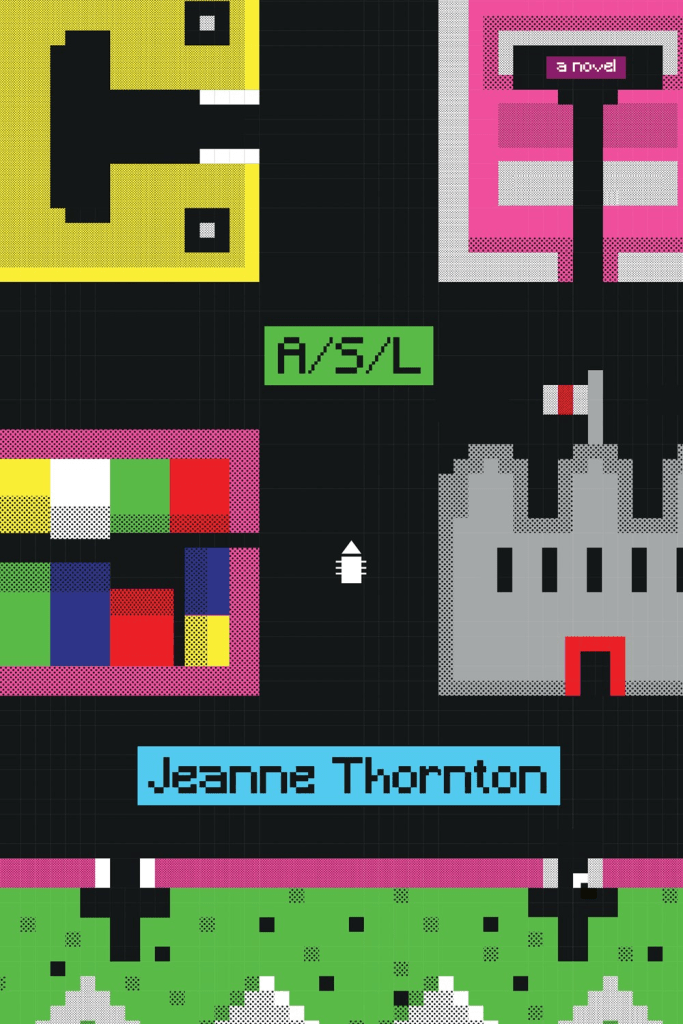
Best Transfeminine Fiction – A/S/L by Jeanne Thornton
Date: April 1st, 2025
Publisher: Soho Press
Genre: Literary Contemporary
Website: https://fictioncircus.com/Jeanne/
Bluesky: @jeannethornton.bsky.social
Purchase: Bookshop
It is 1998; Lilith, Sash, and Abraxa are teenagers, and they are making Saga of the Sorceress, a game that will change everything, if only for the three of them.
18 years later, Saga of the Sorceress still exists only on the scattered drives of its creators. Lilith might be the first trans woman to ever work as an Assistant Loan Underwriter at Dollarwise Investments in Brooklyn. Sash is in Brooklyn as well, working as a research assistant and part-time webcam dominatrix. Neither knows that the other is there, or that Abraxa, the third member of Invocation LLC, is just across the Hudson River, sleeping on the floor of a friend’s grandparents’ Jersey City home. They have never met in person, and have been out of touch for years, but none have forgotten the sorceress, or her quest, still far from finished.
This new book by Lambda Literary Fellow Jeanne Thornton, one of trans America’s brightest literary stars, queers our notion of nostalgia as it expertly blends literature with technology.
2025 was the year of the transfeminine literary-contemporary novel, and A/S/L just might be the best novel in the genre to date.
A/S/L is a character-driven novel, centered around its main trio of struggling trans women living in and around New York City in their mid-30s. It has all of the tropes and dressing of the Sad Girl Trans Lit movement of the 2010s, but Jeanne Thornton’s tour-de-force fourth novel feels like the natural evolution of that genre, a celebration of everything that made Topside-era trans litfic great. Monumental in both scope and execution, A/S/L is raw and heartbreaking and tender, with prose as sharp as a knife and a plot never pulls its punches. Abraxa is the best depiction of trans homelessness and precarity that I’ve ever read in trans fiction – she’s treated with dignity and agency, and the way the prose and plot structures around her tragic arc is a masterclass in both characterization and emotional storytelling.
A new high water mark for the trans realism movement, A/S/L is Thornton’s best novel to date – and that’s from an author who won the Lambda Award for Transgender Fiction in 2022. A/S/L deserves every ounce of praise, and it’s my pleasure to give it TFR’s most prestigious award, Best Transfeminine Fiction of 2025.
Shortlisted with Distinction: Woodworking by Emily St. James
Shortlisted: A Rotten Girl by Jemma Topaz; Stag Dance by Torrey Peters
Longlisted with Distinction: Magica Riot: Full Bloom by Kara Buchanan; A Mask for the Sun by Kay F. Atkinson; Black Flame by Gretchen Felker-Martin
Longlisted: Lessons in Magic and Disaster by Charlie Jane Anders; Disappoint Me by Nicola Dinan; Glitch Girl! by Rainie Oet; Machines of Consent by Sophia Turner; Keeping the Peace by Tris Husband; One of the Boys by Victoria Zeller; A Hungry Light by Zin Nabelle
Distinction: Autumnal Conductor by Lhuzie Fénix
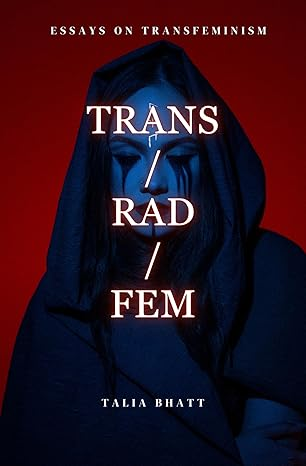
Best Transfeminine Nonfiction – Trans/Rad/Fem by Talia Bhatt
Date: January 24th, 2025
Publisher: Self
Genre: Trans Theory, Feminist Critique
Website: https://taliabhatt.com/
Bluesky: @taliabhatt.itch.io
Purchase: itch.io
Can a synthesis of trans liberation and feminism be easily arrived at? This collection asserts that, as a matter of fact, we possessed the answer to that question decades ago.
Second-Wave feminism is, today, nearly synonymous with ‘transphobia’. Any mention of this era or the movement of ‘radical feminism’ conjures images of feminists allying with right-wingers and the authoritarian state, providing legal justification for outlawing gender-affirming care and spreading deeply evil caricatures of trans women to rationalize their exclusion as feminist subjects. In the ensuing struggle to reconcile trans rights with feminism, the specter of the trans-exclusionary radical feminist has often reared its head in opposition. One may be tempted to conclude that the Second Wave, as a whole, has done irreparable harm to feminist, queer and trans politics, and must be discarded entirely.
But is that truly the case?
Radical feminism also is responsible for repudiating bioessentialistic notions of gender with theories that place it as a firmly social phenomenon. It gave us the language to describe patriarchy as a regime of mandatory heterosexual existence and dared to dream of a post-gender existence long before anyone spoke the phrase “breaking the binary”. Modern transfeminism owes much to radical feminist theory, and despite all propaganda to the contrary, the two schools of thought may be far more allied than believed.
This series of essays aims to reconstruct and reintroduce the radical feminist framework that its misbegotten inheritors seem determined to forget and in doing so boldly makes the claim that transfeminism, far from being antagonistic to radical feminism, is in fact its direct descendant. It shows how a comprehensive social theory of transsexual oppression flows almost naturally from radical feminist precepts and dares to declare that a materialist, radical transfeminism is the way forward to seize the foundations of patriarchy at the root.
If there’s one book that defined 2025, it’s Trans/Rad Fem. Talia Bhatt’s searing manifesto is the single most popular work of transfeminist theory since Julia Serano’s Whipping Girl nearly two decades ago in 2007. In a year of institutional capitulation, there were few things that felt more radical than the simple act of refusal – but that’s exactly what Trans/Rad/Fem demands of its reader: “I refuse to be a man.” This is the book we needed this year; a book that gave us vocabulary to fight back, to articulate the endless waves of dehumanizing transphobia pouring out of Western governments and courts, to build a global solidarity between Anglophone trans communities and third-sexed trans women from around the world. What Talia Bhatt demonstrates here more than anything else is conviction, the unyielding fire that forms the base possibility for building a better world.
Amidst violent betrayal, cis apathy, and crushing political defeats, Trans/Rad/Fem gave us the most powerful gift that a work of nonfiction can: hope.
Oh, yeah – and this category shattered last year’s record for the biggest blowout. With a 42-vote margin, Trans/Rad/Fem isn’t just the consensus pick for the Best Nonfiction of the year; it proved that no other 2025 release came anywhere close.
Shortlisted with Distinction: Gendertrash from Hell: The First Print Collection of the Zine that Changed Everything by Mirha-Soleil Ross
Shortlisted: Marsha: The Joy and Defiance of Marsha P. Johnson by Tourmaline; Authority by Andrea Long Chu; Before Gender: Lost Stories from Trans History, 1850–1950 by Eli Erlick; Love in Exile by Shon Faye
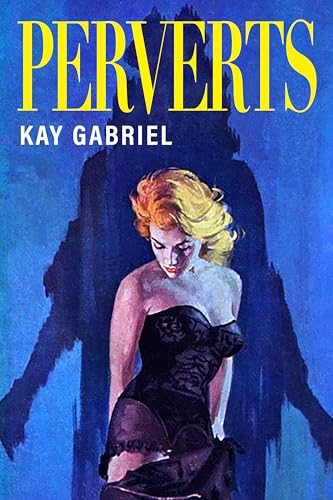
Best Transfeminine Poetry – Perverts by Kay Gabriel
Date: September 30th, 2025
Publisher: Nightboat Books
Website: https://www.kaygabriel.com/
Instagram: @unit01barbie
Purchase: Amazon
Perverts traverses the psychic landscapes of Kay Gabriel and her community of friends, writers and organizers, piecing together a collective dream that both mirrors and transforms waking life.
Against the backdrop of the anti-trans panic, Perverts explores desire as a political problem. It asks two questions at the same time: whose desire is understood as dangerously excessive? And—a classic organizer’s question—how do we turn what we have into what we need to get what we want? Synthesizing her own dreams with those of her friends, Kay Gabriel’s Perverts is an exercise in turning private experience into shared consciousness and illicit desire into common cause.
“[W]ho writes an epic poem in the 2020s?” Kay Gabriel asks at the beginning of her eponymous poem “Perverts,” the sprawling 75-page piece that takes up the majority of her third poetry collection. The answer – ‘Perverts’ – takes us across a sprawling landscape of shared dreams, millennial friendships, and a mosaic life lived in drifting images and motifs. Perverts is notable as an experiment in collaborative storytelling, emerging less as the project of a lonesome poet insomuch as the shared fantasia of a densely woven community. The characters in “Perverts” are real people; and Gabriel positions herself as the quiet mouthpiece for their unspoken thoughts, artfully drawing out the irrealis of half-remembered dreamstates with playful spacing and an engrossing contemporary voice that reads sleek and modern. Though perhaps overshadowed by its heftier sister, Gabriel’s second and final poem “TRANNIES, by Larry Kramer” helps to air out the epic tone of “Perverts,” with doubled spacing and a sampling of literary criticism to end the book.
Perverts is ambitious and contemporary, and for all these reasons, I chose to break the tie for Best Transfeminine Poetry of 2025 in its favor.
Shortlisted with Distinction: Glitch Girl! by Rainie Oet
Shortlisted: a body more tolerable by jaye simpson; Local Woman by jzl jmz; Sage by Yaffa As
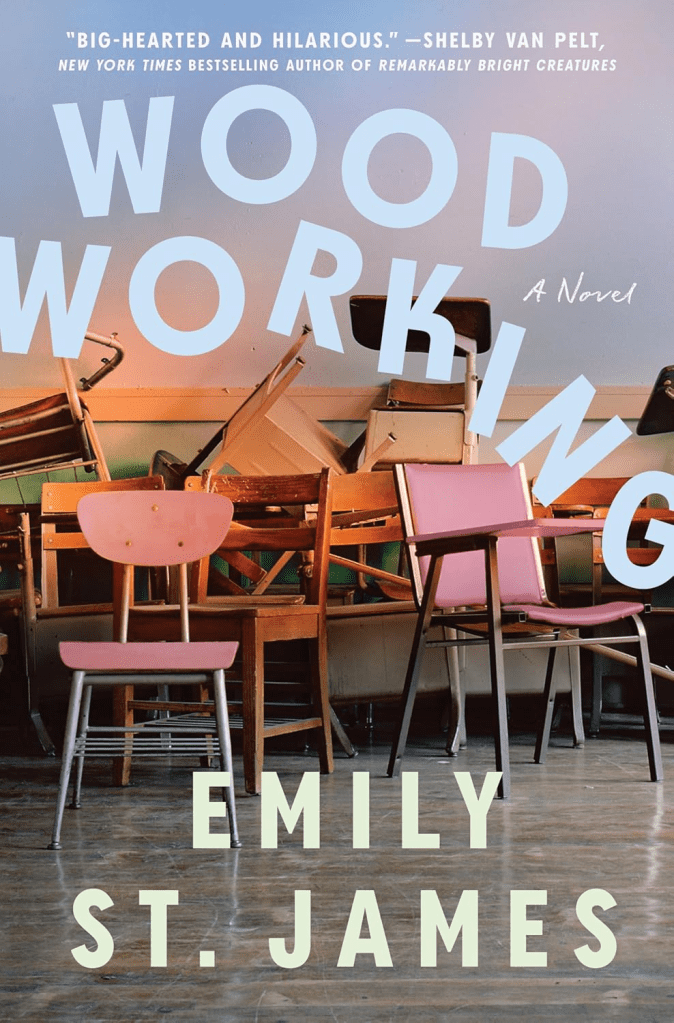
Best Transfeminine Debut – Woodworking by Emily St. James
Date: March 4th, 2025
Publisher: Crooked Media Reads
Genre: Literary Contemporary
Website: https://episodes.ghost.io/
Bluesky: @emilystjams.bsky.social
Purchase: Bookshop
Erica Skyberg is thirty-five years old, recently divorced—and trans. Not that she’s told anyone yet. Mitchell, South Dakota, isn’t exactly bursting with other trans women. Instead, she keeps to herself, teaching by day and directing community theater by night. That is, until Abigail Hawkes enters her orbit.
Abigail is seventeen, Mitchell High’s resident political dissident and Only Trans Girl. It’s a role she plays faultlessly, albeit a little reluctantly. She’s also annoyed by the idea of spending her senior year secretly guiding her English teacher through her transition. But Abigail remembers the uncertainty—and loneliness—that comes with it. Besides, Erica isn’t the only one struggling to shed the weight of others’ expectations.
As their unlikely friendship evolves under the increasing scrutiny of their community, both women—and those closest to them—will come to realize that sometimes there is nothing more radical than letting the world see who you really are.
It’s rare that a novel can capture the zeitgeist, but Woodworking truly the right book at the right moment. The debut novel from Emily St. James, longtime television journalist and community mainstay, Woodworking follows the story of two trans women in South Dakota who form an unlikely inter-generational friendship. In some ways it’s a classic high school semester novel; but in a year where trans teachers are stigmatized and losing jobs across the United States, St. James’ debut poses an essential perspective on platonic trans relationships and what it means to be trans in the current academic environment. The central thesis of the book is a refutation to the oversexualization of trans women in popular culture, peeling back the hysteria around ‘trans in schools’ to dig into the lived reality for trans students and teachers who persist through the discrimination. Woodworking is a wonderful novel with great characters and a big heart, and I’m very happy to announce it as the Best Transfeminine Debut of 2025.
Shortlisted: The Zeus Constant by Callisto Khan; One of the Boys by Victoria Zeller; Autumnal Conductor by Lhuzie Fénix; Herculine by Grace Byron; Flower of the Underworld by Cirice Gray; Keeping the Peace by Tris Husband; Glitch Girl! by Rainie Oet
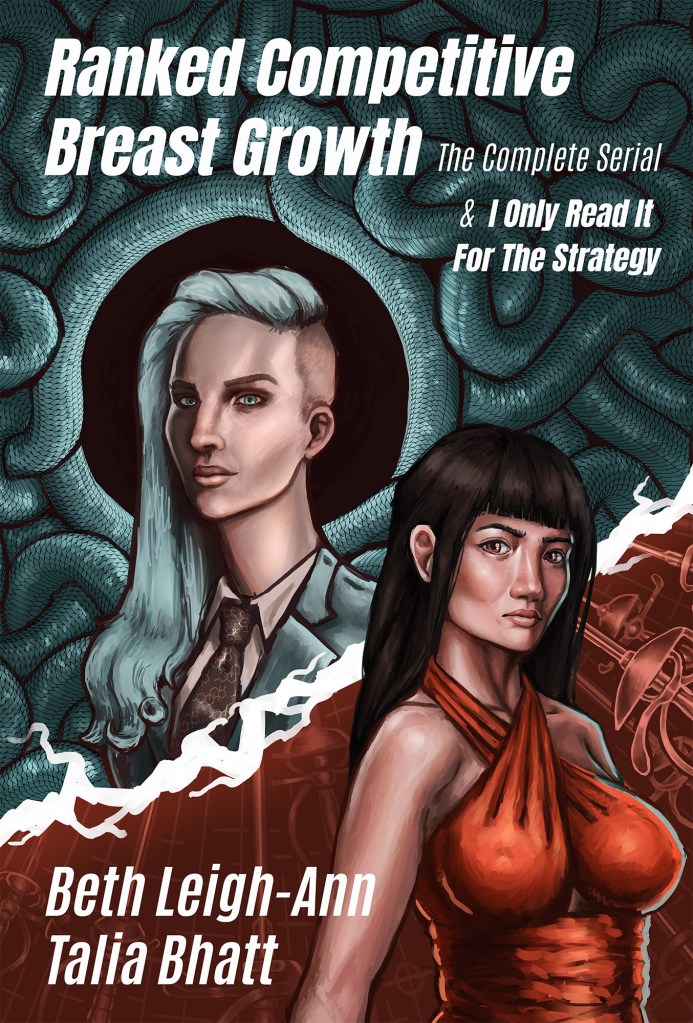
Author of the Year – Talia Bhatt
Titles Published in 2025: Trans/Rad/Femme (Self, 1/24/25); Ranked Competitive Breast Growth: The Complete Serial with Beth Leigh-Ann (Self, 10/6/25)
Other Notable Work: Ongoing serialization of Ranked Competitive Breast Growth with co-author Beth Leigh-Ann; feminist critique on the Trans/Rad/Fem Substack blog, including ongoing work in the “Understanding Transmisogyny” series, “Degendering and Racialization,” and “Intersectional Antifeminism;” co-host of the Cracked Ivory podcast with Emma Zakharuk covering feminist issues
Major Awards: Nine TFR Awards (Best Nonfiction 2025 & Outstanding Trans Theory 2025, Trans/Rad/Fem; Best Web Serial/Fanfiction 2025 & Best Character 2025, Ranked Competitive Breast Growth; Author of the Year 2025; Outstanding Academic 2025; Best Nonfiction 2024 & Outstanding Trans Theory 2024, “The Third Sex;” Outstanding Romance 2024, Dulhaniyaa)
Website: https://taliabhatt.com/
Bluesky: @taliabhatt.itch.io
Purchase: Trans/Rad/Fem, Ranked Competitive Breast Growth
On February 6th, 2025, approximately thirteen days after publishing the biggest work of nonfiction of the year, Talia Bhatt posted the following on Bluesky: “As I lean more into nonfiction, I’m going to engage less here on a personal level […] So, announcing that I’m not really a fiction writer for the foreseeable future.” This was completely false, as Talia would go on to co-write with Beth Leigh-Ann one of the most popular works of fiction this year, the blockbuster Scribblehub serial Ranked Competitive Breast Growth, which will win two awards tonight and has amassed 429,000 views online.
Or, as Talia put it a few days ago, “Fiction was not done with me.”
2025 will go down as the year that Talia Bhatt managed to have both the most popular work of nonfiction and the most popular work of fiction at the same time, at least for a few weeks this summer when RCBG began to hit the popular mainstream. In addition, Talia also founded and co-hosted the podcast Cracked Ivory with fellow author Emma Zakharuk, a feminist talk show that dug into political issues of sex and gender. Her work on next year’s Brown/Trans/Les has been publicly documented on her Substack, with several soon-to-be chapters already available to read. And even when she wasn’t making something new, Talia’s presence on social media was a community mainstay, keeping up with the ongoing geopolitical cataclysms with wit and acerbic insight.
With more award wins tonight than any other author, Talia Bhatt is the clear choice for 2025’s Author of the Year. Her work was an essential part of this year’s transfeminine culture.
Shortlisted: Jemma Topaz, Jeanne Thornton, Kara Buchanan
Indie Press of the Year – LittlePuss Press
Location: Brooklyn, NY, United States
Most Notable 2025 Releases: Worthy of the Event by Vivian Blaxwell; Gendertrash From Hell: The First Print Collection of the Zine That Changed Everything ed. Mirha-Soleil Ross and Cat Fitzpatrick; Realistic Fiction by Anton Solomonik
Website: https://www.littlepuss.net/
Why We Nominated Them: After years of hard work spent navigating the aftermath of Topside Press, 2025 was the year that LittlePuss Press came triumphantly into its own. Casey Plett and Cat Fitzpatrick’s press put out three books this year, two by transfeminine authors and all three of them received excellently by the industry at large.
In March, Worthy of the Event and Realistic Fiction were released on the same day in a double-header phenomenon, kicking off a major book tour for Blaxwell across the United States and Canada. Worthy of the Event is among the most significant pieces of Australian transfeminine literature ever published, and likely represents the biggest publishing success by an Australian trans author to date. Not to be outdone, LittlePuss would publish a paperback edition of the revolutionary underground zine Gendertrash from Hell in November, bringing an essential piece of 90s trans counterculture to a literary mainstream for the first time; an invaluable addition to the trans nonfiction canon and our literary historical record. The amount of editorial and archival labor that Cat Fitzpatrick did is pretty mindblowing; I would urge you to read this article about it if you’re curious.
In addition to their publishing output, LittlePuss also ran a successful mutual aid holiday giveaway last December to connect their work with fans who couldn’t afford it otherwise. On top of publishing three titles, their team was also engaged in editing several more, including an impressively robust marketing campaign for Aoife Josie Clements’ forthcoming debut novel Persona. It’s rare for any author to receive this much marketing help from their publisher in 2025, so for the LittlePuss team to take such an active marketing role with this many projects on their plate is insanely impressive for a four-person outlet.
For all of these reasons, LittlePuss Press has earned a nomination for the 2025 Indie Press of the Year award.
While Trans/Rad/Fem may have had the biggest blowout, Casey Plett and Cat Fitzpatrick’s LittlePuss Press received more votes than any other nominee! Of our 277 voters this year, 78 ballots voted for LittlePuss, 26% of all total ballots. It’s more than well-deserved. After years of slowly building prestige and establishing their style and voice, LittlePuss’ output exploded this year, with three big releases each worthy of mention in their own right. With last year’s addition of new editor Emily Zhou and this year’s addition of assistant Sasha Karbachinskiy, LittlePuss is poised to have an even bigger year in 2026, with no fewer than four titles planned for the calendar year. For a four-person outlet, the output and quality is simply unmatched in the trans publishing sphere.
I also want to take a moment to shout out Lilac Peril Press, our other nominee for this award and the runner-up in votes. Even though LittlePuss won the category by a commanding margin, Lilac Peril’s vote tally of 41 ballots would have been more than enough to win the award in 2024. Their distinction tonight is hard-fought and well-earned, and you should absolutely go read their anthology TABOO if you haven’t already.
Congratulations to both LittlePuss and Lilac Peril – it’s been a great year for trans indie publishing, and it’s my honor to celebrate it with you both.
Nominated with Distinction: Lilac Peril Press
Genre Categories
Outstanding Contemporary Fiction – A Rotten Girl by Jemma Topaz
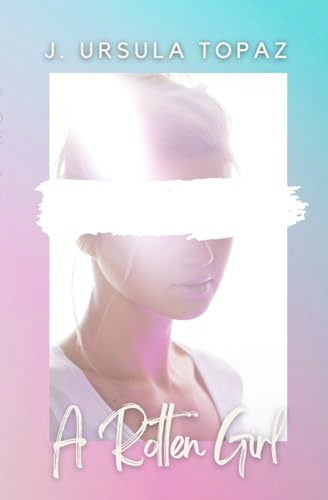
Date: January 2nd, 2025
Publisher: Self
Genre: Literary Contemporary, Satire
Website: https://jemmatopaz.carrd.co/
Bluesky: @jemma.bsky.social
Purchase: itch.io
Pearl is a trans woman writer on the cusp of literary greatness… or so she thought until her agent informs her that her first book has sunken like a stone for its failure to “connect with normal people”. Normal people. Heterosexual people. Cisgender people.
Jaded from the knowledge that this industry rarely lets in people like her, Pearl comes up with a plan: write a commercial male/male romance. Except the market’s all about authenticity these days, isn’t it? The plan gets complicated, drawing her into a web of escalating deceptions where she poses as a cisgender gay man and comes ever closer to destroying all her relationships, and her own life.
A Rotten Girl is a satirical drama that explores gender, public personas, the commodification of queerness—and the reality of what it is like to be a trans woman in a hostile world.
Of the four shortlisted novels for Best Fiction this year, three were phenomenal contemporary novels that went neck and neck for this category. I was really hoping that the winner of Outstanding Contemporary would be the novel that didn’t win Best Fiction or Best Debut, and I am so satisfied to say that’s exactly what happened. This one was a thin margin, with the lead changing nearly every other ballot during the voting process, so this win was anything but a given, and very well-deserved.
A Rotten Girl is the statement novel that was missing from Jemma Topaz’s decorated oeuvre. Taking inspiration from R.F. Kuang’s Yellowface, it follows the story of a transfemme author who masquerades as a gay man to sell a steamy M/M romance primarily to middle-aged cis women. 2025 was the year that the fujoshi (a Japanese term for female superfans of yaoi manga) went mainstream, and in a cultural moment when Heated Rivalry, a gay hockey romance, is the hottest show in the world thanks to cis women, Jemma’s depiction of mainstream gay romance fans feels more prescient than ever. But A Rotten Girl is more than just a social commentary on the moment of queer romance through the cis mainstream; it’s also a biting satire of what I described in my review as the ‘transfeminine pariah complex,’ the way that the trans community habitually consumes its own at the first signs of problematic behavior. Topaz’ dry prose can be riotously funny, but don’t get too comfortable – at the end of the day, you might just find yourself the butt of the joke.
Distinction: Woodworking by Emily St. James; A/S/L by Jeanne Thornton
Outstanding Short Story – “Agent Provocateur” by Cassandra Spencer

Date: October 14th, 2025
Publisher: Imposter Review
Genre: Literary Contemporary
Website: n/a
Bluesky: https://bsky.app/profile/hotsmartgirl.bsky.social
Read the Story: Imposter Review
My timeline is full of angry trans women. Angry at their representatives, angry at journalists, angry at right-wing posters, angry at each other for being the wrong kind of angry. A girl I follow in Idaho is reposting her GoFundMe to move to California because her state has cut off Medicare coverage for trans health, and her mentions are full of girls yelling at her that it’s about to be fucked in California, too. Andi is on here, arguing with a journalist at the Washington Post for saying the bill isn’t a ban. Cis leftists are posting about the bill, they’re posting about genocide, they’re complaining about journalists. The journalists are posting about journalists.
I don’t feel like posting.
I don’t feel like looking for a journalist.
I feel like going for a walk.
This year’s short story nominees were full of debut authors, and our winner here is no exception. This is Cassandra Spencer’s first publication ever, and it’s a impressive opening statement – raw and well-articulated, if not a little rough around the edges. It has been a bad, bad year to be trans in the United States of America. In a certain sense, a short story about a trans woman getting fucked a Republican congressman for thousands of dollars while agonizing over his extremely transphobic tweets, the loss of healthcare access, and classified drone strike materials she found in his bedroom feels like a microcosm of 2025. The narrator is submerged in quotidian horror. It all comes across here – the silent fury, the learned helplessness, the bitter apathy. The quiet despair of a woman who has completely surrendered herself to an abusive system.
“Agent Provocateur” is a bold piece of fiction, and a strong first step toward a promising career. This year’s awards put both Cassandra Spencer and Imposter Review on my radar, and I for one am excited to see what she writes next.
Distinction: “The Stages of Contagious Disease” by Aster Olsen; “Oh Time Thy Pyramids” by Ann LeBlanc
Outstanding Individual Poem – “The Returns” by JD Pluecker
Date: May 2025
Publisher: F Magazine
Genre: Vignettes
Website: https://jdpluecker.com/
Bluesky: @jdpluecker.bsky.social
Read the Poem: Website
She spent so many years translating but now she has largely stopped. She has stopped because she is no longer willing to translate as in to replace or substitute or stand in for. Or she just doesn’t want to. A question of desire. She does not pass through and neither does her language. Pasar de una lengua a otra, no, imposible, se dice sola en la cama. Her language, her body, her bodies propagate and multiply.
Of the four ties I had to break this year, this category was by far the most challenging. Of the two tied nominees, one was a perfect technical application of a concise idea, and the other was a sprawling exploration of a personal relationship to language in all its messiness. How the hell are you supposed to compare that? Ultimately, this mostly came down to my personal preference, and by my token, “The Returns” ekes the slightest edge. I suspect that if you asked ten people to break this tie, you would get five votes for each poem.
Writing across ~41 nebulous vignettes, JD Pluecker’s “The Returns” is a fascinating meditation on translation, borders, and the liminal spaces of Texas’ anti-trans hellscape. What follows reads a bit like a notebook or a journal, following Pluecker’s thoughts from theory text to theory text, articulate thoughts to fractured nothings, slipping into Spanish at the fleeting margins, then back again. “Why make the goal be to write something that no one can understand,” Pluecker writes. “She didn’t need to be understood, but she didn’t need to be not understood either.” There’s a persistent sense of self-revision throughout the poem, the narrator’s ongoing struggle between a refusal to translate and translation as the base condition of writing. Translation occurs between the spaces, Vignette 14.5 – a breathless joining of the body and translation through repetition, punctuated by the reveal that the paragraph was once about writing, the word “translate” substituted through find and replace.
I appreciate “The Returns” not just on its own merits, but as a meta-commentary on JD Pluecker’s prolific career as a translator of Latin American feminist texts. Pluecker is responsible for Semiotext(e)’s 2018 translation of Gore Capitalism, among others. In a year where no translated texts managed to break into the transliterary mainstream, I’m deeply intrigued by the other major nomination that Pluecker had in the Outstanding Translated Work category for A We Without a State by Yásnaya Elena Aguilar Gil, an indigenous Mexican activist whose writing deserves far more attention from an Anglophone audience. “The Returns” is informed by Pluecker’s seventeen years of work as a professional translator, which add nuance and weight to the liminality of her verse.
I also want to take a moment to acknowledge the other poem in this tie, Callie Jennings’ “When I Try to Verify Why They Carpet Driveways After the Rain, Google Keeps Feeding Me Distressingly Hot Factoids About Hermaphroditic Earthworm Sex” (yes, that’s the real title). Aside from obviously having the best title of the year, “Hermaphroditic Earthwork Sex” excels as an incredibly tight and well-crafted piece of free verse, a vivid evocation of an earthworm writhing through the dirt after a rainstorm. It absolutely deserves distinction in this category, and I hope that you’ll check out both poems!
Distinction: “When I Try to Verify Why They Carpet Driveways After the Rain, Google Keeps Feeding Me Distressingly Hot Factoids About Hermaphroditic Earthworm Sex” by Callie Jennings; “This Poem Does Not Support Palestine Action” by Josie Giles; “I’m Not a Lumberjack and I Don’t Smoke, So Driving is the Most Dangerous Thing I Do” by Rosalind Shoopmann
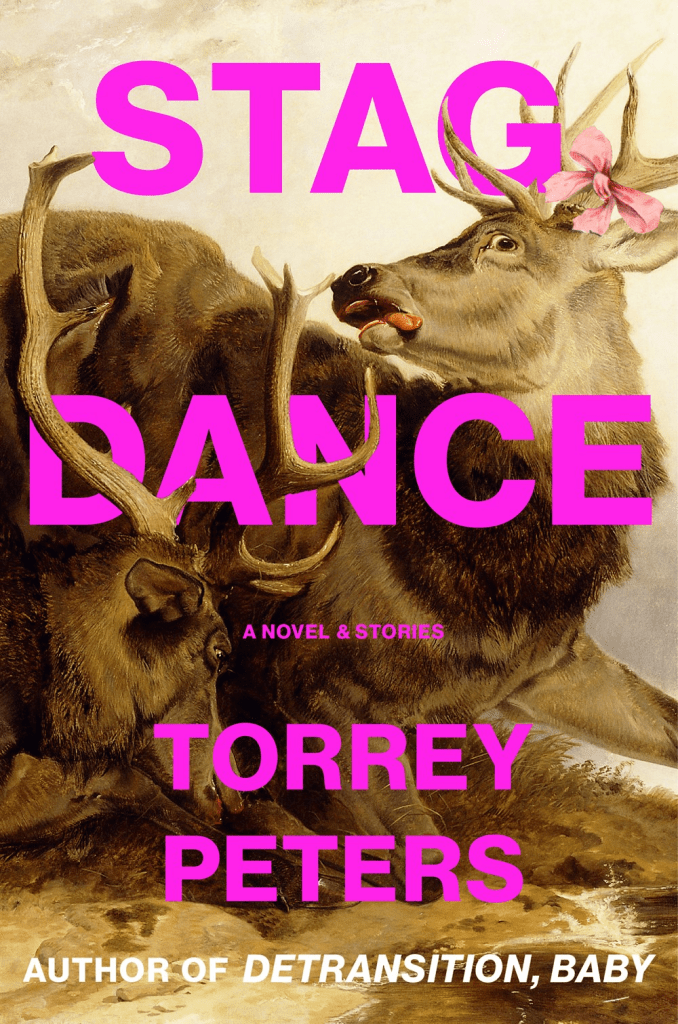
Outstanding Shortform Collection/Anthology – Stag Dance by Torrey Peters
Date: March 11th, 2025
Publisher: Random House
Genre: Literary Contemporary, Historical, Science Fiction, Anthology
Website: https://www.torreypeters.com/
Bluesky: @torreypeters.bsky.social
Purchase: Bookshop
In this collection of one novel and three stories, bestselling author Torrey Peters’s keen eye for the rough edges of community and desire push the limits of trans writing.
In Stag Dance, the titular novel, a group of restless lumberjacks working in an illegal winter logging outfit plan a dance that some of them will volunteer to attend as women. When the broadest, strongest, plainest of the axmen announces his intention to dance as a woman, he finds himself caught in a strange rivalry with a pretty young jack, provoking a cascade of obsession, jealousy, and betrayal that will culminate on the big night in an astonishing vision of gender and transition.
Three startling stories surround Stag Dance: “Infect Your Friends and Loved Ones” imagines a gender apocalypse brought about by an unstable ex-girlfriend. In “The Chaser,” a secret romance between roommates at a Quaker boarding school brings out intrigue and cruelty. In the last story, “The Masker,” a party weekend on the Las Vegas strip turns dark when a young crossdresser must choose between two guides: a handsome mystery man who objectifies her in thrilling ways, or a cynical veteran trans woman offering unglamorous sisterhood.
Rounding out our quartet of shortlisted Best Fiction nominees is Torrey Peters’ sophomore book Stag Dance, which collects Peters’ two classic 2010s-era novellas with two new stories, “Stag Dance” and “The Chaser.” Stag Dance is notable as a triumphant showcase and synthesis of Peters’ career-to-date, from her self-published origins with “Infect Your Friends and Loved Ones,” to the COVID/Detransition, Baby style realism of “The Chaser,” to the tradpub glitz of “Stag Dance” representing her current ascendancy as the queen of transfeminine chic. Throughout, Peters is in her usual top form, with immaculately crafted and polished prose and her signature edgy approach to trans sociality and relationships. It’s a collection that ties together her career up to this point, and sets up the foundation for the next era of Torrey Peters yet to come.
Distinction: TABOO by Andrea Morgan and Luke Sutherland
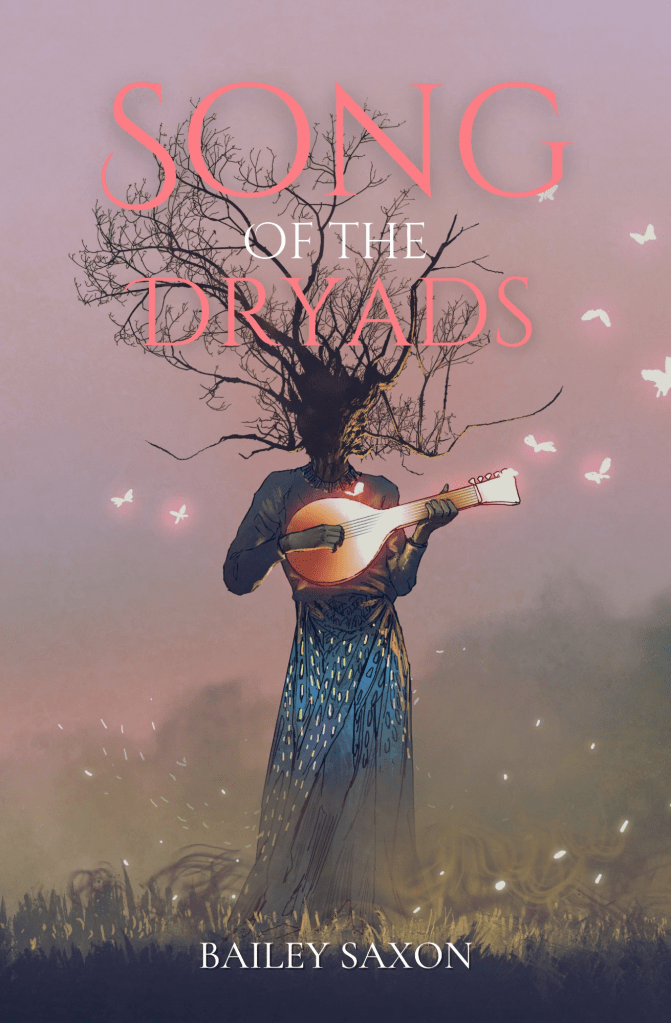
Outstanding TG/TF or Transition Fantasy – Song of the Dryads by Bailey Saxon
Date: April 1st, 2025
Publisher: Self
Genre: Fantasy, TG/TF, Romance
Website: https://www.patreon.com/BaileySaxon
Bluesky: Link
Purchase: itch.io
Gayle is a lonely man. A strong and well respected one, but alone nonetheless. He decides to put this strength to good use and investigate a string of suspicious hunter deaths. Each case reeked of foul play from more experienced hunters, numerous newbies going missing after going on request to gather materials from the forest with them. He ventures in, the determination to save who he can overriding his fear.
Bianca, the new girl in the forest, has a dark secret that she can’t let a single Dryad in their secluded sequoia grotto know. They all love and respect her, but she worries that kindness could disappear all in a matter of seconds. Dryads are known for their affinity to nature, so she strives to make herself indispensable by helping everyone out. They saved her from being alone, and she can’t tell them why or she may lose the community she so desperately wanted all along.
Follow the titanium egg of the century in her magical journey to find herself, her family, and her own definition of the meaning of life.
2025 was a year full of creative dips into the fantasy creature backlog, from Lucy Stubbs’ dullahan heartthrob to Zin Nabelle’s horned deification cult to Vaela Denarr’s sentient bloodthirsty swordshards. But no fantasy transformation was quite as strange or inventive as the six-legged flowering dryads of Bailey Saxon’s debut novel Song of the Dryads, a tale of forced plantification and lesbian panic that’s truly unlike anything I’ve read from the genre. Song of the Dryads is notable not only for its unique transformation – a rarity in a genre that’s seen everything under the sun – but for Bailey’s confident jump straight into the deep end of self-publishing. There are so many TG/TF authors who never transition from online serials to published fiction, and it’s a huge testament that we got Song of the Dryads as a published novel straight off the bat. Bailey Saxon had a big debut year, publishing three books spanning half a dozen genres and styles, and I’m very excited to recognize that tonight with the award for Outstanding TG/TF or Transition Fantasy.
Distinction: A Hungry Light by Zin Nabelle
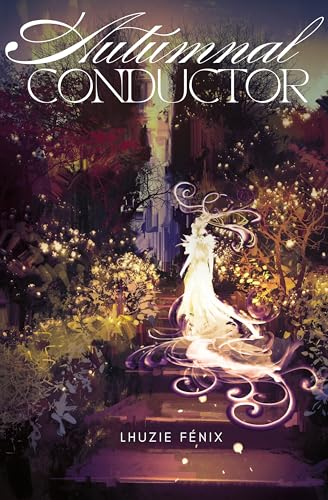
Outstanding Fantasy – Autumnal Conductor by Lhuzie Fénix
Date: 3/3/25
Publisher: Cybernetic Coven
Series: The Flower Painter #1
Genre: Extremity, Mythology, Horror
Website: https://www.cyberneticcoven.com/
Bluesky: @strigarosa
Purchase: itch.io
Proserpina, the Flower Painter, is interrupted by the flowering of the asphodel — a drab, ugly thing that defiles her domain and which drags her down to the Underworld, a realm enemy to all that she is.
To survive, she will have to seek allies among the dead: a warden of this prison, the grinning poison king, a woman that conned better gods than you and got away with it, the world-conquering dragon, a knight sworn to Her, and the rejected sludge of dying humanity.
2025 was an incredible year for transfeminine fiction, but if there’s one book that spoke to me more than any other, it’s Autumnal Conductor, the debut novel from Mirandese author Lhuzie Fénix. This book was my personal vote for Best Fiction, and despite being significantly less read than other top contenders in the category, it managed to pull off an extremely respectable 6th place overall in Best Fiction votes despite missing out on the Longlist completely. So don’t let its absence from the top categories fool you – this was, hands down, one of the best works of literary craftsmanship this year, and I would urge anyone who hasn’t heard of it to pick it up for a read.
The prose of Autumnal Conductor is mind-bending and deeply experimental, warping and twisting not only its phantasmagoric vision of the Underworld, but the perspectives and bodies of the characters within it. The dialogue dances between ornate and vernacular; it sweeps the reader away into an unstable world, into a collapsing mind and a setting that sloughs apart; it is at once a breathless mythological pastiche and a plural commentary on altered mindstates, as playful with language as hostile. Lhuzie has a talent for making the English language feel unfamiliar in the best way, and it comes across on the level of syntax and word choice. It’s only a fantasy novel in the most technical sense – this novel is first and foremost a work of mythopoeia, and an exceptional one at that.
Autumnal Conductor is the most under-read book of the year, and my favorite novel of 2025. It’s my absolute delight to give it the Outstanding Transfeminine Fantasy award.
Distinction: Song of the Dryads by Bailey Saxon; Magica Riot: Full Bloom by Kara Buchanan
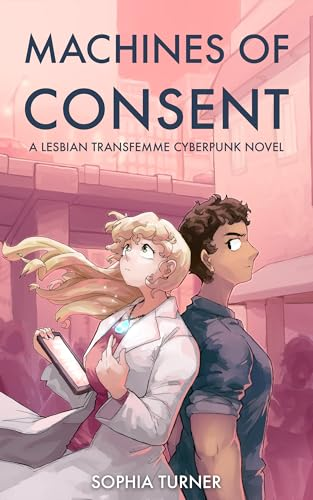
Outstanding Science Fiction – Machines of Consent by Sophia Turner
Date: October 7th, 2025
Publisher: Transistance Press
Genre: Cyberpunk, Thriller
Website: https://www.sophiajt.com/
Bluesky: @sophiajt.com
Purchase: itch.io
Dr. Jess Stockton is a scientist with high goals and even higher ambitions. Through her efforts, she has created a device based around consent which has revolutionised society and drawn no small amount of attention both good and bad.
Roh is a freerunning messenger for the underground with the solitary goal of survival. When tested in the lab for the consent device, she displays a very odd set of biometrics which should be impossible in humans.
Machines of Consent follows two trans lesbians in a sci-fi adventure as they find each other and try to escape an oppressive force bent to use them for nefarious ends. Both cyberpunk and spicy blockbuster, it’s a thrill ride from start to finish.
Do you consent to the heat?
One of the most exciting industry developments of the past year was the founding of Transistance Press, the first trans indie based in Australia. Both of Transistance’s titles this year came from Sophia Turner, one of two co-founders, and it’s a promising first effort from the press! Machines of Consent is a sex-positive cyberpunk thriller with big ideas about consent in society and dating culture, as well as its subsequent weaponization by a corporate apparatus that cares more about selling products than fostering a positive dating culture. It’s got some of the steamiest sex scenes of the year, paired with an action plot that feels like a Marvel movie at times. I’m very excited to see where Sophia’s work takes her next, both as an author and an editor, and it’s my pleasure to welcome Transistance Press to the debut trans indie class of 2025!
Distinction: A Mask for the Sun by Kay F. Atkinson
Outstanding Romance – Bottle Blondes by Rhiannon Swanson

Date: July 23rd, 2025
Publisher: Self
Genre: Eggfic, Romance
Website: https://www.patreon.com/transcect/home
Bluesky: @transcect.bsky.social
Read the Serial: Scribblehub
Seb has his life all settled. His classes are well planned, and he has standing plans every Friday night with his best friends. But when they convince him into a bit of makeup, everything flips upside down, and he finds himself hurtling down a road of self discovery he never, ever wanted to be on.
Speaking frankly, it’s been a terrible year for the trans romance genre. Not a single nominee received more than four votes across 277 ballots – and the category didn’t even come down to a tiebreak. The two big tradpub romances (Best Woman by Rose Dommu and Disappoint Me by Nicola Dinan) both majorly underperformed; none of the biggest names in the selfpub Kindle ecosystem (Lily Seabrooke, Olivia Lynd) were so much as mentioned in the voting process. Given this, perhaps it shouldn’t come as a surprise that the most exciting romance novel of the year was not a published book, but the latest work from one of the most exciting new talents working in the Scribblehub ecosystem, Rhiannon Swanson aka Transcect. I came across Swanson’s work for the first time last year with Under Stagelights, her major 2024 serial, and I’m very pleased to say that Bottle Blondes is a great step forward in both prose quality and plot structure.
Bottle Blondes is a fairly straightfoward fusion of your classic college sorority romance and a Scribblehub eggfic, but it’s the combination of the two that really makes this novel shine. The way that Swanson writes the simple sweet acceptance of Viola into her stereotypically Southern party girl friendgroup and her endearing crush on the college quarterback is deeply gratifying. For a book set at a South Carolina university, it’s such a hopeful and heartwarming take on trans acceptance in student life. There can be so much power in a romance novel with a simple metaphor, and the titular figure of the bottle blonde comes across as a really artful device for exploring trans acceptance. It doesn’t matter that Viola wasn’t born blonde like the rest of her friends – it represents who she is and wants to be, and her friends will be there to cheer her on along the way.
I will be eagerly awaiting the published edition of this book! Swanson is one of the most promising up-and-coming authors in the serial ecosystem; her work is too good to remain unpublished.
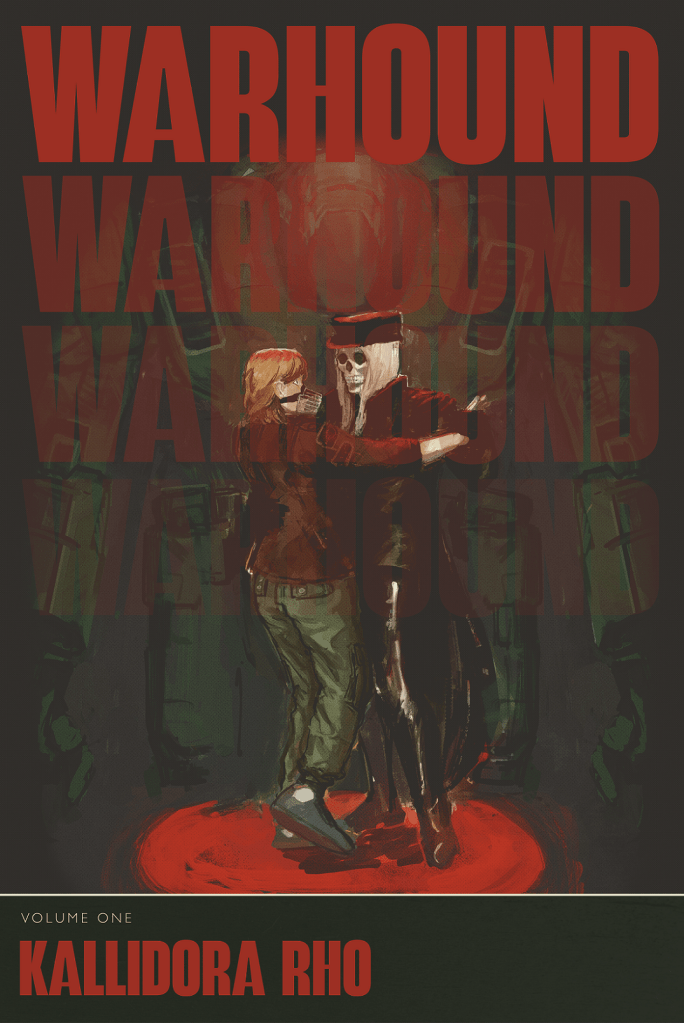
Outstanding Erotica – Warhound by Kallidora Rho
Date: July 21st, 2025
Publisher: Self
Genre: Mechsploitation, Netorare, Grimdark
Website: https://bio.mechsploit.me/to/@kallidorarho
Bluesky: @kallidorarho.bsky.social
Purchase: itch.io
Sartha Thrace, ace mech pilot, is always so confused. She’s a rebel, so why is she fighting on the wrong side? She’s a free woman, so why is she wearing a muzzle? She’s a hero, so why do her comrades treat her like a rabid dog? Sartha Thrace is so fortunate that her beloved Handler is always there to help her understand…
Once a hero to the rebellion, Sartha Thrace has been captured, brainwashed, and turned by the Empire she once fought against. During her captivity—and subsequent rescue—three other pilots find themselves transfixed by what has been done to her. Sergeant Kotys, an Imperial pilot bent on revenge and power. Leinth Aritimis, a young rebel who worships Sartha. And Kione Monax, a mercenary ace who shares with Sartha a strange, confused bond.
Each wants something from whatever remains of Sartha Thrace, but as they peer into the abyss within her, they soon find their own reflections staring back. And what of the sinister woman in black leather who holds Sartha’s leash?
I’m gonna be incredibly real – I have no idea how to explain this novel to a general audience.
Warhound by Kallidora Rho is the absolute epitome of the single most fucked thing you’ll ever find sexy. If you don’t know what “mechsploitation” or “handler/hound” or “NTR” means, I am absolutely not going to be the person who explains it to you; the basic gist is that this collection of erotic stories and novellas takes place in a grimdark fascist dystopia, where the military of the evil empire uses experimental technology to bind captured rebel pilots of giant mecha robots into sexual slavery and mental servitude. Warhound is an exploration of the darkest depths of human sexual psychology – every dimension of nonconsent – but it gleams like a piece of polished onyx. Between Rho’s excellent writing and the usage of nonconsent as a storytelling medium, Warhound is able to pose troubling questions about the nature of consent and desire, and the base motivations that drive our actions under conditions of absolute exploitation. It’s vile and twisted and sinfully delicious.
I would strongly recommend that you do not read this book unless you understand what you’re getting yourself into. This is hardcore Dead Dove: Do Not Eat erotica, and not for the faint of heart. But make no mistake: Warhound is the best work of transfeminine erotica published this year, and 100% deserving of this award.
Distinction: Essence of the Eye by Jemma Topaz; Sugar and Spice by Bailey Saxon
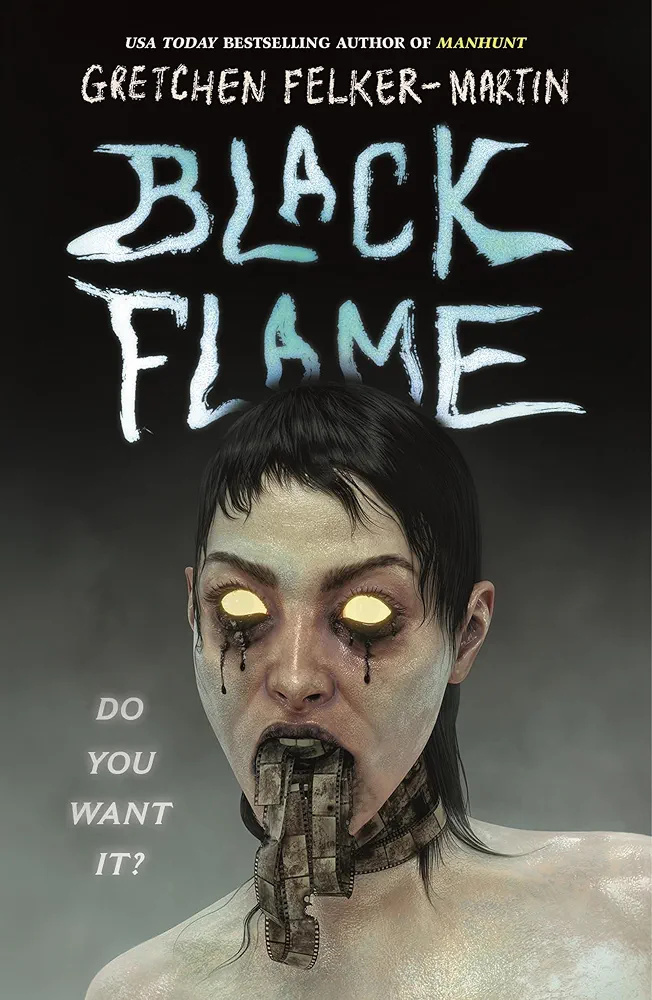
Outstanding Horror – Black Flame by Gretchen Felker-Martin
Date: August 5th, 2025
Publisher: Tor Nightfire
Genre: Psychological Horror
Website: https://www.patreon.com/scumbelievable
Bluesky: @scumbelievable.bsky.social
Purchase: Bookshop
The Baroness, an infamous exploitation film long thought destroyed by Nazi fire, is discovered fifty years later. When lonely archivist Ellen Kramer—deeply closeted and pathologically repressed—begins restoring the hedonistic movie, it unspools dark desires from deep within her.
As Ellen is consumed by visions and voices, she becomes convinced the movie is real, and is happening to her—and that frame by frame, she is unleashing its occult horrors on the world. Her life quickly begins to spiral out of control.
Until it all fades to black, and all that remains is a voice asking a question Ellen can’t answer but can’t get out of her mind.
Do you want it? More than anything?
Gretchen Felker-Martin has been on a meteoric rise over the past few years. After her debut novel Manhunt catapulted her into the horror mainstream, she’s been putting out consisently great novels on top of her myriad of other project, each better than the last. Nowehere is that more evident with Black Flame, Felker-Martin’s third novel, which is easily one of the best books of 2025 in any genre, period.
Black Flame may be the novel for our times – a excoriation of quisling participation in the modern fascist project, digging deep into the psychology of a Jewish woman who’s laid her bed with the Nazis. But Black Flame‘s primary achievement arrives on the level of prose. Felker-Martin writes with passion and a deft command of device; her scenes are threaded with a wonderfully prosodic tempo, weaving repetition into a plot structure heavily influenced by classic black-and-white cinema. Ellen’s film restoration work bleeds both into her decaying psyche and the decorated margins of the page, distorting her world to a 1930s bent. The fact that Black Flame has the best craftsmanship of any transfeminine paperback this year certainly doesn’t hurt; Tor Nightfire outdid themselves with the physical product of this book.
2025 was a fantastic year for transfeminine horror, and Black Flame is the absolute cream of the crop. While it may not be quite as scary as other nominees on the list, Black Flame is nonetheless a deeply harrowing read, with one of the nastiest conclusions of the year. A must-read for any fan of the genre.
Distinction: Moonflow by Bitter Karella; A Mask for the Sun by Kay F. Atkinson
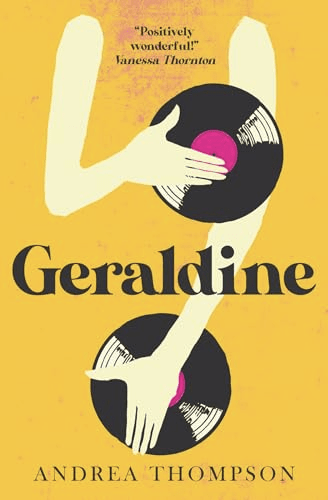
Outstanding Historical Fiction – Geraldine by Andrea Thompson
Date: March 4th, 2025
Publisher: Fremantle Press
Genre: Historical, Post-Colonial, Autofiction, Bildungsroman
Website: n/a
Instagram: @andreathompsonauthor
Purchase: Amazon
The story of a woman who changes the world that wants to change her. Geraldine is born with an adventurer’ s heart. Whether it’ s escaping from boarding school in Rhodesia, or buying hormones from the local speed dealer in Weston-super-Mare, Geraldine is open to all the world has to offer— even if the world doesn’ t quite know what to make of her. Arriving in Australia as an adolescent, Geraldine finds solace and self-discovery through music. As she grows into a woman, she not only inspires others but also learns to be accepted for who she truly is.
As the least-voted category on the whole docket, I’m always fascinated to go through the nominees for Outstanding Historical Fiction to find obscure gems in the pile. This year it’s Geraldine by Andrea Thompson, a debut novel from Western Australia, and the first true literary novel I’ve ever read from the region. Geraldine is the sort of book that sneaks up on you; it tells its coming-of-age story with dependable, workmanslike prose, painting a clear picture of Geraldine through her adolescence and young adulthood across a broad swathe of the decaying 1970s remnants of the British Empire. Thompson does a pretty good job at handling the post-colonial settings of Zambia and Rhodesia in the early chapters of the novel, a quiet and unflinching examination of the class and race dynamics implicit in Geraldine’s father’s prospecting job. But the novel really shines after Geraldine moves to Perth – Geraldine is based off the real history of the queer liberation movement in Western Australia, a history that Thompson directly participated in, and it’s a really fascinating glimpse into a queer history I knew absolutely nothing about prior to reading.
Distinction: Stag Dance by Torrey Peters
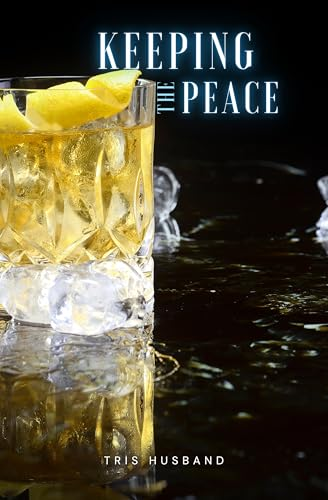
Outstanding Mystery/Thriller/Suspense – Keeping the Peace by Tris Husband
Date: October 16th, 2025
Publisher: Self
Series: Gunmetal Olympus
Genre: Science Fiction, Mystery, Noir, Mythology
Website: https://www.patreon.com/TrisHusband/
Bluesky: @trishusband.itch.io
Purchase: itch.io
Akakios, child of Diodotos, wasn’t the most reliable friend Isadora ever had. Xe tended to drop in unannounced, never really cared about what was going on in her life, and seemed to only ever want to drink at their favorite bar before disappearing again. So when xe showed up on her doorstep with a gun in xer hand, claiming that xer wife Pelagia had just been murdered, Isadora didn’t really know what to do.
With Akakios now dead for a crime xe may not have committed, and everyone from the Archon of Elysium to ruthless gangsters to xer dead wife’s family telling her to drop it, Isadora tried to just keep her head down, throwing herself into her work as a independent detective and entangling herself in the petty drama of one of Elysium’s most exclusive communities.
Unfortunately, if what she wanted was to avoid confronting Akakios’ dark past, the Valley was probably the last place in Elysium Isadora should have been.
One of the most radical developments in transfeminine publishing this year was the expansion of the Gunmetal Olympus series by Maria Ying (Devi Lacroix and Benjanun Sriduangkaew, and Callisto Khan from mid-2025) into an expanded universe that allows fans of the series to be compensated for writing novels in the setting. Beyond any term so vulgar as ‘fanfiction,’ the Gunmetal Olympus Expanded Universe is a boundary-smashing experiment against traditional notions of intellectual property; the dozen or so GO novels published this year represent something sui generis entirely, and bridges new possibilities for early-career authors trying to launch a career in indie trans publishing.
Of these experimental Gunmetal Olympus novels, the most successful is Keeping the Peace by Tris Husband, a compelling piece of detective noir fiction with stout prose and a glitzy mystique. Husband’s debut novel may take place in a cyberpunk mythology setting, but the DNA of the book still hails from the pulp origins of the detective and noir genres. Aside from being a solid genre yarn, Keeping the Peace is notable for its strong exploration of alcoholism and addiction, a thematic rarity in transfeminine fiction. The novel is reminiscent of Marvel’s Jessica Jones, both in tone and content; Isadora has a fabulous narratorial voice, and her charisma as a main protagonist is what carries this novel to excellence.
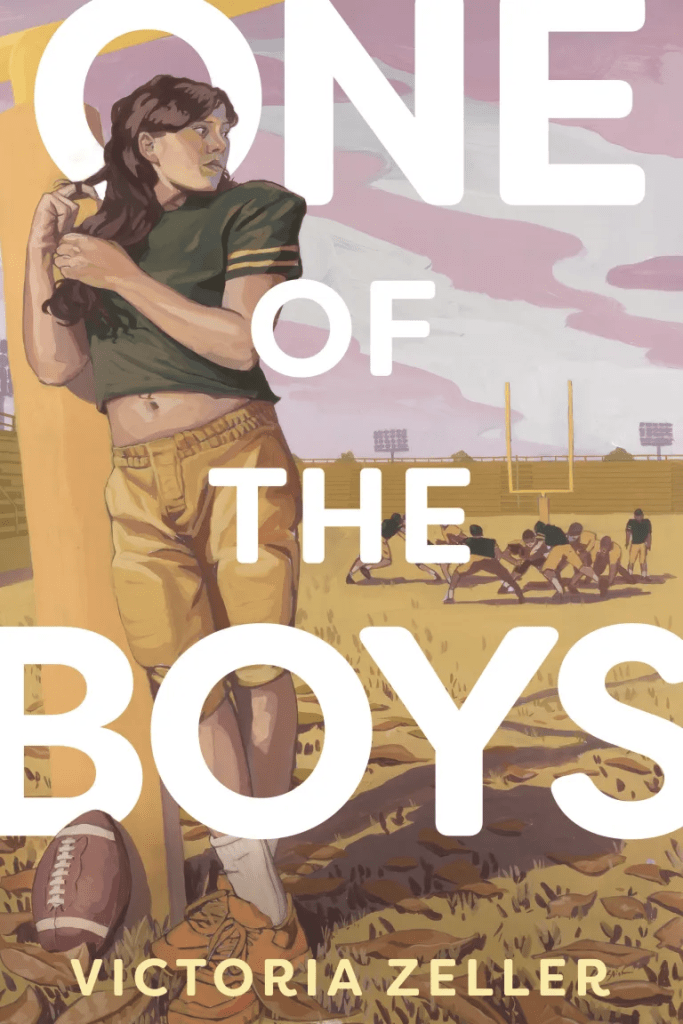
Outstanding Young Adult – One of the Boys by Victoria Zeller
Date: May 13th, 2025
Publisher: Levine Querido
Genre: Young Adult
Website: https://victoria.monster/
Bluesky: @dirtbagqueer.rocks
Purchase: Bookshop
Grace Woodhouse has left a lot behind. She used to have a great friend group, an amazing girlfriend, and a right foot set to earn her a Division I football scholarship—before she came out as trans. As senior year begins, Grace is struggling to find her place in early transition, new social circles, and a life without football. But when her skills as the best kicker in the state prove to be vital, her old teammates beg her to come out of retirement, dragging her back into a sport—into a way of life—she thought had turned its back on her forever. When a chance meeting cracks the door to college football back open, she has to decide how much of herself she’s willing to give up for the game she loves.
As a former trans kid, I have a very personal relationship to trans YA fiction. This is the stuff that got me through high school, the type of books that I grew reading and that forged my love for trans fiction in the fires of pediatric trans healthcare. So when I say that One of the Boys by Victoria Zeller is the good shit, and that it would have absolutely fueled me through my high school nightmare, I mean it.
Victoria Zeller’s debut novel is a masterclass in how to write a book about teenagers for teenagers. The teenagers in this book feel like high schoolers; they’re messy, they’ve got dumb in-jokes and chaotic groupchats and disastrous friend groups; Zeller never descends into the sort of clique-y stereotypes or trope-filled nonsense that often marks the prose of YA authors who have forgotten what high school feels like. Grace Woodhouse is both a jock and a theater kid; she’s caught in flux between genders and friendgroups, multiple sets of overlapping expectations that pull her in conflicting direction. One of the Boys absolutely shines through its side characters – the rowdy football team, Grace’s new girlfriends, the quietly stellar supporting role played by her ex-girlfriend.
Together with last year’s excellent Girlmode by Magdalene Visaggio, we’re finally starting to see a transfeminine YA reading list that’s befitting of the 2020s. One of the Boys is a fantastic addition to the genre, and a must-read for any trans teenagers looking for a good book.
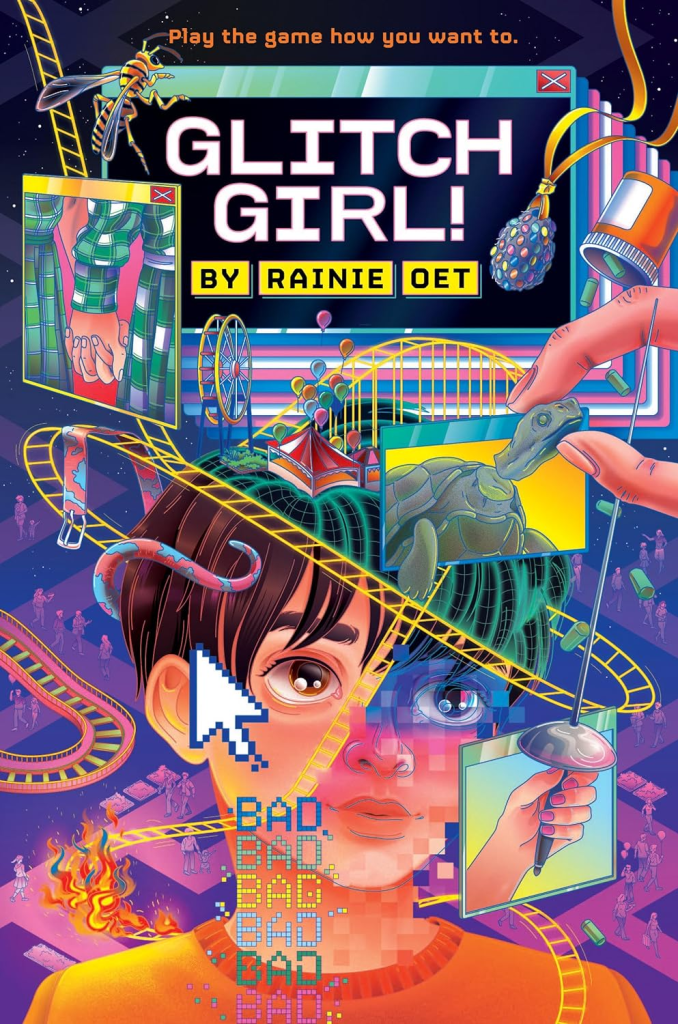
Outstanding Children’s Fiction – Glitch Girl! by Rainie Oet
Date: March 11th, 2025
Publisher: Kokila
Genre: Middle Grade, Verse
Website: https://www.rainieoet.com/
Social Media: n/a
Purchase: Bookshop
J—’s life is consumed by the roller coaster video game Coaster Boss, and by the power she exerts over the pixelated theme park attendees. Her life outside the game, however, is less controllable.
Me.
I’m such a big space. I break the universe, a glitch.She’s navigating ADHD, the loneliness of middle school, and an overwhelming crush on a girl named Junie. J— is convinced that Junie sees her as who she really is, a person who isn’t “bad” just because she doesn’t stay quiet and sit still in class. As a person who is realizing that the name she’s been given doesn’t really fit her. And that maybe boy doesn’t either.
Glitch Girl! follows J— from fifth to seventh grade, from the beginning to the end of her obsession with Coaster Boss, and to the start of a new friendship. When J— meets Sam, a nonbinary classmate, she begins to realize that it’s okay to not fit into neat, pixelated boxes.
Glitch Girl! is one of the most ambitious middle grade novels I’ve ever read. Not only is the entire novel told in poetic verse – a big ask in its own right – but it also covers some of the heaviest subject matter I’ve ever read from the genre: childhood mental health issues, neglectful parenting, dysphoria, and suicidal ideation. That’s a lot for any one middle schooler to hold. But there are kids who do deal with all of it, and Glitch Girl! isn’t writing for the kids who don’t have to deal with a difficult childhood – it’s for the struggling kids, the ADHD kids, the lonely and bullied kids, the trans kids ostracized from an academic environment that refuses to accept them. It’s heavy and brutal and honest, and I know that there are kids out there who need this book.
When I heard the premise of Glitch Girl!, I steeled myself for poetry that was mediocre at best. But I am pleased to say that Oet’s verse is really good for what it is – excellent, even. It takes its dark subject matter and molds it into a shape that kids can digest. In fact, after reading the full novel, I’ve come to the conclusion that poetry might be the only way this subject matter could be made age-appropriate to a middle schooler. I don’t think it’s an accident that Glitch Girl came within a single vote of winning the Best Poetry race – Perverts might be a broadly better collection for an adult audience, but there’s truly no work of trans literature that’s anything like Glitch Girl!, and I enormously respect this book for going toe-to-toe with the more traditional poetry collections in the top category.
Distinction: The Ink Witch by Steph Cherrywell
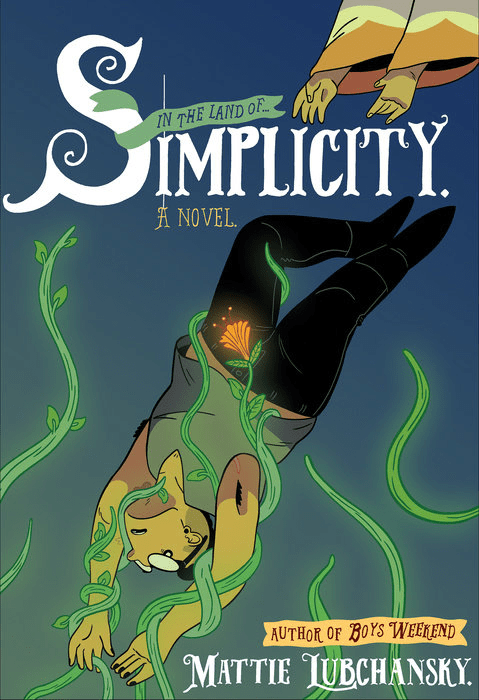
Outstanding Graphic/Comic – Simplicity by Mattie Lubchansky
Date: July 29th, 2025
Publisher: Pantheon
Genre: Science Fiction, Horror, Dystopia
Website: https://mattielubchansky.com/
Bluesky: @mattielubchansky.com
Purchase: Bookshop
In 1977, a group called The Spiritual Association of Peers decamps to the woods of the Catskills, taking over an abandoned summer camp. They name their new home Simplicity.
In 2081, scholar Lucius Pasternak, a fastidiously organized trans man, tries to keep his head down living in the New York City Administrative and Security Territory, which was founded after the formal dissolution of the United States in 2041. Then, he’s offered a job by the mayor, billionaire real estate developer Dennis Van Wervel, to complete an anthropological survey of the people of Simplicity for a history museum he’s financing. A wary Lucius is nevertheless drawn in by the people of the small wooded community, intrigued by its strange rituals and in particular by the charming acolyte Amity Crown-Shy. Born and raised on the compound, Amity is comfortable in their own skin, a striking contrast to Lucius’ repressed reserve. But Lucius’ control starts to slip when he begins to suffer visions both terrifying and sensual—visits from beautiful but nightmarish creatures.
Then, just as Lucius discovers that Van Wervel’s project is more sinister than it seemed, members of the community begin to disappear, leaving behind grisly signs of struggle. The denizens of Simplicity believe that a being they call “The Lamentation” is responsible for the attacks. Amity and Lucius set out to hunt for the creature in the dangerous Exurb Zones, a wild wood full of libertarian doomsday preppers, wealthy isolationists, and worse. There, they’ll finally discover the true threat to their way of life—and what they’re willing to do to stop it.
Mattie Lubchansky’s illustration work in Simplicity, a graphic science fiction novel where a futuristic United States has fallen into technofeudalism, is nothing short of wonderful. Lubchansky’s characters are vibrant and expressive and complex, and it drives a tightly paced plot that’s fun and never overstays its welcome. Simplicity has a powerful message about organizing and activism under conditions of severe authoritarianism, and ends on a hopeful note: even in a dire future marred by billionaire capitalism and climate catastrophe, we can – and must – still fight our way to a better future. In addition to its main sci-fi drama, Simplicity is also an understated piece of folk horror, playing with imagery of a dying natural world and effusive sexuality, with striking visuals of nightly violent orgies reminiscient of George Orwell’s Two Minutes Hate in 1984, and multi-eyed multi-toothed beasts that devour their way through nightmares and dreams. A striking graphic novel with a big heart.
Outstanding Web Serial/Fanfiction – Ranked Competitive Breast Growth by Beth Leigh-Ann and Talia Bhatt
Date: May 5th, 2025 – Present
Publisher: Self
Genre: TG/TF, Satire, Eggfic
Website: https://taliabhatt.com/
Bluesky: @tpwrtrmnky.bsky.social
Purchase: itch.io
A trans girl hatches a brilliant scheme: Infiltrate a community of cis men who compete to see who can grow the biggest breasts by taking hormones for three years, and cheat the competition for a free and easy transition. No one will suspect a thing… Except possibly her roommate, who, unbeknownst to her, is doing the exact same scheme.
What started as a shitpost and is mostly still a shitpost is Ranked Competitive Breast Growth, Beth Leigh-Ann and Talia Bhatt’s brilliant and stupid psy-op to cause as much psychic damage to the broader trans community as possible. RCBG represents the total saturation of so many things in our current-day discourse: the cosmically-dense egg, an irony so poisoned it winds all the way back around to being sincere again, the mainstreaming of 4chan-style discourse and vocabulary, and the complete and utter fucking stupidity of having to watch the worst people you can imagine get everything they’ve ever wanted in 2025. It all spirals together in beautiful and cataclysmic fashion to build one of the funniest things I’ve ever read – an excoriation and a love letter in equal measure.
Given that Talia won two of the six top categories this year, I know that people will hyperfixate on her name on the byline. But I want to emphasize that Beth Leigh-Ann came up with the initial concept for RCBG, and that this is an phenomenal debut showing from her. Beth and Talia are currently developing a novelization of the serial called Estro Junkies, due for Spring 2026, which I know for a fact will be popping up again in next year’s awards. I’ve made the decision to defer Beth’s debut eligibility until then, so I have no doubt that I’ll be discussing RCBG next year too when Estro Junkies rolls around.
Distinction: Carve it on My Bones by Erin Elkin; The Sisters of Dorley by Alyson Greaves; Bottle Blondes by Rhiannon Swanson
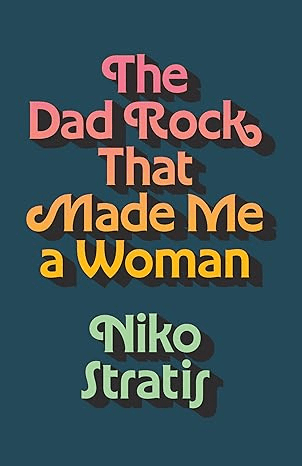
Outstanding Memoir – The Dad Rock that Made Me a Woman by Niko Stratis
Date: May 6th, 2025
Publisher: University of Texas Press
Genre: Music Criticism, Memoir
Website: https://www.nikostratis.com/
Bluesky: @nikostratis.com
Purchase: Amazon
A memoir-in-essays on transness, dad rock, and the music that saves us.
When Wilco’s 2007 album Sky Blue Sky was infamously criticized as “dad rock,” Niko Stratis was a twenty-five-year-old closeted trans woman working in her dad’s glass shop in the Yukon Territory. As she sought escape from her hypermasculine environment, Stratis found an unlikely lifeline amid dad rock’s emotionally open and honest music. Listening to dad rock, Stratis could access worlds beyond her own and imagine a path forward.
In taut, searing essays rendered in propulsive and unguarded prose, Stratis delves into the emotional core of bands like Wilco and The National, telling her story through the dad rock that accompanied her along the way. She found footing in Michael Stipe’s allusions to queer longing, Radiohead’s embrace of unknowability, and Bruce Springsteen’s very trans desire to “change my clothes my hair my face”—and she found in artists like Neko Case and Sharon Van Etten that the label transcends gender. A love letter to the music that saves us and a tribute to dads like Stratis’s own who embody the tenderness at the genre’s heart, The Dad Rock That Made Me a Woman rejoices in music unafraid to bare its soul.
The Dad Rock That Made Me a Woman by Niko Stratis is a refreshing deviation from the usual formula of the trans memoir, one that does a couple things I’ve never seen before from the genre. For starters, the Yukon is a novel setting, one I’ve never gotten the chance to read about before. So much of Niko’s early life concerns trying to navigate the rugged settler masculinity she was born into, meandering from Yukon to Alberta and back again through addiction and male-dominated workplaces. As music criticism, Stratis covers a ton of ground here: several decades worth of rock music, building towards the persuasive thesis that “Dad Rock” isn’t a sonic genre insomuch as a manifestation of the emotional bonds between father and child, both good and bad alike.
Maybe that’s why Dad Rock spoke to me – it’s not a trans memoir about music, it’s a music memoir that happens to be about transness. It’s fresh and engaging, and let’s be honest – we all know that the playlist goes hard.
Distinction: Trauma Plot by Jamie Hood
Outstanding Trans Theory – Trans/Rad/Fem by Talia Bhatt
Date: January 24th, 2025
Publisher: Self
Genre: Trans Theory, Feminist Critique
Website: https://taliabhatt.com/
Bluesky: @taliabhatt.itch.io
Purchase: itch.io
Truthfully, I don’t have much more to say here that I haven’t already covered in the Best Nonfiction or Author of the Year categories, or in the two awards that included chapter “The Third Sex” already won in 2024 (you can read that commentary here). If I had to mention something I haven’t talked about yet, it would be Talia Bhatt’s commitment to Second Wave feminism, a text selection that distinguishes Trans/Rad/Fem from a lot of other transfeminist works of its type. For a portion of the feminist canon largely regarded as the antecedent to TERF movements, Talia does an admirable job arguing for a trans interpretation of that body of scholarship, taking the fight directly to the theoretical roots of modern-day “feminist” transphobia.
I also wanted to take a moment to celebrate the runner-up in this category, Talia Mae Bettcher’s field-defining philosophy treatise Beyond Personhood. While it’ll never have the popular readership of Trans/Rad/Fem, Bettcher’s magnum opus does absolutely crucial work dissecting and reconsidering the theoretical groundwork behind our account of trans metaphysics. If you’re a nonfiction fan or an academic, I would strongly recommend Beyond Personhood. Its distinction in this category is very well-earned.
Distinction: Beyond Personhood: An Essay in Trans Philosophy by Talia Mae Bettcher
Outstanding General Nonfiction – Authority: Essays on Being Right by Andrea Long Chu
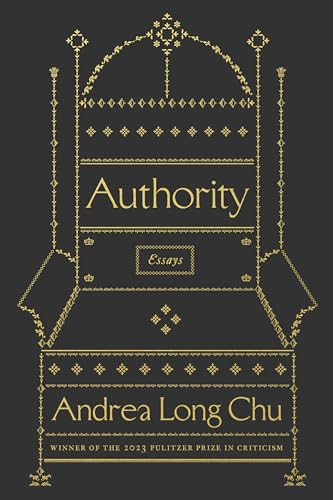
Date: April 8th, 2025
Publisher: Farrar, Straus, and Giroux
Genre: Literary Criticism
Website: https://www.andrealongchu.com/
Social Media: n/a
Purchase: Bookshop
Many worry that criticism is suffering from a crisis of authority. In a world where everyone’s a critic, what is criticism for? Since her canonical essay “On Liking Women,” the Pulitzer Prize–winning critic Andrea Long Chu has established herself as a leading public intellectual and a bold cartographer of the new landscape of taste itself.
Authority brings together sharp, illuminating essays on everything from musical theater to sci-fi novels, as well as an acclaimed tetralogy of personal essays first published in the magazine n+1. Throughout, Chu defies the imperative to leave politics out of art, charging fellow critics like Maggie Nelson and Zadie Smith with complacent humanism and modeling how the left might brave the culture wars with both its faculty of judgment and its sense of justice intact.
In two magisterial new essays, Chu offers a fresh intellectual history of criticism’s crisis of authority, tracing the surprisingly political contours of the discipline from its origins in the Enlightenment to our present age of social media. The desire to recover some lost authority, she argues, is neither new nor particularly freeing. Rather than being taken in by an endless cycle of trumped-up emergencies over the state of our culture, Authority makes a compelling case for how to do criticism in light of the actual crises, from climate change to rising authoritarianism, that confront us today.
This book is incredibly important to me as a critic, and I was gunning to write about it for these awards. While I was hoping that Andrea Long Chu would win Outstanding Reviewer/Critic (*annoyed foreshadowing*), I will absolutely take Authority in the General Nonfiction category.
While the bulwark of Andrea Long Chu’s second book is occupied by reprints of her classic criticism pieces – you know, the stuff that won her the Pulitzer – I believe the most important piece in this book to be “Criticism in a Crisis,” which I wrote about in an essay earlier this year entitled “Are We Still Free?” I was at the bottom of a very deep mental health hole when I read Authority this spring, and Chu’s fiery cri du coeur toward a leftist literary criticism was exactly what I needed to hear to snap myself out of my writing slump and step back up to the plate this fall. This book is a call to action, should you be willing to read it as such – and I’ve read the reviews of this book, and the vast majority of legacy news outlets have completely missed the point. Chu’s vision of literary criticism is grounded in a material approach, situating the critic’s role within class conflict and posing the supposed collapse of their historical role, the ‘crisis of criticism,’ as an abdication of a political responsibility more essential than ever in 2025. Case in point: “If we really want a ‘critical mass of critics,’ as Ozick has called for, then we will have to substantially improve the economic reality of being a critic in this country.”
I recognize that as a literary critic, I am uniquely situated with regards to this book. But the parts that spoke less to me are what will appeal to most fans of Andrea Long Chu’s work: the evicerations of popular cis literature, the polemics on transness and womanhood, the unique cruelty of a critic who’s never bothered to pull her punches. Authority compiles and closes the chapter on Chu’s early career, and it’s a fitting collection for anyone who wants to get up to speed on the trans community’s premier critic.
Distinction: Worthy of the Event by Vivian Blaxwell
Outstanding Foreign Language/Translated Work – (So What) If I’m a Puta by Amara Moira, trans. Amanda de Lisio and Bruna Dantas Lobato
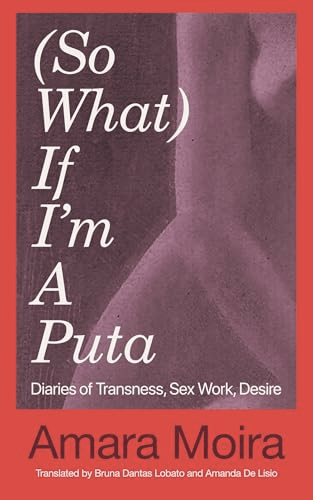
Date: July 22nd, 2025
Publisher: The Feminist Press
Genre: Putafeminismo, Memoir, Sex Work Diary
Website: n/a
Instagram: @amaramoira
Purchase: Bookshop
So What If I’m a Puta, originally published on author Amara Moira’s popular blog of the same name, consists of 44 crônicas that wryly portray her experiences as a trans sex worker in Brazil. In a brazen, funny, and at times heartbreaking voice, Moira explores the political and personal textures of her encounters with the men who buy sex from her, and the complex reality of her labor of a sort of love.
Woven through Moira’s essays are reflections on transition, safe sex, desire, whorephobia, consent–in the grim context of Brazil’s record rates of violence against trans women. Ultimately, Moira writes to center trans sex workers in Brazil’s putafeminist movement, modeling a feminism that envisions inclusivity, safety, self-determination, and joy for us all.
In a year full of steamy novels and sex-positive literary declarations, no book was more sex-positive than the long-awaited English translation of Amara Moira’s Portuguese-language 2016 memoir E se eu fosse puta, The Feminist Press’ (So What) if I’m a Puta. Moira’s raunchy travesti sex worker diary is a delightfully irreverent depiction of transfeminine life in Brazil. What’s truly unique about Moira’s account of her history with sex work is a genuine enjoyment and care for her profession; sex work isn’t a burden or obligation or survival necessity, it’s an active choice on Moira’s part, and that’s the thesis of the book. So what? Why shouldn’t sex workers enjoy and care about their work, and why shouldn’t they write about it?
2025 seems to have been a stronger year for translated nonfiction (a departure from last year), but I also wanted to take a moment to mention Land of Mirrors by Maria Medem, a translated Spanish-language novel that I’ve seen exactly nobody discuss. I haven’t gotten a chance to read it myself yet, but it’s high on my list for early 2026.
Distinction: Land of Mirrors by Maria Medem, trans. Aleshia Jensen and Daniella Ortiz; A We Without a State by Yásnaya Elena Aguilar Gil, trans. Jadine Pluecker
Outstanding Audiobook – Magica Riot by Kara Buchanan, narr. Emma Martello
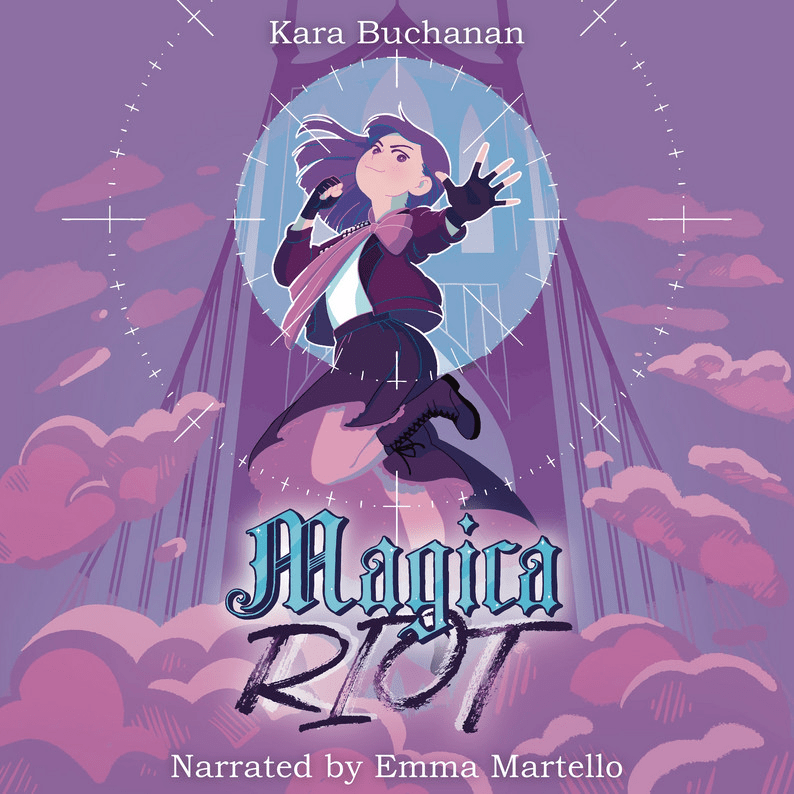
Date: January 21st, 2025
Publisher: Storm Maiden Studios
Genre: Magical Girl, Science Fiction, Fantasy
Website: https://magicariot.com/
Bluesky: @magicariot.com
Purchase: itch.io
The last night of Claire Ryland’s old life was pretty normal, aside from the alley fight with interdimensional monsters. Fortunately, the drummer of her favorite local band transformed into a magical girl and saved her.
Then Claire became a magical girl as well. Things got a little complicated after that.
Now Claire is juggling two new lives: living as a girl and as a member of Portland’s super-secret supernatural defense squad, the hard-rocking magical girls known as Magica Riot!
The story of a young transgender woman who’s discovering herself at the same time she’s learning how to be a magical girl, Magica Riot is an action-filled musical adventure inspired by classic magical girl anime, tokusatsu shows, and the vibe of the American Pacific Northwest. Featuring a cast of LGBTQ+ magical girls, mysterious monsters, and villains that are more than they appear to be, Magica Riot shows that finding your true self is the first step toward saving the world.
Despite being nominated for a ton of categories last year, Kara Buchanan’s hit novel Magica Riot didn’t ultimately take home any TFR Awards in 2024. So I’m delighted to say that the voters have changed that with our inaugural Outstanding Audiobook award! Magica Riot is a charming magical girl novel about self-acceptance and kicking ass in the Pacific Northwest, and Emma Martello has been doing wonderful work as a voice actress. I’m not personally an audiobook listener, so I can’t offer much specific commentary on the audiobook itself, but I’m really glad we added this category.
Distinction: One of the Boys by Victoria Zeller, narr. Jen Richards; Trauma Plot by Jamie Hood, narr. Jamie Hood; Glitch Girl! by Rainie Oet, narr. Rainie Oet and Jeff Ebner
Author Categories
Breakout/Debut Author – Emily St. James
What I’ve learned from two years now of trying to define what it means to be a “debut” author is that it’s almost impossible to define the term in a way that isn’t completely porous. By so many metrics, Emily St. James’ work on Woodworking is a continuation and vindication of her long career, a literary triumph made possible through years of hard work writing for journalism and television. But a first novel – something that many writers spend decades working toward – represents a sort of cumulation, the opening of a new chapter. Woodworking may not be the literal first thing that Emily has ever published like some of this year’s other debut authors, but it represents the start of something new and exciting.
It’s an odd thing to say of a debut novelist – that their win is clearly owed to experience – but it rings true here. Woodworking reads like the product of a life lived with its felt knowledge for intimate places and small towns, its knack for writing intergenerational relationships that many young trans writers in their 20s simply lack the experience to replicate. It’s fresh and exciting; and it also lends Woodworking a depth of flavor that really sets it apart from the other debut novels that came out this year. For me, it’s undeniable that Emily St. James is the biggest breakout author of 2025, and I think I speak for all of us when I say that Woodworking left me incredibly excited about where Emily St. James’ fiction career might go next!
Distinction: Callisto Khan; Lhuzie Fénix; Victoria Zeller

Pillar of the Community – Ana Valens
Notable 2025 Work: Led the fight against payment processor censorship in the wake of crackdowns on indie marketplace itch.io; ongoing freelance journalism at various outlets, including “Why Is This ‘Gamer Supps’ VTuber Pushing the Great Replacement Theory?” for VICE; ongoing work as a VTuber, Twitch streamer, and NSFW audio producer
Website: https://www.acvalens.net/
Bluesky: @acvalens.com
This July, I helped to break the news of censorship at major trans indie publishing platform itch.io amidst a broader series of crackdowns on NSFW games across the internet. Though trans books were not the primary target of the attacks, hundreds of trans authors were directly impacted by the move, losing income and exposure. The responsible parties were Australia anti-porn organization Collective Shout, previously responsible for getting GTA V banned in Australia, and the major online payment processors: Mastercard, Visa, Paypal, and Stripe. There was no regulatory change, no impetus or charge – merely the moralizing disgust and disdain of the ongoing war against porn, and the whims of a corporate monopoly that cares more about controlling its image than permiting the free and fair exchange of legal transations.
The days after the news broke were a confusing mess. I was furious with itch.io – but it quickly became apparent that the platform had been given little choice but to acquiesce in the wake of larger platforms like Steam refusing to fight the legal battles in their stead. People were looking to me for answers, and frankly I had no idea what to do, how to respond, or where our community needed to direct our anger.
Ana Valens did.
Over the course of 2025, Ana Valens has been leading the fight against payment processor censorship with moral clarity and unyielding determination. She has educated our community on exactly how the censorship works and how we can fight back. She has organizing daily phone banking sessions, taught people how to successfully pressure a customer service representative, coordinated infographics and resources, and helped our community to build anti-censorship work into our daily routines. Her activism has gone far beyond her own efforts; even after stepping back from the daily organizing spotlight, her tireless work continues to reverberate through ongoing efforts against payment processors and various other fascist censorship measures.
As a visible figure in the anti-censorship campaign, Ana’s activism has come at an enormous personal cost. Her name has been blacklisted by the payment processors, and she’s lost a variety of income sources. It’s been an extremely stressful and costly personal ordeal – and all in the name of fighting for NSFW creators on the internet, both trans and otherwise. Transfeminine authors may only be a small fraction of the impacted creators, but Ana Valens has fought just as tirelessly for us as she has for everyone else – because the truth is that censorship affects all of us, and will come for everybody if left unchecked.
So thank you, Ana, from the entire community. More than anyone else this year, you helped to shape and lead the fight against censorship of transfeminine literature. There is nobody more deserving of the 2025 Pillar of the Community award than you.
Distinction: Talia Bhatt
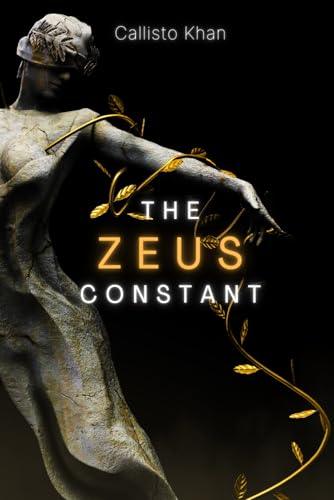
Underground/Up-And-Coming Author – Callisto Khan
Titles Published in 2025: The Zeus Constant (Self, 3/11/25); A Weed in the Flowerbeds (Self, 8/12/25)
Other Notable Work: Joined the Maria Ying pseudonym with Devi Lacroix and Benjanun Sriduangkaew to work on future projects, including The Persephone Effect (2026)
Website: n/a
Bluesky: @callistokhan.bsky.social
Purchase: The Zeus Constant, A Weed in the Flowerbeds
Of the new Gunmetal Olympus novelists, nobody had quite the starpower as Callisto Khan, who wrote an interpellation of The Hades Calculus that it got Devi and Benjanun to take her onto the main Maria Ying pseudonym. Imagine writing a fanfiction so good the authors ask you to help with the next book! As discussed during the section on Keeping the Peace, I don’t think that the Gunmetal Olympus EU represents fanfiction – it’s something new entirely, and Callisto Khan is at the forefront of creating new possibilities for collaborative world writing that spills out beyond the written page into the economics of publishing. Collaboration is the lifeblood of the GO setting, and I have no doubt that the energy that Khan brings to the table will make The Persephone Effect even more of a must-read than it already was.
Unfortunately, The Zeus Constant is one of the only books on this entire list that I have not yet managed to personally read, so I can’t offer direct commentary on it. But it’s been a fan favorite this year, and came close to winning a couple categories, namely Outstanding Science Fiction and Breakout/Debut Author. So congratulations to Callisto Khan on a big first year, one that promises much bigger things to come!
Distinction: Aster Olsen, Cassandra Spencer, Cirice Gray
Best Technical Prose or Craft – Jeanne Thornton
I’ve already talked about why A/S/L is the best book of the year on the level of character and scope – now it’s time to discuss Jeanne Thornton’s drop-dead gorgeous prose work that makes it all possible. Each of the three viewpoint characters have a unique voicing in the narrative – the blunt vacancy of Sash’ drifting life, complimented by the second person narration and epistolary segments at the beginning of the book; the contemporary urban realism of Lilith’s perspective, with prose that wouldn’t feel out of place in Detransition, Baby; and of course the showstopping theater of Abraxa’s warped mental view. Jeanne digs deep into the lived phenomena of psychosis, paranoia, and non-lucid thinking; even at her lowest and least rational, there’s a beautifully tragic logic to Abraxa’s decision making. The reader is brought into the delicate contours of her psyche – the quiet sublimity of the abandoned church, delusional fantasies of high meaning and secret messages, the helpless juxtaposition through an irrational certainty and the instability of her social interactions and dialogue.
A/S/L has exceptional character work, but what elevates this novel as more than the sum of its parts comes across in its tonal and thematic work. The structure of the novel is framed around its abrupt jump into the present day; time is the architecture of loss, and A/S/L‘s delicate commentary on nostalgia and living grief is framed through the physical structures of the plot: the church, the apartment, the coffee shop. Abraxa’s story is powerful because Sash and Lilith are being proximate and dislocated from it; the emotional landscape of her mental decay becomes the hopeful possibility of a past the main characters can never return to. It’s contrasted against the B-plot of trying to turn the church into a community center for queer folks – a hopeful idea, but one made impossible by the realities of the financial system, a dream that cannot recapture the haunting beauty of Abraxa’s lived reality. When a certain scene changes the geography at the end of the book, it’s an incredibly powerful catharsis with a knife twist that hurts in the best way.
As a literary novel, A/S/L is an absolute triumph of craft, and it very much stands out among the other nominees on the metric of execution.
Distinction: Lhuzie Fénix; Callisto Khan
Miscellaneous Categories
Funniest Book – A Rotten Girl by Jemma Topaz
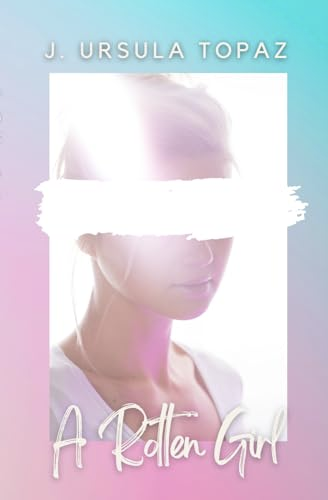
Date: January 2nd, 2025
Publisher: Self
Genre: Literary Contemporary, Satire
Website: https://jemmatopaz.carrd.co/
Bluesky: @jemma.bsky.social
Purchase: itch.io
Unlike Bhatt and Leigh-Ann’s Ranked Competitive Breast Growth, whose humor comes from its slapstick absurdity, A Rotten Girl thrives on realistic satire that interrogates the banality of literary delusions. You can’t help but laugh at Pearl’s dry observations on the fickle nature of the reader; or helplessly as she digs herself even deeper down the hole she’s created. Jemma’s humor has a very British dry witticism; A Rotten Girl presents even its most fanciful delusions in a matter-of-fact tone, a farcical engagement that lasts until the moment the semblance of popularity crumbles before her eyes. Pearl has a knack for always saying the funniest thing, but she’s also a bit of a public jester – the jokes come at her own expense most of the time.
The brilliance of A Rotten Girl is that every joke, every comic situation, every mounting absurdity builds out the deep depression and self-loathing of the main character; and that while this hilarious novel knows when to throw a punchline, it also knows when to stop joking. The humor hits harder because the book ends solemnly, not in spite of it. A Rotten Girl is the rare novel that truly belongs to the satire genre; and of all the transfeminine fiction that came out this year, no book is so devout to its humor as this.
Distinction: Ranked Competitive Breast Growth by Talia Bhatt and Beth Leigh-Ann
Best Character – Katherine, Ranked Competitive Breast Growth by Beth Leigh-Ann and Talia Bhatt
The only character going by the nickname “Boymoder Sephiroth” who can also make you cry in the span of a single book.
The best way I can describe Katherine is like Aaron Holt from Dorley on steroids. Her perspective is voiced with the most ridiculous, ostentatious prose you can possibly imagine, and the kicker is that she talks like that in real life too. Katherine has so many brainworms that her brain probably looks like swiss cheese; she is the indisputed master of the titular breast growing competition – not because she’s good at it, but because she’s so hyper-invested that it puts everyone else to shame. The funniest part of the whole book is that Katherine is on the itty bitty titty committee. But when you strip back the layers of recursive loathing and /tttt/ poisoned braincel disaster nonsense, Katherine becomes easily one of the most compelling protagonists of the year from an emotional standpoint. She’s like a bedraggled wet rat of a person, and you can’t help but root for her despite her multifarious ideosyncracies.
Oh, and it doesn’t hurt that Katherine gets some of the best one-liners you’ll ever read in fiction. Talia and Beth’s competition to see who can come up with the most ridiculous dialogue lines has reached cataclysmic heights, and frankly I’m here for it.
Distinction: Abraxa, A/S/L by Jeanne Thornton; Madalithea, Flower of the Underworld by Cirice Gray
Best Transfeminine Representation by a Non-Transfeminine Author – Notes from a Regicide by Isaac Fellman
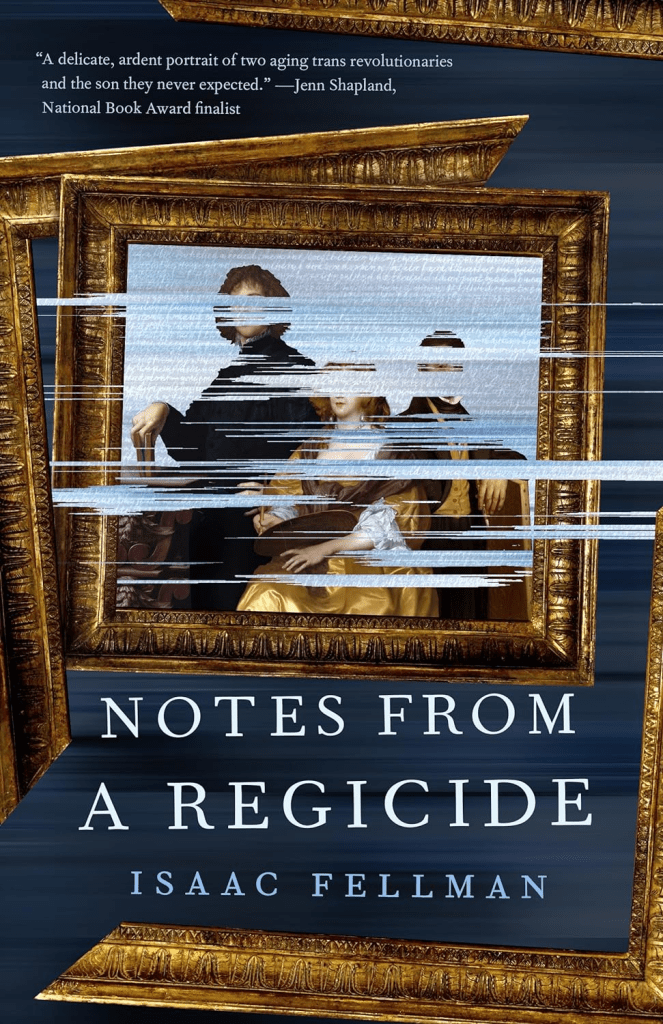
Date: April 15th, 2025
Publisher: Tor Books
Genre: Science Fiction, Literary
Website: https://www.isaacfellman.com/
Bluesky: @isaac-fellman.bsky.social
Purchase: Bookshop
When your parents die, you find out who they really were.
Griffon Keming’s second parents saved him from his abusive family. They taught him how to be trans, paid for his transition, and tried to love him as best they could. But Griffon’s new parents had troubles of their own – both were deeply scarred by the lives they lived before Griffon, the struggles they faced to become themselves, and the failed revolution that drove them from their homeland. When they died, they left an unfillable hole in his heart.
Griffon’s best clue to his parents’ lives is in his father’s journal, written from a jail cell while he awaited execution. Stained with blood, grief, and tears, these pages struggle to contain the love story of two artists on fire. With the journal in hand, Griffon hopes to pin down his relationship to these wonderful and strange people for whom time always seemed to be running out.
In Notes from a Regicide, a trans family saga set in a far-off, familiar future, Isaac Fellman goes beyond the concept of found family to examine how deeply we can be healed and hurt by those we choose to love.
The core plot of Notes from a Regicide revolves around the main couple of Étoine, an alcoholic who killed the titular team in a far-future Quebec, and Zaffre, a brilliant trans woman, a revolutionary, and his life partner. While I’ve only managed to read the opening pages of Fellman’s fourth novel at time of publication, the critical reception to Notes from a Regicide has been overwhelmingly positive, with Zaffre at the heart of many critics’ praise. I am so excited to read this novel! Since I wasn’t able to carve out time to do this category justice, I got some expert help from Maia Kobabe, who had read the two leading nominees and helped me break what otherwise would have been a tie. So a massive thanks to Maia, and to everyone who voted in this category. I’ll come back and update this blurb once I’ve read the book ❤
Distinction: Fawn’s Blood by Hal Schrive; Root Rot by Saskia Nislow
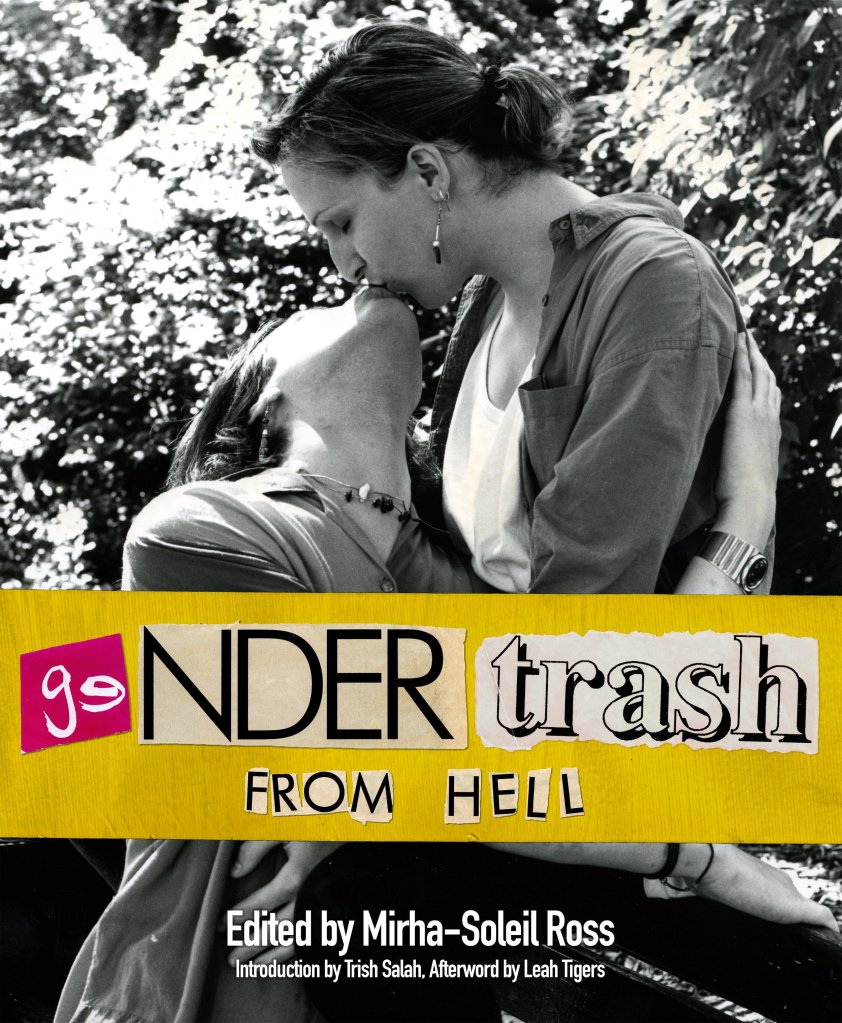
Outstanding Editor or Agent – Cat Fitzpatrick
Notable 2025 Work: Editing and compilation work on groundbreaking zine anthology Gendertrash from Hell: The First Print Collection of the Zine that Changed Everything by Mirha-Soleil Ross; essay discussing the collection “Unearthing the Hidden History of a Singular Trans Punk Zine” at Defector; ongoing editorial work at LittlePuss Press; mentorship and editorial work on new literary outlet Picnic Mag with Alma Avalle and Joyce Laurie; several poems, including TFR Award nominated “Rise Again” from upcoming collection The Dinner Party: A Book about Love
Website: https://www.catfitzpatrick.net/
Bluesky: @catfitzpatrick.net
Purchase: Gendertrash from Hell, The Dinner Party
Here’s the truth – I don’t think I can do a better job at articulating why Cat Fitzpatrick won this award than she’s already done herself. If you haven’t read her excellent Defector article about the making of the Gendertrash from Hell anthology, I would urge you to do so.
Gendertrash from Hell is an absolutely essential piece of trans history, and it’s such a gift that we have it now in anthology form. But Cat’s editorial work went beyond Gendertrash this year. As mentioned in the Indie Press of the Year section, LittlePuss Press published three books this year, with four more coming down the pipeline in 2026. In addition, Cat provided mentorship and a few poems for new litmag Picnic Magazine, one of the coolest new underground trans publications of the year. Her work has been all over the New York indie trans publishing scene this year, and I’m happy to recognize it with our Outstanding Editor or Agent 2025 award!
Outstanding Publication – Woman of Letters by Naomi Kanakia
Notable 2025 Work: Several dozen articles on Woman of Letters on contemporary literature, the Great Books, the publishing industry, and other literary topics; a number of short stories, include TFR Award nominated “Lonely Island Adventures;” the creation of the The Samuel Richardson Award For Best Self-Published Literary Novel
Website: https://www.woman-of-letters.com/
Bluesky: @naokan.bsky.social
Purchase: What’s So Great About the Great Books?
At the end of 2024, Naomi Kanakia announced a pivot to focusing on her literary criticism and nonfiction, and her focus shows in her output this year. Kanakia’s Substack blog Woman of Letters published some of the best literary criticism of the year, spanning genres and eras with her signature perceptive voice. I have an immense ammount of respect for Naomi Kanakia’s work as a fellow critic of self-published literature – we come at the discipline from different angles, but Kanakia’s commitment to situating self-published work within industry prestige and the broader scope of literary history is admirable. She’s also one of the few literary critics I follow who truly believes in the short story form. As someone who rarely gravitates to short fiction – a disposition that comes across in my work – her perspectives on the short story, submission journals, and the critical ecosystems around them are invaluable.
Naomi has a new book coming out in 2026, What’s So Great About the Great Books? from Princeton University Press, and I’m super excited to read her first full-length nonfiction title. It’s very gratifying that I got to talk about both of the most successful transfeminine literary critics besides myself in this year’s awards, because, well…
Distinction: Lilac Peril

Outstanding Reviewer or Critic – Bethany Karsten
Sigh….
Yeah, I’m going to make a rule next year that you guys aren’t allowed to vote me for this category. Or at least that I’m not eligible multiple years in a row.
Setting aside my continued mortification, I did have a pretty prolific year in 2025. After launching my Patreon this February, I published a ridiculous eighty-eight book reviews, all for books by transfeminine authors, many of which had little to no critical coverage by the mainstream publishing industry. I’ll be releasing those reviews to the public as a collected volume this spring, details forthcoming. In addition, I also published several major pieces of literary criticism this year, including a February article about Black transfeminine literature and an essay on the importance of reading bad fiction and how AI doesn’t count toward that goal. I deepened my research into the history of trans literature with a very long piece about the origins of American anti-trans law and its connections to book bans in the 1840s and 50s. And I continued my general work documenting the trans publishing industry, as well as founding and running the inaugural TFR Awards during last December’s portion of the eligibility period.
Thank you so much to everyone who voted in this year’s TFR Awards. It’s been a challenging year, but the amazing community we’ve built here makes it all worth it for me. I’m deeply grateful for your love and support to trans authors, and I’m excited to continue the work in 2026!
Distinction: Andrea Long Chu
Outstanding Academic – Talia Bhatt
Aaaaand here’s one last award for Talia Bhatt to round the year off.
This is another cateogry that I’m going to retool next year – ultimately the goal of the Outstanding Academic category is to recognize excellence in academic publishing, not general nonfiction. I’ll clarify in 2026 that this is intended to recognize either an author working from within the academy as a professor or student, or a non-academic author whose work is published by journals, academic presses, or other academic publications. Trans/Rad/Fem is an excellent book, but it fits neither of these criterion.
At the same time, Talia Bhatt won this year’s category by a definitive margin, and I want to honor what an achievement it is for Trans/Rad/Fem to have achieved such reach and acclaim as a self-published title. Talia has written both here and elsewhere about the violence of epistemic erasure – how trans of color voices and voices from the Global South are structurally excluded from the Academy and the halls of knowledge production and legitimation. 2025 has seen the removal of trans knowledge and bodies from the Academy space in the United States, and has laid bare just how fragile our place in the Academy truly is. What does it mean to be a transfeminine academic when the very possibility is under threat?
In a year without answers, it seems apt that the most important work of nonfiction came from outside of the Academy. Truly a fitting end to 2025.
Distinction: Eartha Mae Guthman
Round-Up & Conclusion
And that’s a wrap on the 2026 TFR Reader’s Choice Awards! Thank you so much again to everyone who helped us make this possible – the readers, the voters, everyone who helped promote the Awards on social media, and most of all the authors who gave us so many wonderful books this year. These awards would not be possible without you.
Once again, I’d like to give a major shoutout to our Sponsors. If you want to support TFR and make the 2026 Awards possible, you can join our Patreon at the link below.
Want to read these books? Here’s a full list of all the winners, as well as a Goodreads list that has the same information:
Novels
- Magica Riot by Kara Buchanan
- Black Flame by Gretchen Felker-Martin
- Notes from a Regicide by Isaac Fellman
- Autumnal Conductor by Lhuzie Fénix
- Keeping the Peace by Tris Husband
- The Zeus Constant by Callisto Khan
- Simplicity by Mattie Lubchansky
- Glitch Girl! by Rainie Oet
- Warhound by Kallidora Rho
- Song of the Dryads by Bailey Saxon
- Woodworking by Emily St. James
- Geraldine by Andrea Thompson
- A/S/L by Jeanne Thornton
- A Rotten Girl by Jemma Topaz
- Machines of Consent by Sophia Turner
- One of the Boys by Victoria Zeller
Shortform
- Perverts by Kay Gabriel
- Stag Dance by Torrey Peters
- “The Returns” by JD Pluecker
- “Agent Provocateur” by Cassandra Spencer
Serial
- Ranked Competitive Breast Growth by Beth Leigh-Ann and Talia Bhatt
- Bottle Blondes by Rhiannon Swanson
Nonfiction
- Trans/Rad/Fem by Talia Bhatt
- Authority: Esssays on Being Right by Andrea Long Chu
- What’s So Great About the Great Books? by Naomi Kanakia
- (So What) If I’m a Puta by Amara Moira
- Gendertrash from Hell: The First Print Collection of the Zine that Changed Everything by Mirha-Soleil Ross
- The Dad Rock that Made Me a Woman by Niko Stratis
If you want to look at the complete results spreadsheet, including all of the nominated books not mentioned in this article, then the link is below! I’ll give my usual disclaimer that there will almost certainly be spelling errors and mistakes in there – please don’t hesitate to let me know if there’s anything I should fix.
And that, my friends, is that. I hope that you all have a Happy New Years, and I’ll see you again in 2026 for another great year of transfeminine literature!
 The Transfeminine Review
Join the discussion! All comments are moderated. No bigotry, no slurs, no links, please be kind to each other.