Are you questioning your gender and searching for fiction that’ll help you figure out what a transition might look like?
Are you a trans woman or a femmeby who’s never seen herself on the traditionally published page before?
Are you the loved one or significant other of a trans person who wants to better understand their experiences?
Or are you just looking for your next great yarn?
If you answered yes to any of these questions, or if you’re only curious to learn more about trans women in publishing, then you’ve come to the right place.
No matter what race, gender, sexual orientation, age, political background, religion, or nation, there’s a transfemme book out there that’s right for you. We’ve curated some recommendations below for good gateway novels that’ll help to introduce you to the world of trans fiction. Check out all of our recs even if you don’t think they’ll apply for you!
Trans literature has undergone a tremendous amount of growth and change over the past year, and this 2025 starter guide reflects the most current state of our industry. With censorship initiatives threatening trans livelihoods and the ever-looming specter of fascism putting our communities under threat, trans authors have come together and produced some of the best fiction and nonfiction the genre has ever seen. It’s so hard to know what the future will hold, but ultimately there’s never been a better time to be a trans reader than right now, and this list showcases that perfectly.
Remember that all of these texts are starting points. There’s a lot more out there, so don’t take this list as an end-all, be-all. Use it as a springboard, not a ladder. Don’t try to read all of them, and definitely don’t read them in the order that I’ve listed them in. I certainly didn’t love every book on this list, and unless you’re as voracious about this project as I am, you will burn yourself out very fast. Only read the books you actually want to. I’ve read almost every book this list, but there are a few that for various reasons I haven’t gotten around to yet. I’ve noted whenever I haven’t personally read a book on the list.
One of my primary goals with this list is to highlight as many great books as I can, and part of that is going to be avoiding repeating too many of my recommendations from last year. While there are some clear cases like Nevada where a book remains the unambiguous correct choice for a beginner reader, the majority of the books from last year came from my personal preference, and I’m gonna do my best to shake it up so returning readers can also find something new to love. When I’ve changed my recommendations for an old category (some categories will be new), I will be including my recommendations from the prior year in small text beneath them.
Note that I’ve moved certain books to different categories (usually higher on the list), so if it still appears on the list, I won’t also be marking it from last year’s list.
I chose to update this starter guide in the spirit of strength – for trans joy, trans resilience, and everything in between. Let these books comfort and carry you through murky times. I hope you find your next favorite read!
This article was made possible by our wonderful Sponsors! If you want to contribute to essential transgender journalism like this, then please feel free to go support our work on Patreon – your contributions help us keep Academic Quality Scholarship 100% free and available to the general public.
- TIER ONE: BABY STEPS
- Your First Transfemme Novel
- The Millennial Favorites
- The Gen-Z Favorite
- For Fans of Madeline Miller
- For Fans of Sally Rooney
- For Fans of Tamora Pierce
- For Fans of Jodi Picoult
- For Your Coffee Table
- What about Poetry?
- Actually, I Want a Memoir
- Help Me Understand Transphobia
- I Want to Learn about Trans History
- I Want to Learn about Transfeminism
- TIER TWO: SHALLOW END
- Your Next Gateway Drug
- The Point of No Return
- My 10/10 Gold Star Recs
- The One That’ll Make You Ugly Cry
- I’m Looking for Literary Contemporary
- I’m Looking for Magical Realism
- I’m Looking for High Fantasy
- I’m Looking for Urban Fantasy
- I’m Looking for Science Fiction
- I’m Looking for Cyberpunk/Mecha
- I’m Looking for Psychological Horror
- I’m Looking for Gothic Horror
- I’m Looking for Romance
- I’m Looking for Historical Fiction
- I’m Looking for Mystery
- I’m Looking for Thrillers
- I’m Looking for Suspense
- I’m Looking for Young Adult Fiction
- I’m Looking for Children’s Fiction
- I’m Looking for Humor/Satire
- Got More Poetry?
- Actually, I Still Want a Memoir
- I Want to Learn about Trans Studies
- TIER THREE: AROUND THE WORLD
- I’m Looking for Kiwi Fiction
- I’m Looking For Irish Fiction
- I’m Looking For Australian Fiction
- I’m Looking for South African Mixed Media
- I’m Looking for Spanish-Language Fiction
- I’m Looking for French-Language Fiction
- I’m Looking for Japanese-Language Fiction
- I’m Looking for German-Language Fiction
- I’m Looking for Italian-Language Fiction
- I’m Looking for Portuguese-Language Memoir
- I’m Looking for Tamil-Language Nonfiction
- Toward a Global Indigenous Poetics
- TIER FOUR: DEEP CUTS
- The Internet Cult Classic
- The Post-Modern Masterpiece
- The Original TG/TF Story
- Your Favorite Author’s Favorite Author
- The Pre-Topside Digital Counterculture
- The Black Literary Trailblazers
- What Even Is a “Trans” Book?
- But What about the Memoirs?
- Left-of-Center Theorycrafting
- Groundbreaking Shortform Collections
- One More Poetry Collection
- A Bone for the Philosophers
- Just For Shits and Giggles
- TIER FIVE: WHAT NOW?
TIER ONE: BABY STEPS
Your First Transfemme Novel
There’s a lot that’s changed in the past year, but my recommendation for your first novel hasn’t at all! There’s only one transfeminine book that has a reasonable claim as a ‘modern classic,’ and it remains both a cultural touchstone and a pivot point in transliterary history – no other novel by a transfeminine author has such broad impact, and if you’ve truly never picked up a book by a trans author, reading this first will help to inform your experience with hundreds of books inspired and influenced by it. It’s also one of the most accessible trans novels, being translated into six languages and widely available in chain bookstores across the US and Europe. Your local library probably has a copy too.
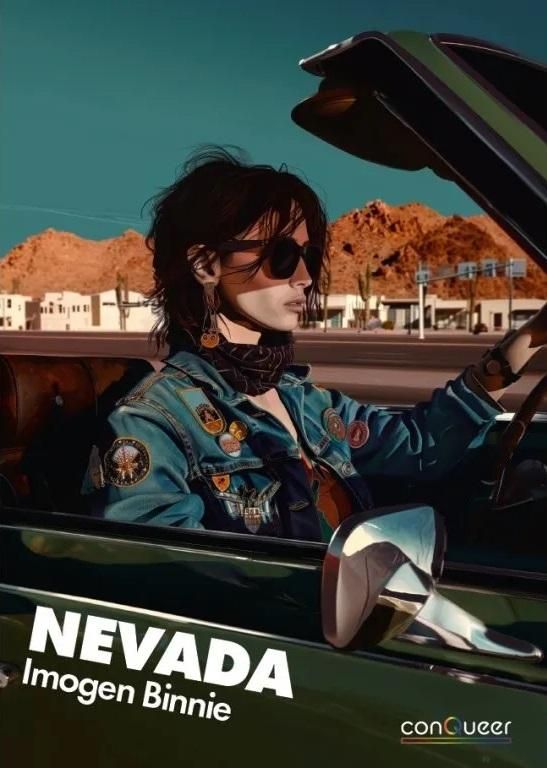
Nevada (2013) – Imogen Binnie
What It’s About: Down-on-her-luck trans woman Maria Griffiths loses her shitty bookstore job and decides to leave New York with her ex-girlfriend’s car and drive to Nevada. There, she meets James, a young man who’s got gender issues of his own, and sweeps him up into the whirlwindmurk of her collapsing life.
Why You Should Read It: The marquee novel of the now-defunct Topside Press, Nevada was a revelation for an entire generation of trans women who had never seen themselves represented on the page. Maria is messy and self-important and at times unbearable, but she’s fierce and funny and has agency in a way so often denied to trans women in the decades prior. Told across detached Manhattan bookstores and Brooklyn apartments and strip malls in Reno, Nevada, Binnie’s debut novel is sometimes called one of the ‘great American road trip novels,’ and it manages to thread the delicate balance of accessibility to a mainstream audience while never faltering or compromising on its depictions of transfeminine interiority. It’s hardly a perfect book, but it is and remains the best entry point to the genre at-large.
The Millennial Favorites
So you’ve probably read Nevada if you’re looking here. If you haven’t read Nevada, my advice is that Nevada will probably let you know if you’re going to like these books, but these books might not let you know whether you’re going to like Nevada. If you’re a millennial or Gen-X trans woman, though, this is a fine place to start out if Nevada’s summary doesn’t appeal to you.
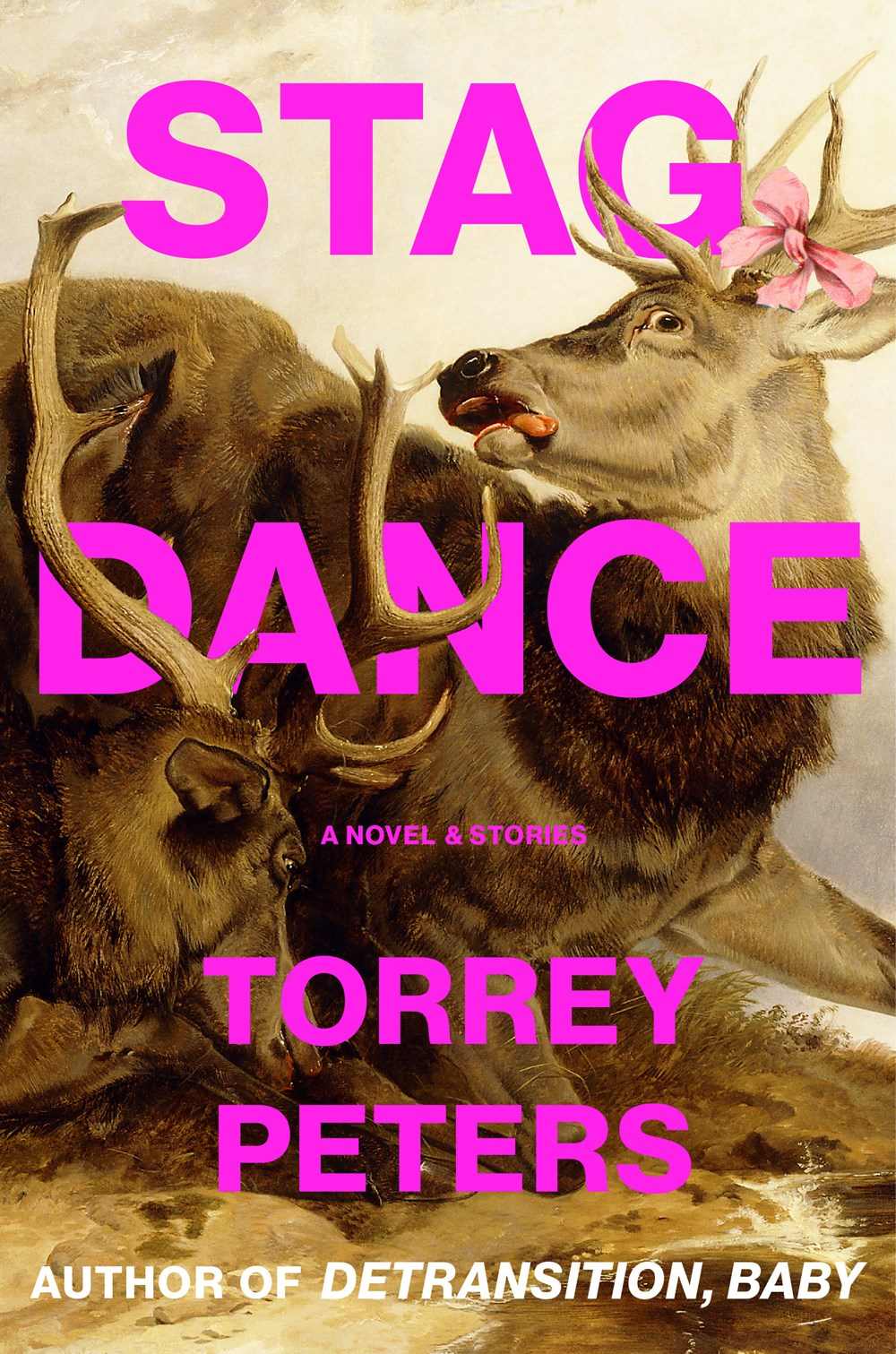
Stag Dance (2025) – Torrey Peters
What It’s About: Across four novellas spanning almost a decade of her career, Torrey Peters explores the messy contours of transfeminine life. The Masker and The Chaser both examine the complicated relationship between trans women (transitioned or not) and the cis men who have romantic interest in us. Infect Your Friends and Loved Ones dives into the politics of trans community and self-love, and the titular Stag Dance explores the fluid nature of gender and the unstable position of trans women within a cis-male dominated society.
Why You Should Read It: Stag Dance is one of 2025’s biggest new releases, and it’s gained widespread critical acclaim and readership across the broader market. Torrey’s work is beloved by cis and trans women alike, and Stag Dance builds upon the formidable platform established by 2021’s Detransition, Baby, pairing Peter’s excellent early novellas with her lushly composed newer work. If you’re looking for a bookclub read, this is a great place to start.
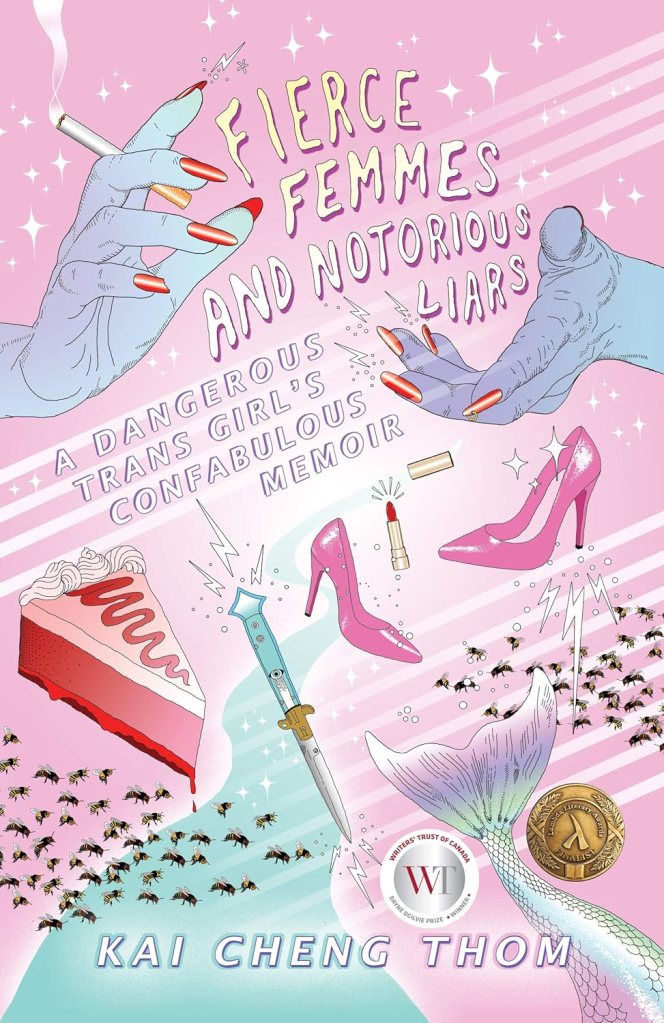
Fierce Femmes and Notorious Liars (2017) – Kai Cheng Thom
What It’s About: A trans girl runs away from home and joins a biker gang of femme queens that fights cops and struggles together (and against each other) to carve out community and home in a hostile world.
Why You Should Read It: First and foremost, from a stylistic standpoint, Fierce Femmes is utterly delightful. Thom plays with the fabulist genre effortlessly, and every detail about her setting accentuates the story. But it is the characters in this book that have given it this spot on the recommendation chart. Effortlessly peering into the depths of the transfemme psyche, Thom brings each and every one of her girls to life, and reading this book is like an explosion of trans life and joy. If you’re still not quite sure what transfeminine literature as a genre is ‘about,’ this book should give you a pretty solid crash course.
Last Year’s Recs: Detransition, Baby (2021) by Torrey Peters, Little Fish (2017) by Casey Plett
The Gen-Z Favorite
Gasp – my generation? Getting our very own category??
It’s more likely than you think.
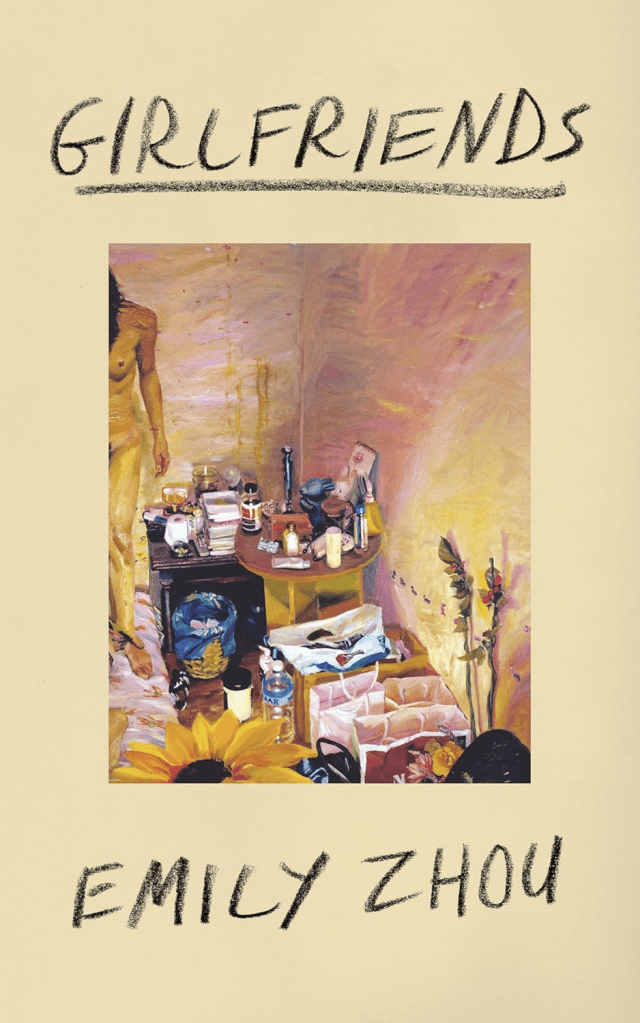
Girlfriends (2023) – Emily Zhou
What It’s About: Seven short stories about the minutae and mundanity of transfeminine life, written with sparkling crystal-clear prose. Zhou’s protagonists are fleeting and recursive – the book never lingers longer than it has to, but manages to capture so very much light in the process.
Why You Should Read It: Arguably the first major novel by a Gen-Z trans novelist, Girlfriends helped to set a new tone both as a signature debut for Casey Plett and Cat Fitzpatrick’s LittlePuss Press and for the post-pandemic era more broadly. This collection is snappy enough for even the shortest attention spans, and I’ve heard young people sing its praises from far beyond the usual audiences of transfeminine literature. If you’re in college or your early 20s, this is a great way to get into reading trans books.
For Fans of Madeline Miller
We know you’re out there, Song of Achilles fans. Don’t you worry, there’s a trans take on your favorite Greek mythology to dabble your feet in the genre.

Wrath Goddess Sing (2023) – Maya Deane
What It’s About: A trans retelling of Homer’s Illiad that draws upon cross-dressing elements in the original tale to reimagine Achilles as a trans woman, puppeted by the whims of the eldritch gods and locked in a titanic struggle for the soul of the world with Helen.
Why You Should Read It: Firstly, this book is completely badass, and it’s a masterclass on historical fantasy done right. The Greek gods are chilling forces of nature, and Deane draws on a deep well of comparative mythology knowledge and innovative new flair to keep the old world feeling fresh and new. The ending is superbly thought-provoking. If you want a mythology fix, this should be your first stop shop.
For Fans of Sally Rooney
Sometimes all you need is a good book to read while you’re sitting on the beach. For everyone who’s a fan of mainstream literary-contemporary and enjoys curling up on the couch with a good book and a cup of coffee, this might be the one for you.
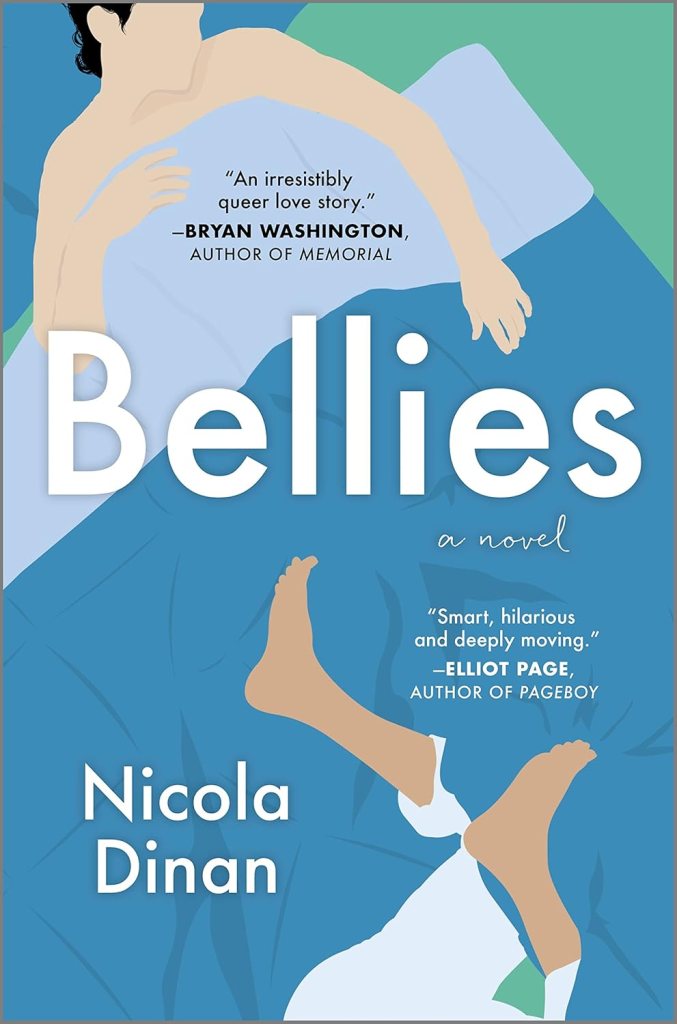
Bellies (2023) – Nicola Dinan
What It’s About: It starts out as a gay relationship in college. Tom and Ming are planning out a life together, but when Ming decides to transition, what might have been a simple romance turns into a globe-trotting drama as both Tom and Ming contend with their changing feelings about each other – and themselves.
Why You Should Read It: If you’re looking for a contemporary book, Bellies perfectly encapsulates the current literary moment. Dinan’s writing is clean, crisp, and direct, and this one will be the perfect package for anybody who just can’t get enough of the Rooney/MFA style. It’s a fun cosmopolitan romp, and sometimes that’s all we’re looking for in a book, y’know?
For Fans of Tamora Pierce
When I was a kid, my absolute favorite book was In The Hand of the Goddess by Tamora Pierce, which followed aspiring knight Alanna as she shed the disguise of manhood that had allowed her to join the knighthood and embraced her femininity. It was an absolute revelation to me as a young trans girl, and if you loved Tammy’s work as a kid, or YA fantasy more broadly, then I’ve got the perfect rec for you.
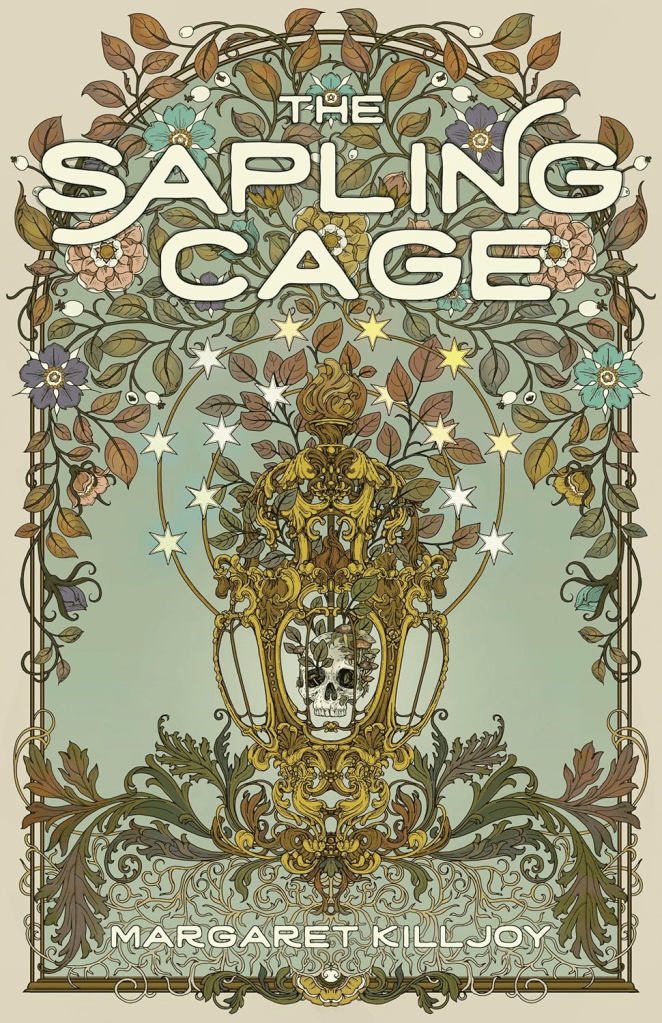
The Sapling Cage (2024) – Margaret Killjoy
What It’s About: With dreams of becoming a witch, Lorel hides her birth sex and runs off to join a struggling cover, where she quickly finds herself entrenched in a struggle for the fate of both magic and the world.
Why You Should Read It: The Sapling Cage captures the magic of the childhood cross-dressing favorites of many trans readers while staying true to its deeply trans themes and characters. Lorel’s ongoing emotional struggle with her deception and her fears about being cast out from her coven are deeply relatable to any young trans reader, and the book has a broad appeal both as a fantastic first trans YA novel, and as a lighter comfort read for adult trans readers who never got to see themselves in fiction as a kid.
For Fans of Jodi Picoult
Oh boy, are you in luck.

Mad Honey (2022) – Jennifer Finney Boylan, Jodi Picoult
What It’s About: A trans girl is dead, and all fingers are pointing at Olivia McAfee’s son. A desperate mother struggles with parenthood, the legal system, and unfamiliar ideas about gender, all while we see glimpses of the vibrant life that was cut short when Lily Campanello tragically lost her life.
Why You Should Read It: Let me be very clear – I would not recommend this book to a trans woman. It’s written for cis people with a cis lens, and unless you really like Jodi Picoult or legal thrillers, you’re probably not going to like this. However, for all of my cis readers out there, especially any cis moms who are trying to navigate the unfamiliar terrain of transitioning and gender, this might be a good pick for you. My grandparents read it and loved it!
For Your Coffee Table
Whether you’re looking for a conversation starter for your book group/dinner party or a statement piece to queer your living space, there’s nothing like a coffee table book to set the mood! One of my favorite things to do at my grandparents’ apartment as a kid was rooting through their expansive coffee table book collection – if I had found a book like this back then, it would have blown my mind.
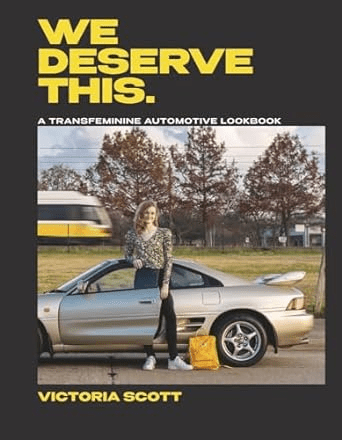
We Deserve This (2025) – Victoria Scott
What It’s About: An all-American lookbook of hot trans women with hot cars from auto journalist and photographer Victoria Scott.
Why You Should Read It: Aside from serving absolute cunt, We Deserve This has a really powerful message about trans joy and self-actualization in a world that loves to deny it. By pairing together trans women with a car of their choice, Scott creates a really striking discussion about trans fulfillments and the vehicles we use to achieve them. Top-notch photojournalism.
What about Poetry?
One of the most embarrassing omissions from last year’s list was my complete lack of poetry recommendations. Since then, I’ve been making an active effort to add more poets to my reading, and there’s some really wonderful work that I’m excited to rec in 2025! If you’re looking for an accessible starting point, though, there’s one book that stands out.
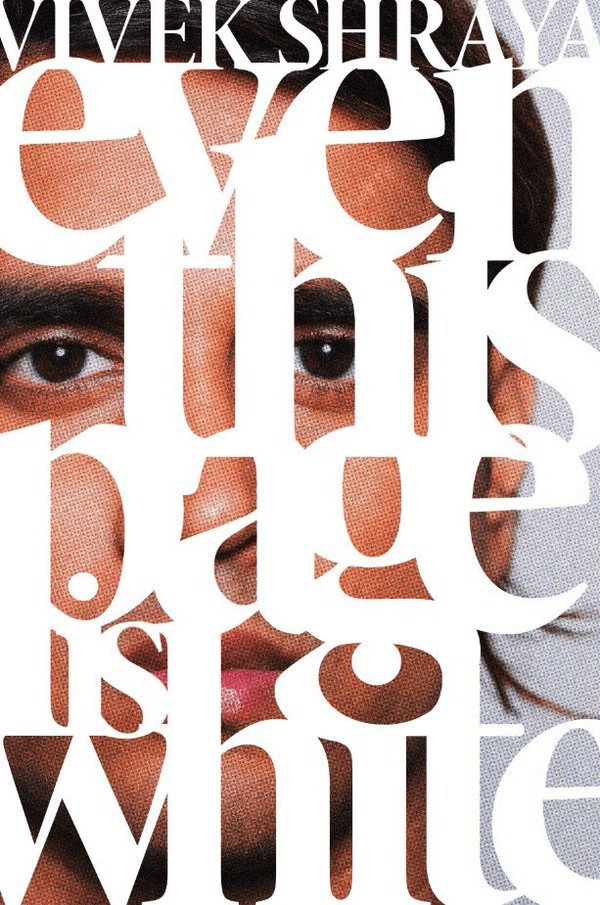
Even This Page is White (2016) – Vivek Shraya
What It’s About: A stark dissection of race and racial discrimination that captured the moment of the mid-2010s.
Why You Should Read It: Shraya’s lightning rod debut poetry collection may be almost a decade old, but it’s perhaps more important now than ever. With a contemporary flair for free verse and page-breaking poetic structure, Shraya’s pen cuts with a clarity and spark far beyond her pressing political themes, rendering this collection not just an essential historical read, but a vigorously enjoyable one for the current-day reader too.
Actually, I Want a Memoir
Last year I went on a little tangent here about my skepticism toward the trans memoir genre, and I’m here to report in 2025 that my opinion has softened toward them somewhat. While I still would generally recommend starting with a novel, there’s an important place for memoirs that enmesh cis readers within the emotional struggles and political concerns of trans people in our modern world. Memoirs can be such an invaluable tool for building empathy and solidarity, and I want to honor that with my pick here.
While I still believe that Redefining Realness by Janet Mock is a seminal text that everyone should read, I think that the political developments of the last year with regards to trans rights across the United States, the United Kingdom, and elsewhere have necessitated a more contemporary pick that can speak to the challenges of our current moment. With that in mind:
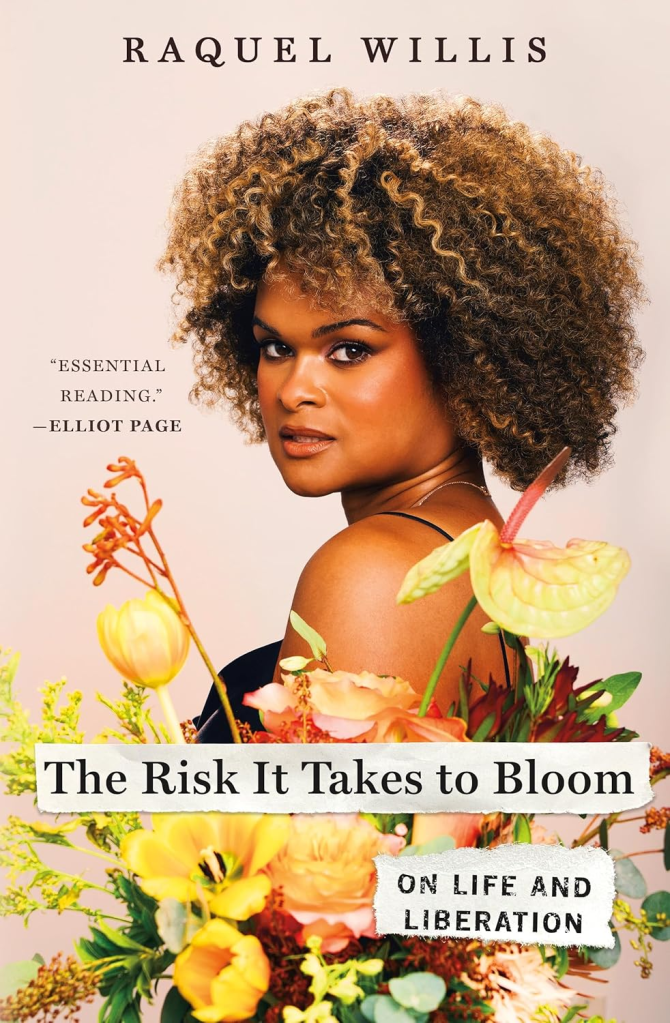
The Risk it Takes to Bloom (2023) – Raquel Willis
What It’s About: Willis documents her childhood as a young Black trans woman in the American South, following her journey to self-acceptance and her path into the activism sphere.
Why You Should Read It: With her ongoing work with Chelsea Manning and others in the Gender Liberation Movement organization, Willis has been at the heart of several of the most impactful protests against Trump administration anti-trans action this year. I think The Risk it Takes to Bloom is a critical book to read right now, not because it’s inspirational, but because it lays out a material path into activism, and gives insight into the type of labor and organizing required to make a stand against fascism or tyranny.
Last Year’s Recs: Redefining Realness (2014) by Janet Mock
Help Me Understand Transphobia
This is an impossible category to update. The stark reality of the situation is that the global legal situation for trans people has rapidly devolved over the course of 2025, far faster than any adequate historian or even journalist could hope to chronicle in a book. At the time of writing this, it has been less than three months since both United States v. Skirmetti and For Women Scotland v. The Scottish Ministers became law in the US and UK respectively, laying the effective groundwork for a complete dismantling of transgender civil rights in both countries. The devolution has been rapid, violent, and wide-reaching – the sort of historical happening that’s nearly impossible to cover until after the dust has settled.
Frankly, I don’t think that anyone in the trans community currently understand the full scale or implications of what’s been happening, and I have a hard time envisioning how anyone could manage to write, forget find a publisher for, the sort of book I so dearly wish I could recommend to you amidst the violence. Leading transfeminist Talia Bhatt has been vocal about labeling these events an “epistemicide,” i.e. a systemic erasure of knowledge and knowledge-making, and I find it to be an apt descriptor here. Our attempts to report and chronicle the abuses against our community are being violently suppressed – as trans people get removed from the public square, as journalists lose their jobs at traditional publications, as trans authors get passed over for traditional publishing deals, it becomes increasingly hard to publicize or mass-produce the critical work that would educate people about its necessity in the first place.
Nevertheless, we push forward with the resources we’ve got. I’m gonna rec the same book as last year, then suggest a couple of digital resources to help fill in the gaps while the trans experts attempt to sort through the absolute mess of our contemporary political situation.
The Transgender Issue: An Argument for Justice (2021) – Shon Faye
What It’s About: A sweeping examination of the current state of trans rights in the British state and media, reflecting on issues of class praxis, prison abolition, healthcare, schooling, the rising influence of the far-right, and what we can do about it.
Why You Should Read It: While 2025 has dated this book profoundly, I still believdeeplye that this may be the single most accessible resource for understanding how the political landscape got to this point, even if it only covers through the pandemic. The bigotry and discrimination peddled by convervative governments around the world is not an ahistorical phenomenon; it has been taught and reinforced at every level of our culture. If you want to support the trans people in your life right now, The Transgender Issue will give you an invaluable crash course on some of these tactics, and hopefully an improved historical sense of what went wrong along the way to get us here.
Other Resources: If you want to stay up to date with the latest news on anti-trans discrimination, I would highly recommend following a reputable trans-helmed news organization, preferably multiple. Erin in the Morning, led by Erin Reed, wife of Montana State Rep. Zooey Zephyr, is an excellent resource for those with little to no exposure to trans issues (my grandparents read it). For other sources that are a little more involved, you can check out Assigned Media, led by Evan Urqhart and with frequent contributions from Riki Wilchins, or Trans News Network, led by Mady Castigan, which are both highly reputable trans-helmed newsrooms. When I reached out to my community to source more recs, I was also suggested this comprehensive article series from The Trans Dandy, which demonstrates using graphs and well-researched data how severe this legislative backlash has been.
I Want to Learn about Trans History
It’s not a perfect resource, but here’s the best primer on the subject.
Transgender History, 3e (2026) – Susan Stryker
What It’s About: An overview of American trans history beginning in the 19th century and continuing through to the modern day. There’s a more recent edition published in 2017.
Why You Should Read It: The primary fault of Transgender History is that it really ought to be called “American Transgender History,” as it’s fairly limited to United States and its relevant auxilaries. However, the reason that I recommend this book despite its limitations is because this is the best source I’ve read that can explain basic details about trans history that are common-knowledge to a lot of trans people. For example, if you don’t know much about Stonewall, this book will explain it to you. If you don’t know what “The Transgender Tipping Point” means, this book will explain it to you. I would primarily recommend this to people with little to no familiarity with the topic – this is the best and most accessible place to start learning.
[NOTE] Because this resource will remain largely unedited until August of 2026, I’m going to recommend the Third Edition of the book, which will be publishing on 2/3/26. You can preorder it here. If you are reading this before February of 2026, then you should get the Second Edition from 2017.
I Want to Learn about Transfeminism
Awesome! You’ve got two options on where to start, but if you’re really interested in learning about the subject, I would recommend that you read both.
Whipping Girl (2007) – Julia Serano
What It’s About: Julia Serano introduces a number of keystone concepts that have since become essential pieces of the trans lexicography, including but not limited to ‘transmisogyny,’ ‘ungendering,’ and the initial popularization of the word ‘cisgender.’
Why You Should Read It: Every transfeminine person, but especially the high femmes, should read this book. It is deeply insightful and critiques biases and internalized misogyny in a way that profoundly changed my attitude toward both my body, my transition, and my life. Essential reading.
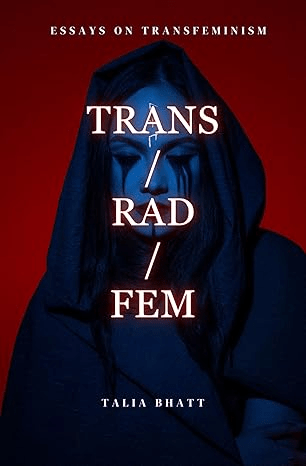
Trans/Rad/Fem (2025) – Talia Bhatt
What It’s About: Talia Bhatt lays out a new framework for understanding transmisogyny and building global solidarity between transfeminine people around the world.
Why You Should Read It: While the competition may be stiff for the best book of 2025, there’s a serious argument to be made that Trans/Rad/Fem is the most important. Bhatt’s searing social commentary and rigorous deconstruction of third gender tropes, internalized misogyny, and epistemic violence are grounded in decades of feminist theory and critique, making this seminal text a crucial new cornerstone text for transfeminism as a discipline.
Last Year’s Recs: Invisible Lives (2000) by Viviane K. Namaste
Great, that’s most of the obvious recommendations out of the way. If you’ve gotten to this point, either you’ve already read some of these, or have heard enough about them to know you probably don’t want to. I DO NOT recommend reading all of these before moving on. In fact, my recommendation would be to read one or two, maybe three, then try something a little more out there. There’s very little in this section that won’t pop up within a fifteen second Google search. So let’s dig a little deeper, yeah?
TIER TWO: SHALLOW END
Your Next Gateway Drug
So you enjoyed Nevada. You read Mad Honey with your book club, your college professor assigned you a passage from Whipping Girl, your friends kept telling you to read Fierce Femmes or Wrath Goddess Sing and you loved it. Or maybe you just hate the idea of having your hand held and want to cut straight to the good stuff. Now what? Well, here’s my first recommendation for what you should read if you’ve already had some exposure to transfeminine literature, but don’t have a clear idea of what you should read next.
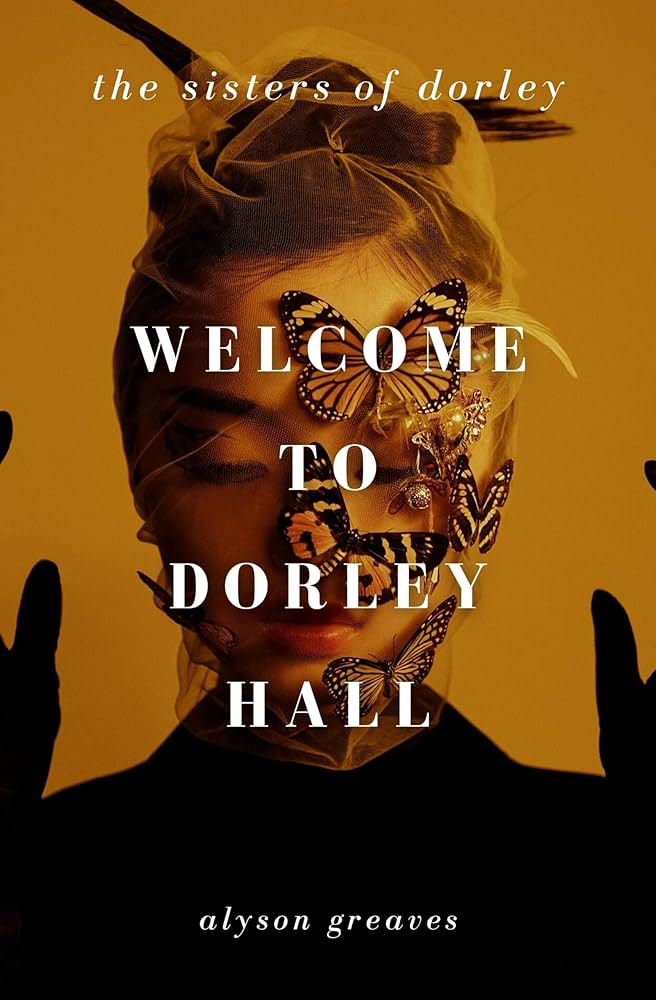
Welcome to Dorley Hall (2024) – Alyson Greaves
What It’s About: While searching for his missing friend Mark Vogel, closeted trans woman Stef Riley accidently stumbles upon a force feminization cult, which attempts to reform cruel and sexist men by turning them into women.
Why You Should Read It: Last year, I put Dorley down in Tier Three in the “Internet Cult Classic” section, but even I couldn’t have predicted the attention and acclaim it’s received in the months since! Alyson Greaves’ magnum opus is a bonafide trans classic – a kaleidoscopic family novel, a literary announcement, and a biting satire in equal measures. Greaves is a masterful character writer, and she captures something essential about the inter-generational trans psyche in all of its messiness and neuroses. It’s hard to summarize in a paragraph what makes Dorley special – it’s a book best read blind. Of all the books on this list, Welcome to Dorley Hall is the one I wish I could read for the first time again.
The Point of No Return
I debated for a long time about where I wanted to put Otros valles on this year’s list. It remains, without real competition, my favorite transfeminine novel that I’ve ever read. It’s tender and hopeful and vicious and I love it so very much. It also is long out of print and very hard to find. There’s a strange epherality here then, a fleeting nostalgia. But I wouldn’t be able to call this list a recommendation list if Otros valles didn’t sit at the very heart of it.
Otros valles broke me down to studs, then gave me the tools to put myself together again. Maybe it can do that for you too.
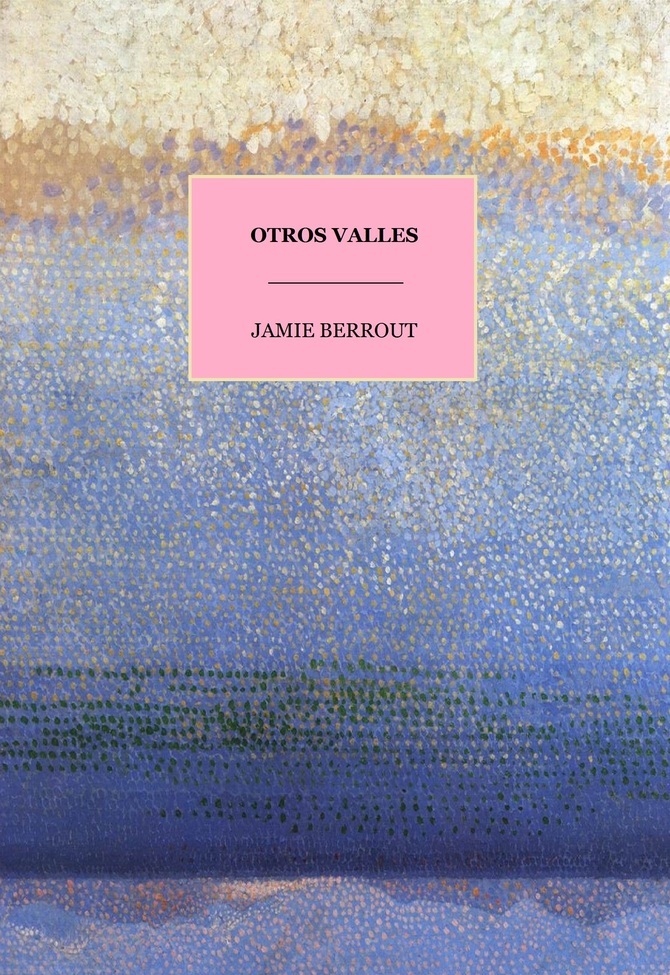
Otros valles (2014) – Jamie Berrout
What It’s About: Captured in fleeting moments and vignettes, at once magical realism, literary contemporary, passionate treatise, and prone to literary flights, Berrout’s masterwork is a tour de force in technical writing and a tender, moving examination of trans life on the Texas/Tamaulipas border.
Why You Should Read It: This is beyond a shadow of a doubt my favorite book ever penned by a trans woman. It is brilliant from the first sentence to the last, the haunting image of the resaca, the oxbow lake where the bodies of the forgotten and murdered reside, the compassion and open-hearted empathy of one trans woman overcoming her own biases and shortcomings to give herself to another. With each progressive incantation – folklórico – Berrout weaves the reader deeper and deeper into the magic of her prose, flowing effortlessly and fearlessly between Spanish and English. This was self-published, and its technical and literary quality blows most other trans books I’ve read out of the water. My words can’t do it justice.
Last Year’s Recs: I’ve Got a Time Bomb (2014) by Sybil Lamb
My 10/10 Gold Star Recs
I’ve rated six books a perfect 10/10 out of the several hundred I’ve read for this project. Otros valles by Berrout is the first, Phoebe and Her Unicorn by Dana Simpson is coming later, and I’ve left my last – Invisible Lives by Vivian K. Namaste – off this year’s list. What’s left are these three exceptional novels that I wholeheartedly believe that everyone should read, no matter their familiarity with transfeminine literature. These are the books that I recommend entirely without qualification or caveat; they are the absolute cream of crop.
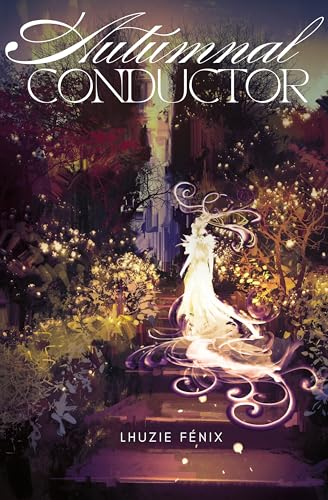
Autumnal Conductor (2025) – Lhuzie Fénix
What It’s About: A mosaic reinterpretation of the Persephone myth, Prosperina is the polymorphic arch-goddess of the Underworld, writhing and twisting across the phantasmagoric page.
Why You Should Read It: The newest title to join the 10s club, Autumnal Conductor is one of the most brilliant achievements in prose craftsmanship I’ve ever read. Relentlessly inventive and dizzyingly lush, Fénix blows open traditional story structure and characterization into a metamodern fractal. From her vocabulary to her sentence structure to her command of word-level imagery, it’s the closest to technical perfection I’ve ever read in a transfeminine book. This is not a book that can be understood on a first read – it’s meant to submerge you, to overwhelm you, to bombard you, and there’s an incredible thrill to letting yourself drift off down the Phlegethon to its natural conclusion. Vicious and gnashing, unabashedly experimental yet deeply versed in transfemme culture, this for me is the perfect encapsulation of the cutting edge of the transfeminine literary avant garde, and it is without exception my favorite novel by a transfeminine author of the 2020s thus far.
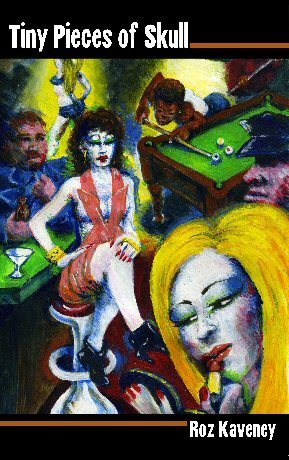
Tiny Pieces of Skull (2015) – Roz Kaveney
What It’s About: Lured out of her comfortable middle class lifestyle and across the pond, British trans woman Annabelle dives headfirst into the 1980s Chicago bar scene and a risque new lifestyle as a rough and tumble escort.
Why You Should Read It: There are so many things to say about this novel. It took nearly thirty years to get it published. It’s an absolutely brilliant class critique. It is the single most humane portrait of trans sex , which can be accessed for free online at Trans Reads.workers that I have ever read, and let me tell you, I’ve read a lot of them. Roz Kaveney writes this entire novel while barely mentioning her characters are trans, putting the richness and texture of their lives on full and unabashed display. Kaveney’s girls are not ‘transsexuals;’ they are people,a basic standard for nuanced characterization that so many trans novels seem to falter over. This is undoubtedly and unequivocally the definitive transfeminine novel of the 20th century, with the only real competition coming from Morris’ Last Letters from Hav in a distant and pallid second, and unless there’s another hidden masterwork out in some granny’s attic or a university archive gathering dust, it absolutely deserves its accolades as such. I see Tiny Pieces of Skull as a testament to the sheer magnitude of work that was lost due to discrimination in the 20th century – we could have dozens, hundreds of novels glowing this way in the mid-century literary style. Instead, we have one.
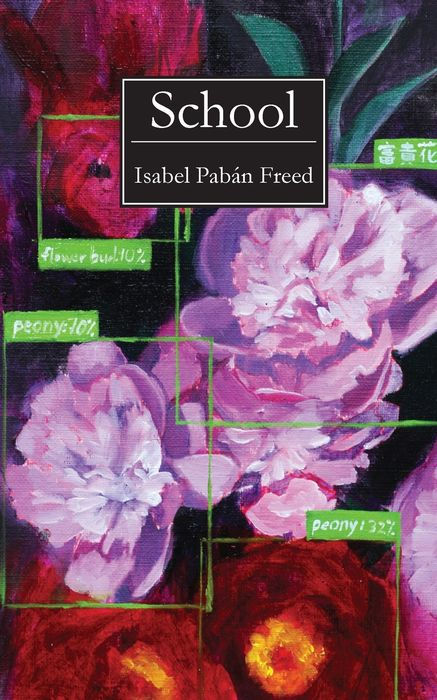
School (2023) – Isabel Pabán Freed
What It’s About: A series of ecliptic vignettes about trans college students and the absolute dumpster fire of a college (and a country) they attend.
Why You Should Read It: Freed is a DFW and Pynchon girlie in the best way, and it absolutely glows in this novel. Metamodern intricacy at its finest. This book reminded me a lot of Umberto Eco in the best way – it is deeply, intricately layered over itself in a way that immediately made me want to turn back to the first page once I finished the last one. It’s also a laugh out loud hysterical text. The prose has an absolute mastery over sentence structure, prosody, and semicolons; Freed has the timing sensibilities of an orchestral conductor, and there are so many little recursions here. The emotional build here is incredibly satisfying, the character work is even better, and it crescendos into a wild third act that completely recontextualizes everything that came before it, which is honestly probably my favorite literary trope. This book reminded me of how I felt reading Cloud Atlas for the first time. But perhaps the most miraculous thing about this book is that it pulls it all off in 274 pages. You may not be getting a tome of Infinite Jest‘s proportions, but I think it’s safe to say that David Foster Wallace would have been proud.
The One That’ll Make You Ugly Cry
Break out the tissue boxes.
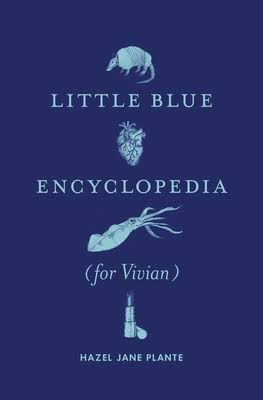
Little Blue Encyclopedia (For Vivian) (2019) – Hazel Jane Plante
What It’s About: It’s an encyclopedia about a bizarre fictionalized TV show with so many obscure details that you could almost believe it’s real. Oh, and it’s also a heartwrenching meditation on loss and grief.
Why You Should Read It: If you’ve ever typed ‘books that will make me cry’ into Google or TikTok, this is the one for you. I had a total moment after I read the end of this book. But that’s not the only reason you should read this – when it’s not making you bawl your eyes out, this book has one of the quirkiest styles of any novel I’ve ever read, and the titular show Little Blue is vividly realized.
I’m Looking for Literary Contemporary
It can be so very painful to write contemporary fiction as a trans woman, in this political moment of all moments. But that’s all the more reason to champion those glowing accomplishments of mimesis that do emerge from the gloom.
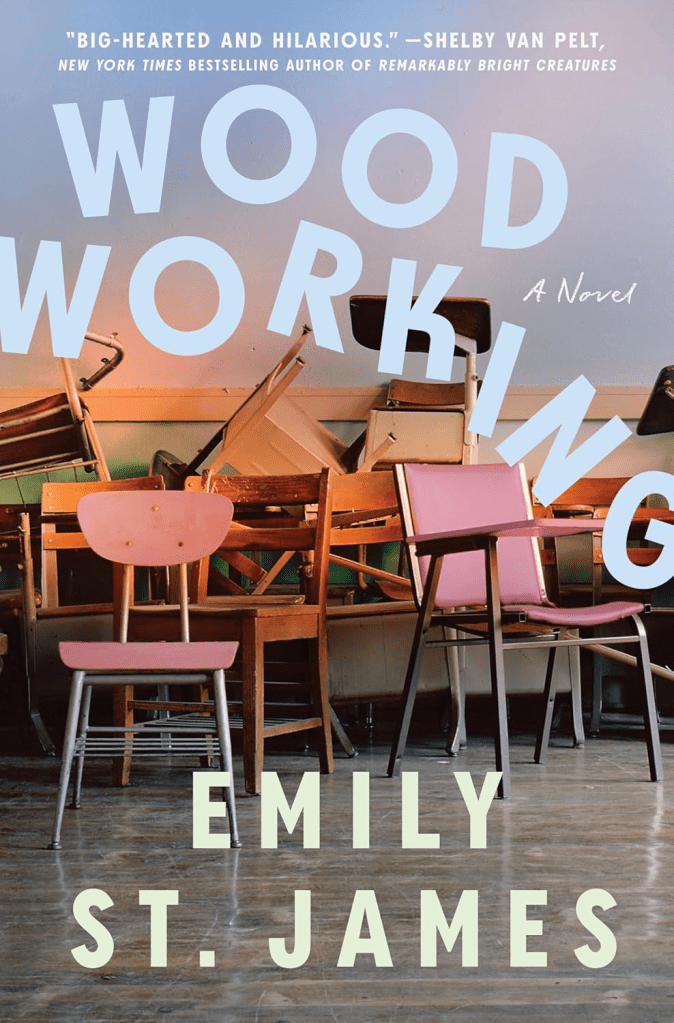
Woodworking (2025) – Emily St. James
What It’s About: Two trans women in South Dakota, an isolated trans teenager and her closeted teacher, form an unusual friendship that threatens to upturn the sensibilities of the conservative culture around them.
Why You Should Read It: St. James’ powerful thesis of this book is that we need more depictions of non-sexual transfeminine relationships, and Woodworking executes it beautifully. Despite the town’s biased beliefs, this superb debut crafts a warm picture of trans teachers, trans friends, trans mentors, trans community leaders – of a transfemininity allowed to participate in small town social life, and which can simply be without a transphobia sexual stigma weighing it down. Captivating.
I’m Looking for Magical Realism
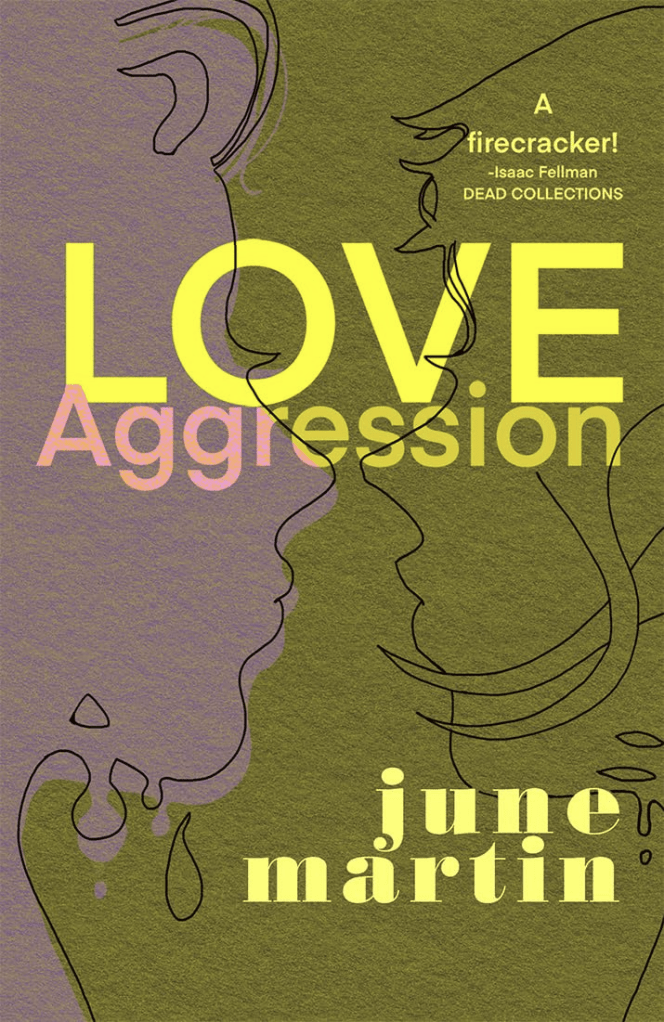
Love/Aggression (2024) – June Martin
What It’s About: Two trans girls stuck in a toxic obsession spiral through an ecliptic vision of Pittsburgh, from liminal coffee houses to bespoke cults to estrogen goddesses living in the group house attic.
Why You Should Read It: Martin’s debut novel, now nominated for the Lambda Award in Transgender Fiction, is at once breathlessly witty and almost dreamy in its surrealist tone. Lily and Zoe are each pathetic heroines in their own right, and Martin’s mastery of the ironic tone and her commitment to her characters brings them both to life on the page in all their neurosis and mess.
I’m Looking for High Fantasy
One of the biggest weaknesses of last year’s starter guide was a serious lack of depth for speculative fiction recommendations. Well, I’m pleased to report that after a full year of doing my homework, I’ve got much better starter recs for spec this year! There is a whole world of transfeminine spec out there, and I’m so, so happy that I can help you wade your way into the waters.
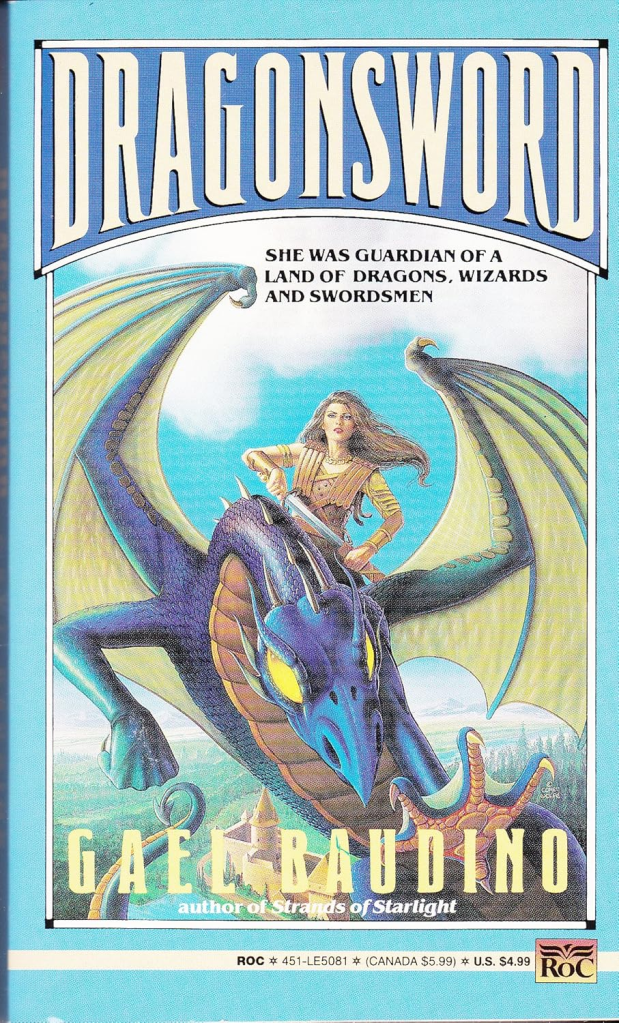
Dragonsword (1988) – Gael Baudino
What It’s About: Scarred from state violence at Kent State, a jaded post-doc finds herself dragged into the misogynistic fantasy world of her horrible professor, where she discovers magic, a transformative power, and crisis that threatens to reshape the world.
Why You Should Read It: There’s a whole world of 20th Century transfeminine fantasy to explore, and I think this is one of the best starting points. Though told from a cis POV, the book deals with deeply trans themes throughout, and a midpoint plot twist that injects gender-bending fun into the mix. This is also a great book for older readers, as many of the cultural touchpoints are from the Boomer generation. Dragonsword is the first book in a trilogy, and Baudino has a ton of other standalones to check out too. If you’re looking for other classic trans fantasy authors, you can also check out Jessica Amanda Salmonson, Rachel Pollack, or Diana Hignutt.
I’m Looking for Urban Fantasy
If you prefer vampires and werewolves and gritty city streets to sweeping epics about swords and dragons, then there’s no shortage of options! Urban Fantasy is one of the most prolific genres of transfeminine spec, but for me, there’s one book that stands out in terms of quality and heart that I’d direct you towards first.
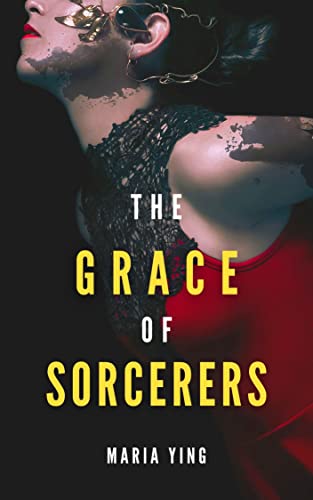
The Grace of Sorcerors (2022) – Maria Ying (Devi Lacroix, Benjanun Sriduangkaew)
What It’s About: Powerful warlocks bind the services of smoldering (and extremely gay) demons. Shapeshifters navigate a hidden landscape of magical society and undercurrents of power. Lesbians abouynd.
Why You Should Read It: It’s a good gateway entry into a certain sphere of self-published fiction by trans women that a lot of the other titles on this list won’t direct you toward. Also, if you like this book, there’s a lot more in the various series by Maria Ying et. al for you to dig your teeth into. Note that Sriduangkaew has a controversial past in the literary world, and also has been one of the absolute strongest allies in the entire publishing industry for the selfpub transfemme community and has provided a lot of organizational leadership and direct aide over the past few years. Exercise your own judgment.
I’m Looking for Science Fiction
Transfeminine sci-fi just had its best year ever, with dozens of excellent titles and a fiercely competitive race for the Outstanding Science Fiction TFR award. While there’s more contemporary choice than ever, I want to recommend an older title that utterly gripped me this past year. I adored this book, and I hope you will too.
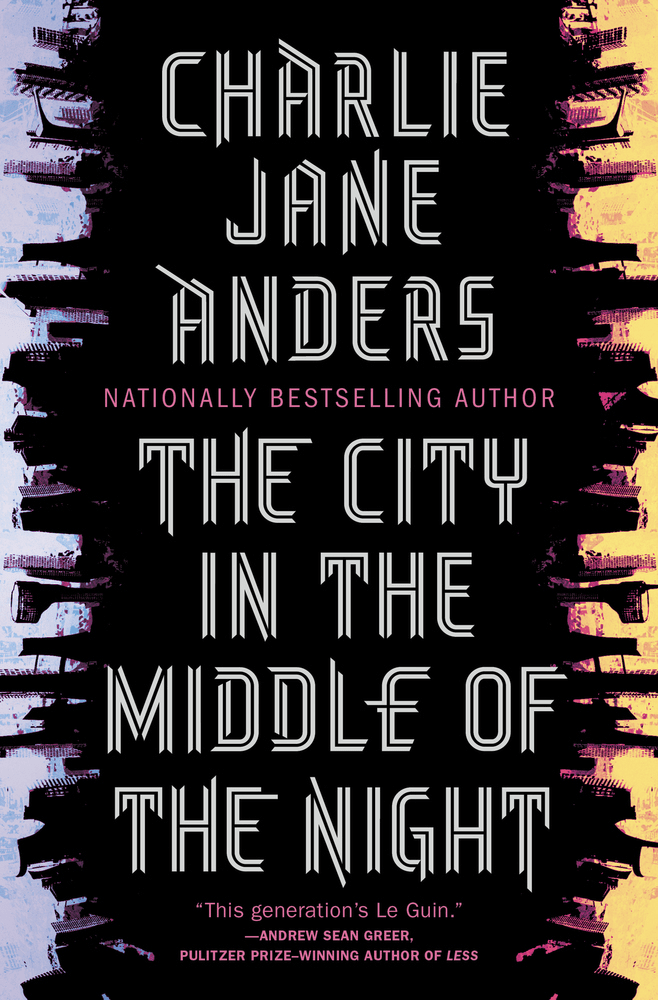
The City in the Middle of the Night (2019) – Charlie Jane Anders
What It’s About: On a tidal-locked planet living on the narrow cusp of eternal night and day, a struggling civilization plows toward its own extinction, driving a lone human girl out into the frozen wastes.
Why You Should Read It: This book is a triumph of both climate fiction and xenobiology, reminiscent of Ursula LeGuin’s sci-fi classic The Left Hand of Darkness in both style and tone. Even though it takes place on a distant planet in the impossibly far future, The City feels both current and necessary, speaking to the self-destruction of our moment and the gutwrenching peril of an existential threat that nobody quite seems to know how to solve. Gripping from start to finish.
Last Year’s Recs: Light from Uncommon Stars (2021) by Ryka Aoki
I’m Looking for Cyberpunk/Mecha
As a general rule, I’m not the best person to look toward for shortform recommendations – I’ve always struggled with attention span for short stories, and thus haven’t read nearly as many collections as I ought to. That being said – it would be an absolute travesty not to include the best short story anthology of last year on this list, especially when it’s such a statement of purpose for the cyberpunk genre at-large.
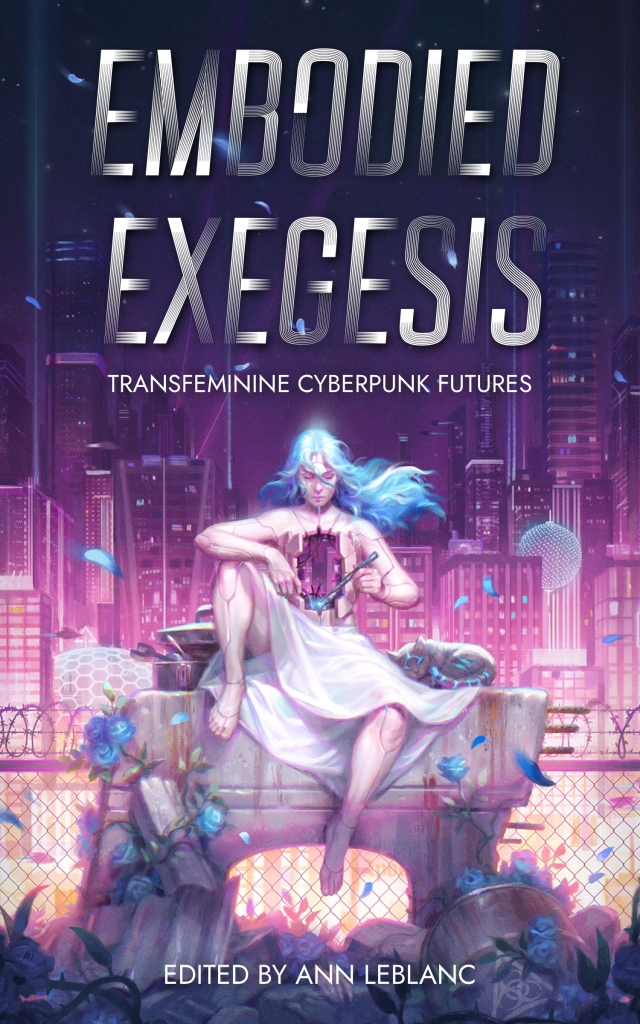
Embodied Exegesis (2024) – ed. Ann Leblanc
What It’s About: A dazzling collection of cyberpunk short stories from a powerhouse group of transfeminine authors, both established and early-career.
Why You Should Read It: It’s rare that a single text makes such a distinct impact on its respective genre; but Embodied Exegesis is a perfect showcase of the explosion of transfeminine cyberpunk and mechsploitation stories over the last few years. Almost every writer in the anthology has published other excellent work of note, much of which I won’t have time to cover here. From breathless transhumanism to grim dystopia to little moments of becoming and hope, there’s nothing better on the market to give you a taste of contemporary transfeminine cyberpunk in all its possibilities.
I’m Looking for Psychological Horror
Alison Rumfitt is absolutely your girl.
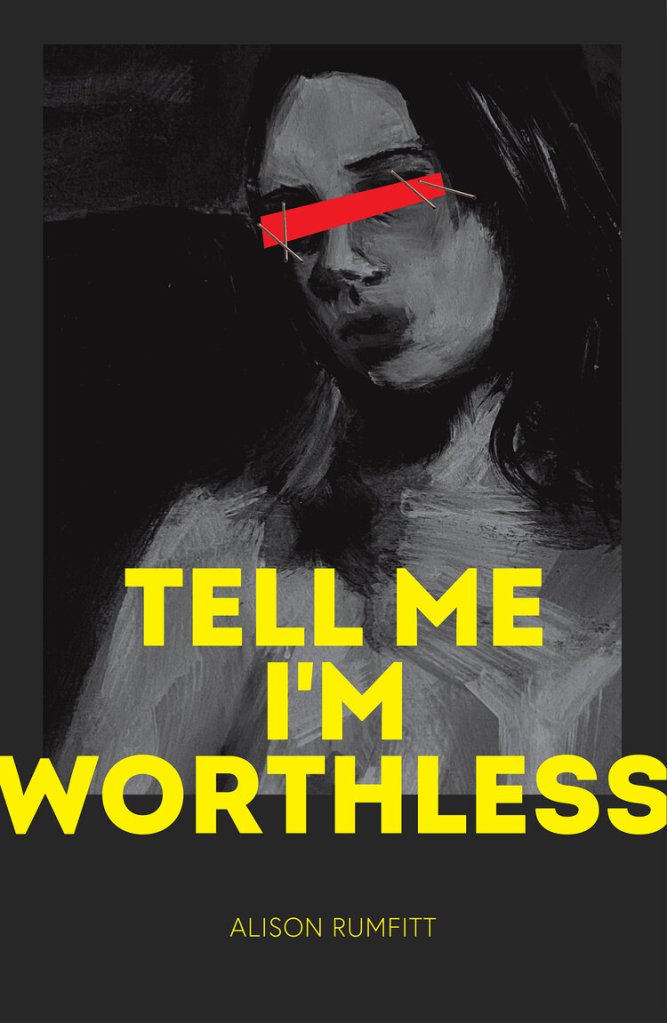
Tell Me I’m Worthless (2021) – Alison Rumfitt
What It’s About: Alice, Ila, and Hannah walked into the House of Albion on a cold day in a deeply transphobic modern Britain. Only Alice and Ila walked out, each thinking that the other has assaulted them. A brutal yet hopeful dissection of modern fascism, carried out through the vehicle of a genuinely terrifying haunted house.
Why You Should Read It: If you like psychological horror as much as I do, of if you’re looking for a book that will make you so viscerally uncomfortable that you can’t put it down, this is the one for you. From her chilling impressions of online 4chan Nazi screeds to her unflinching assessment of British TERF psychology, Rumfitt’s debut is a tour de force in tearing you to shreds (and maybe putting you back together again).
I’m Looking for Gothic Horror
For a more contemporary pick, some of the best transfeminine horror coming out today is in the broader gothic genre, whether it’s the stormy New England Gothic of All The Hearts You Eat by Hailey Piper or the SoCal brujeria of this next pick.
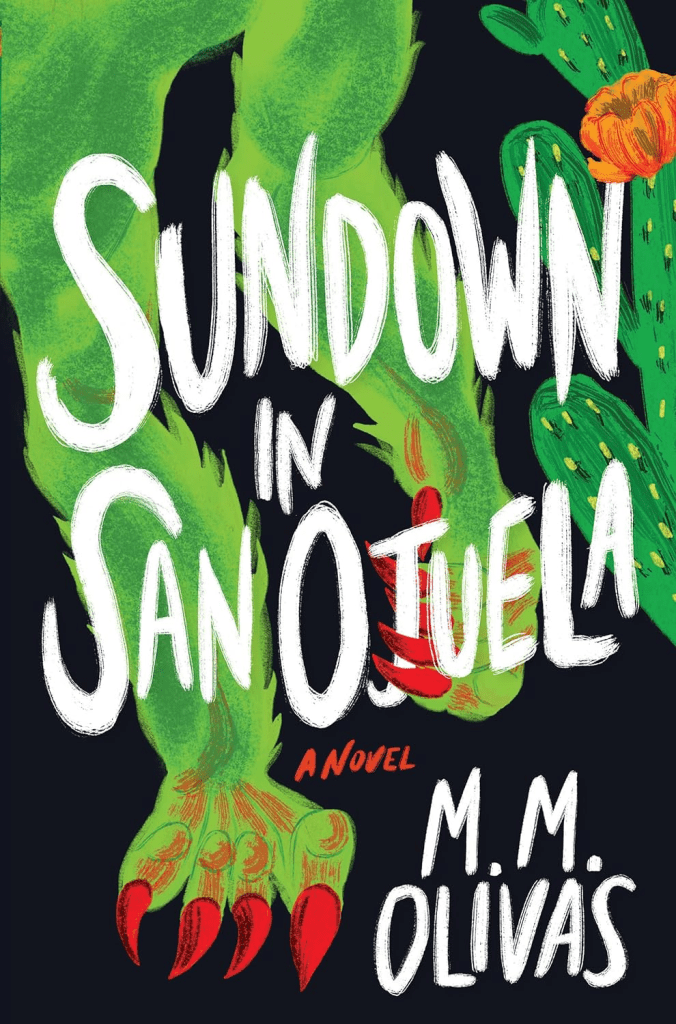
Sundown in San Ojuela (2024) – M.M. Olivas
What It’s About: A moody house haunted by intergenerational memory. A sundown town where monsters come out at night. A goth Latina girl trying to survive in a story that’s barely about her.
Why You Should Read It: One of last year’s sleeper picks, Olivas’ debut novel is a wonderful tour-de-force in Mesoamerican folklore and Chicana storytelling. There’s a fascinating deployment of perspective across the three main viewpoints, where the story of a cop and a queer runaway are told in first and second person respectively, while our alienated heroine Liz slips between in the third person, trying to find her place in the violence of her childhood after dark.
I’m Looking for Romance
If you’re looking for something sleek and sexy and unapologetically trans, then look no further than Olivia Lynd.
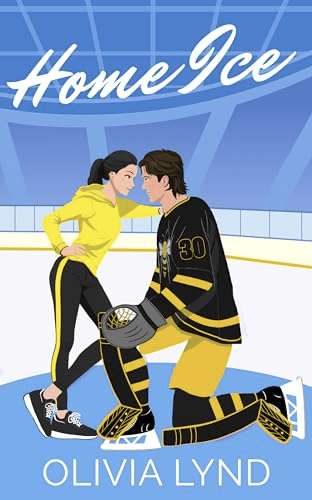
Home Ice (2024) – Olivia Lynd
What It’s About: A trans girl running from her past accidentally runs directly into the hunky star goalie of the hockey team she’s working for instead. Sparks ensue.
Why You Should Read It: It’s so incredibly rare to see compassionate M/F relationships where the woman in trans in fiction, and this is maybe the most heartfelt one I’ve ever read. There is a genuine depth of care and love and attraction that develops between the love interests, and it’s an absolute breath of fresh aid for a trans romance genre that often fetishizes its subject. The B-plot of the book is also an excellent thread about the challenges of being a trans teen in the foster system and the complicated reality of trans parenthood. A must-read for any romance fan.
Last Year’s Recs: Not Like Before (2023) by Lily Seabrooke and Jaqueline Ramsden
I’m Looking for Historical Fiction
I don’t mean to keep reccing books from last year, but man were there a lot of incredible books published in 2024! Historical fiction is an especially barren genre when it comes to trans authors, so it brings me great pleasure to rec something actually historical this year, as opposed to Thornton’s Summer Fun, which, while wonderful, spends half of its airtime in the present day.
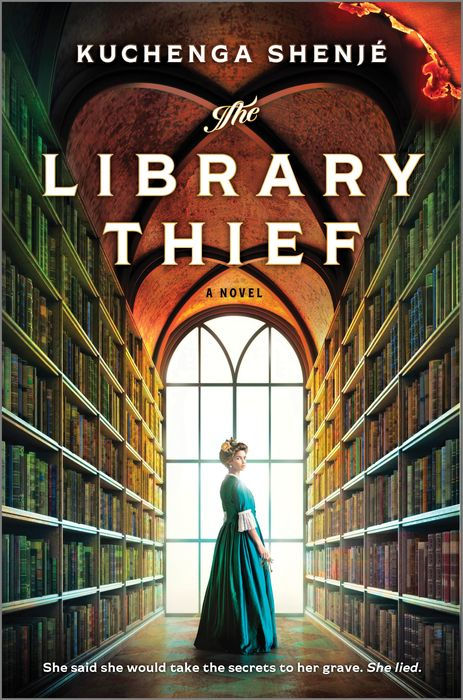
The Library Thief (2024) – Kuchenga Shenjé
What It’s About: The daughter of a bookbinder pretends to be the owner of the business to gain a contract with an aristocratic family, only to find herself swept up in a mystery about the deceased Lady of the manor and her Caribbean roots.
Why You Should Read It: The brilliance of this debut novel is that it takes the format of the Regency novel – its tone, its style, its themes – and fearlessly makes all of the racial connotations of the period textual. The Library Thief is a fantastic example of how a modern lens can be applied to the past without ever losing its groundedness or historical accuracy. Vanishingly few 19th Century novels covered British subjects from the West Indies in any meaningful way, and this book offers a voice to the figures who often slip through the backgrounds of other novels.
Last Year’s Recs: Summer Fun (2022) – Jeanne Thornton
I’m Looking for Mystery
There’s a decent amount of options here if you dig for them. However, if you’re a true procedural fan who likes collecting dozens of books by the same author, there’s one trans author right now who’s truly living up to the procedural name.
By Way of Sorrow (2021) – Robyn Gigl
What It’s About: New Jersey criminal defense attorney Erin McCabe knows that taking up the case of trans prostitute Sharise Barnes will likely throw open her own transition to the wolves. But with her partner Duane Swisher, she’s ready to get to the bottom of the case.
Why You Should Read It: The buddy cop dynamic between Duane and Erin is absolutely fantastic, and it drives the story. Gigl is a lawyer in real life, and she brings all of her expertise to the table. Her antagonists are thrilling because of how well they seem to mirror real world banality and petty evil. But most of all – if you like this one, there’s at least four more where it came from.
I’m Looking for Thrillers
What Robyn Gigl is to transfeminine mysteries, Dharma Kelleher is to transfeminine thrillers – an excellent writer standing in the long tradition of serial pulp heart-racers. Looking for a series to keep you busy? Can’t go wrong here.
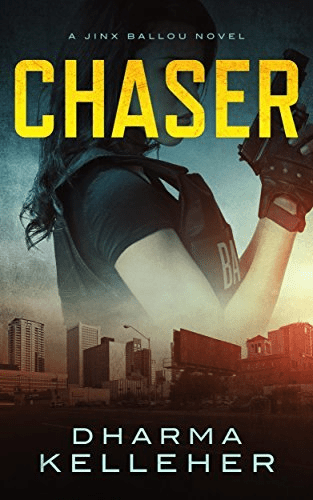
Chaser (2018) – Dharma Kelleher
What It’s About: After getting outed to the world and dumped from her bond agency, Jinx Ballou takes up the only remaining case available to her: a $300,000 order on a seventeen-year-old disabled girl who’s far more complicated than she seems.
Why You Should Read It: Jinx is an absolutely delightful protagonist for a thriller beat – spunky, violent, a complete disaster, and ruthlessly good at her job. With great humor and sharp plotting, Kelleher never lets her foot off the gas, and takes her reader through plenty of twists and turns to solving the case, with judicious amount of violence and crime-busting applied along the way.
Last Year’s Rec: Killing Me Slowly (2014) by Tanya Allan
I’m Looking for Suspense
Continuing on the theme of expanding my slate of genre recs from last year, I have a suspense rec that’s distinct from my thriller rec! Renee James is our third musketeer of transfeminine writers in the Mystery/Thriller wheelhouse, and I’m super pleased to have a fantastic rec to round out the trio.
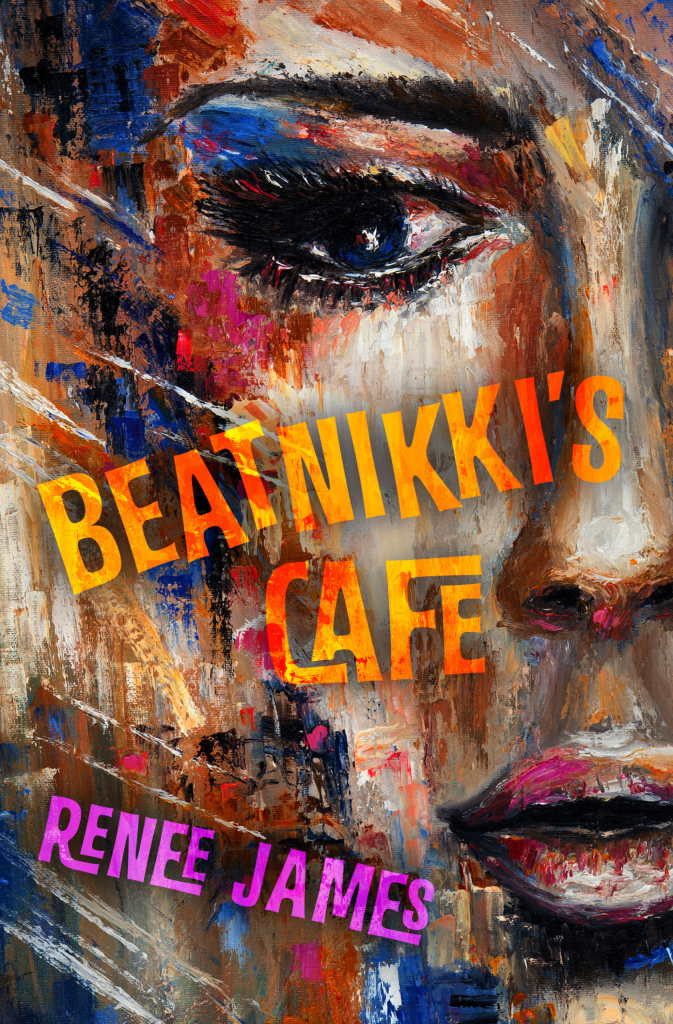
Beatnikki’s Cafe (2023) – Renee James
What It’s About: A series of escalating confrontations between a trans bar owner and a local gang of Neo-Nazis jeaporadizes everyone involved, including Nikki’s tenuous relationship with her teenage daughter.
Why You Should Read It: Set in the post-election landscape of the Trump I era, Beatnikki’s Cafe offers a powerful look back at the atmosphere and tone of 2017-era alt right politics and the early rise of modern fascism, concluding with an almost fable-eque tone. But the true virtue of this book lies in its exceptional portrait of the complexities of trans parenthood for later-in-life trans women.
I’m Looking for Young Adult Fiction
If you’re a teenager who’s figuring out your transition, or a parent who’s trying to find some good books for your trans kid, you’ve got way more options now than I did when I transitioned. I’m gonna recommend you one that I liked when I was younger and two I’ve enjoyed more recently, but know that there’s a whole wealth of choice out there if you’re willing to do some research.
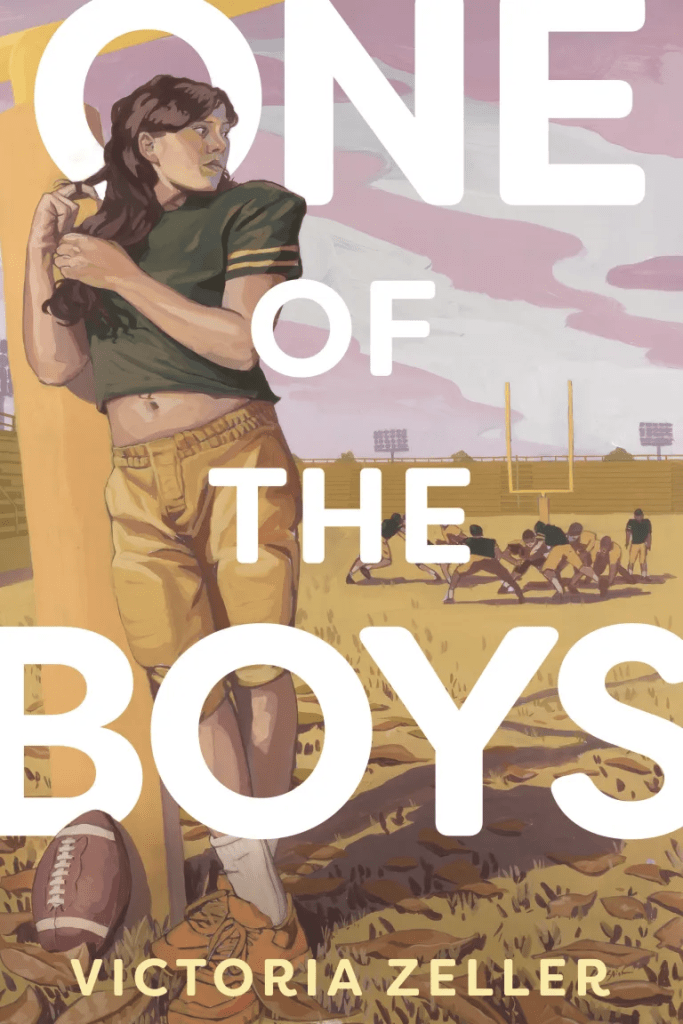
One of the Boys (2025) – Victoria Zeller
What It’s About: After her transition derails a once-promising football career, a trans teen wanders her way back onto the team, discovering herself along the way.
Why You Should Read It: Put simply, this is the best trans YA novel for Gen-Z teenagers that I have ever read. Zeller absolutely nails the teenage voice – there’s little projection or adulthood nostalgia. The characters are imperfect, petty, messy, self-absorbed – but ultimately shine on the page with a charisma and heart that’s incredibly hard to replicate in prose. With a complete commitment to grounded realism, this is the definitive YA novel for trans teens in 2025.
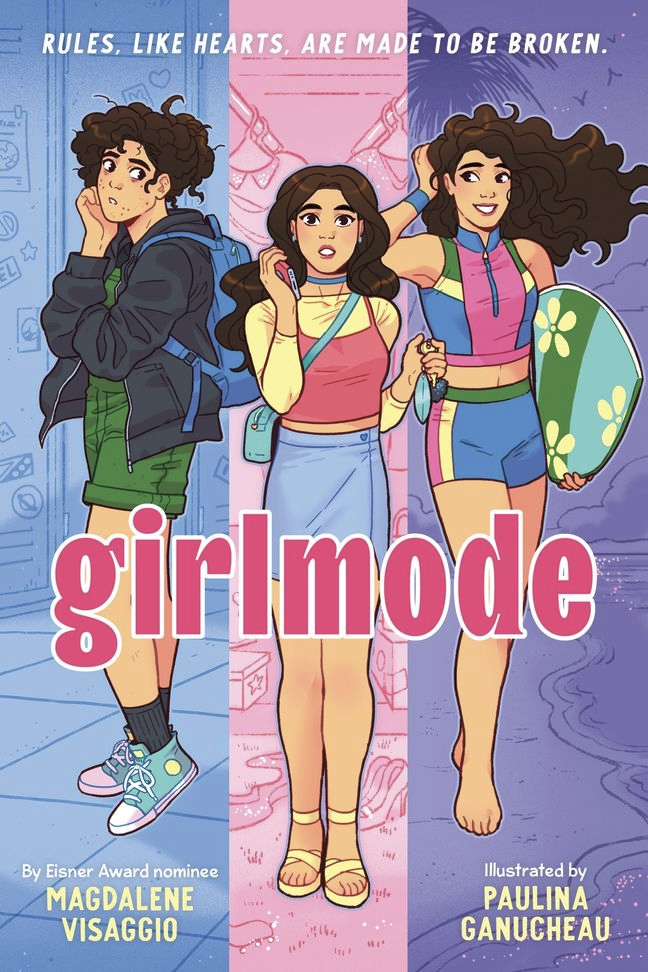
Girlmode (2024) – Magdalene Visaggio, Pauline Ganucheau
What It’s About: Told in Hollywood vein of films like Mean Girls, a newfound girl finds herself swept up in a whirlwind of parties, makeup, and high school cliques, forcing her to confront the girl she is (and wants to become).
Why You Should Read It: Don’t want to read a trans novel about sweaty locker rooms and football? Girlmode is the high femme to One of the Boys‘ butch. This graphic novel isn’t just an excellent exploration of transfeminity – it also sinks its teeth deep into the meat of dysphoria and internalized misogyny, making it essential reading for all the girls out there navigating their femme-shaped demons (and maybe clothes-shopping too).
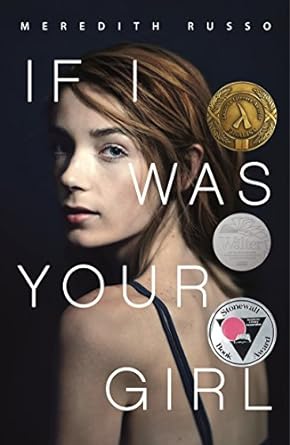
If I Was Your Girl (2016) – Meredith Russo
What It’s About: Amanda has just moved to a new school where nobody knows her biggest secret – she’s trans, and she’s already finished her transition. But when she starts to fall for Grant, her most important secret seems to become more and more perilous with each passing day.
Why You Should Read It: While it may not be as contemporary as the other two picks on this year’s list, Russo’s YA classic remains the definitive trans YA of the 2010s. This was the first book I ever read by a transfeminine author way back in 2017, and it blew my mind.
Last Year’s Recs: Dreadnought (2016) by April Daniels; Performative Masculinity (2022) by Zoe Storm
I’m Looking for Children’s Fiction
There’s plenty out there for young readers once you know where to look! This one is my favorite I’ve come across so far ❤
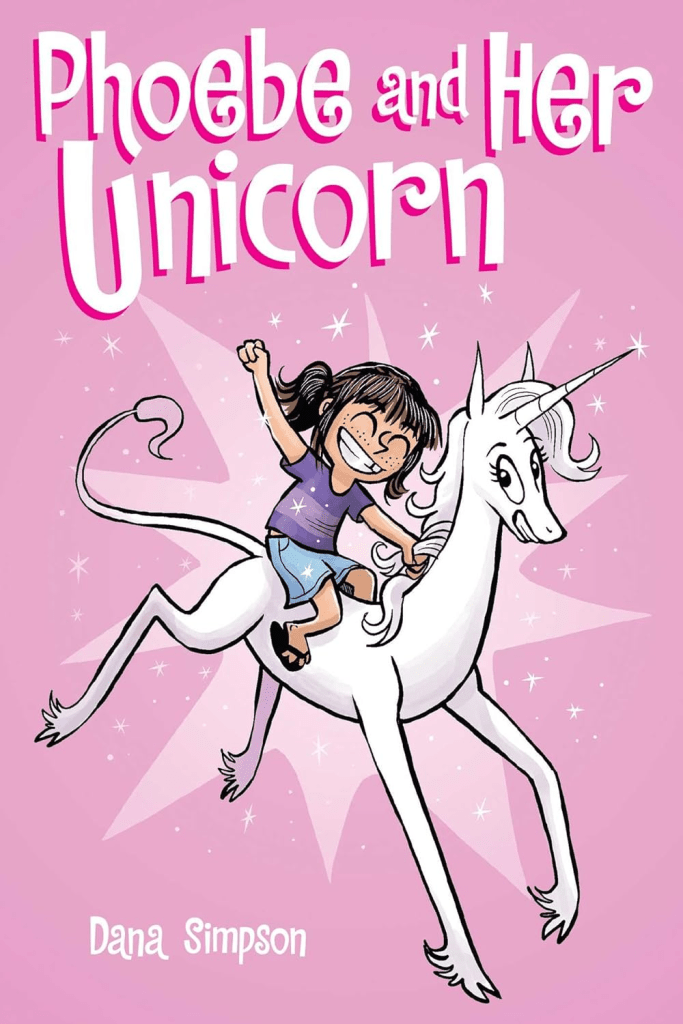
Phoebe and Her Unicorn (2014) – Dana Simpson
What It’s About: After being granted a single wish by a unicorn, 4th grader Phoebe wishes for the unicorn Marigold to become her new best friend. Hijinks ensue.
Why You Should Read It: Phoebe and Her Unicorn has all of the wit and charm of Calvin & Hobbes, paired with the wonderful glitz and girlhood of other longrunning children’s serials like Rainbow Fairies. Much beloved by young readers, but it totally holds up for adults too! And if you like this one, there are twenty-two more books where this one came from.
I’m Looking for Humor/Satire
One of the best new books of the year is a shoe-in for this category – it’ll make you laugh until your sides hurt, or maybe until you realize that you were the one under the microscope the whole time.
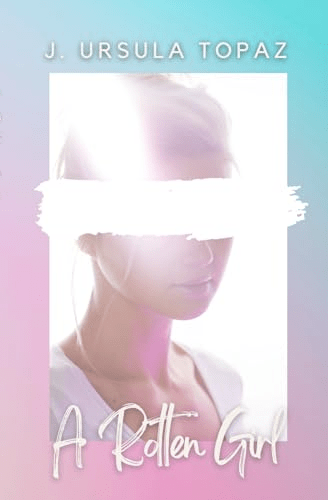
A Rotten Girl (2025) – Jemma Topaz
What It’s About: A struggling trans author publishes a M/M novel for a straight female audience under a male penname. This goes about as well as you would expect.
Why You Should Read It: It’s Yellowface for a trans audience – but don’t let the comp titles fool you. Topaz’s slender latest novel takes an absolutely acerbic look at the scourge of the problematic trans woman, and lingers in the silent devastation so often left in controversy’s wake. Don’t get too comfortable with the whip-sharp humor; this book will tear your heart out before it’s done with you.
Last Year’s Recs: 99 Erics (2020) by Julia Serano
Got More Poetry?
I’m still learning the ropes when it comes to transfeminine poetry, but if you want to know my favorite collection that I’ve read so far, it is without a doubt this recent volume from jaye simpson and Metonymy Press.
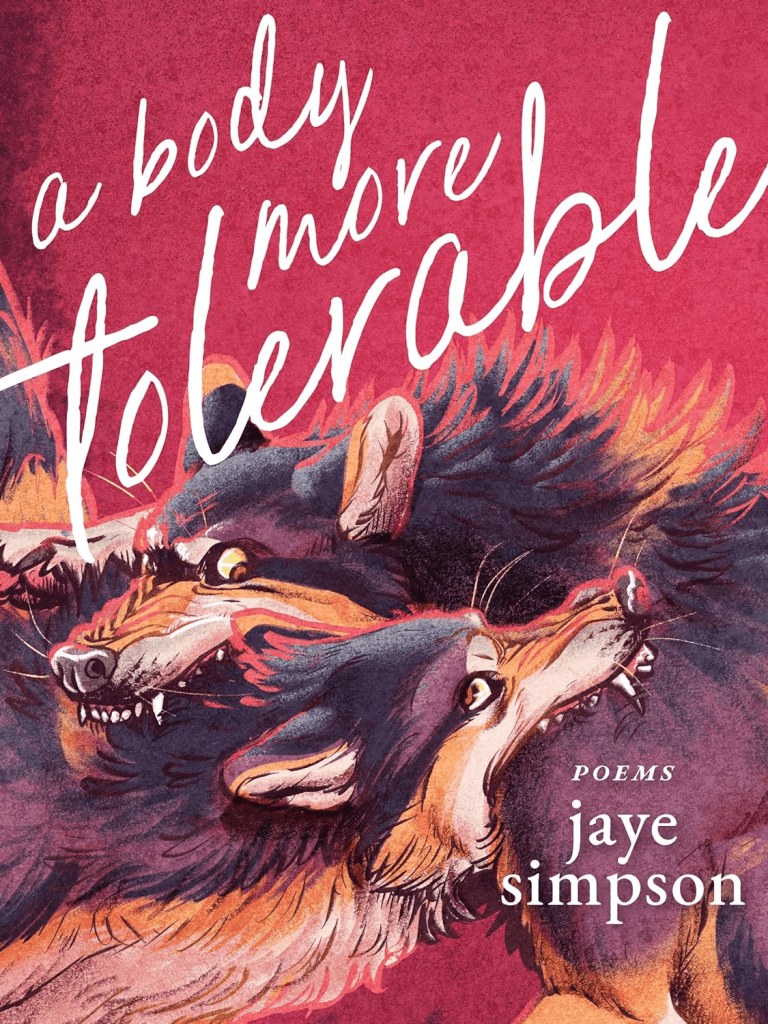
a body more tolerable (2025) – jaye simpson
What It’s About: A razor-sharp collection of contemporary poems exploring indigeneity, trans selfhood, and the ravenous gnawing of a grief not sated.
Why You Should Read It: The structure and pacing of this collection is absolutely brilliant, especially in the first act. From shape poetry to gorgeous deployments of the Ojibwe language, simpson crafts a tender and aching panorama of a trans woman learning to heal.
Actually, I Still Want a Memoir
If you haven’t read The Risk it Takes to Bloom or Redefining Realness, then you should go do that first. However, if you’ve read Willis or Mock’s books, or you’ve read another famous trans memoir (maybe Jenny Finney-Boylan’s, maybe Caitlyn Jenner’s, etc.) and you don’t understand why I’m kicking up a fuss about them, then it’s probably time to do a little bit of reading to better understand the genre and history of the trans memoir and its deep flaws.
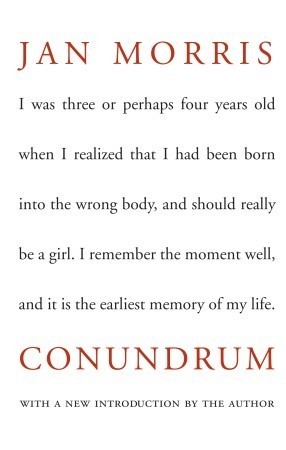
Conundrum (1974) – Jan Morris
What It’s About: Jan Morris led an incredible life. She made her name as the first reporter to break the news of the first summit of Mt. Everest, fought in World War Two, and was one of the last true scions of the dying British Empire. She also happened to be a transsexual.
Why You Should Read It: This book is a classicist, imperialist, orientalist mess. It is also possibly the single most influential book ever written by a trans woman. Jan Morris, for all her shortcomings, still stands as one of the best classically trained trans wordsmiths to ever pick up the pen. If you decide to read this book, my advice would be to read it through on your own without reading any secondary literature about it. Then, once you’ve thought about it for a bit, go read (or reread) “The Empire Strikes Back: A Post-Transsexual Manifesto” by Sandy Stone, and immerse yourself in the decades-spanning backlash and discourse that this memoir sparked within the trans community.
I Want to Learn about Trans Studies
Awesome! If you’re interested in knowing more about the academic wing of the trans literary movement, then I would recommend heading back up the list and reading Whipping Girl and Trans/Rad/Fem first. If you’ve done that, or if you just read Conundrum and you aren’t sure what the best way to read “The Empire Strikes Back” is, then these next books will provide you with a rock-solid basis to start engaging with and thinking about trans scholarship on a really meaningful level.
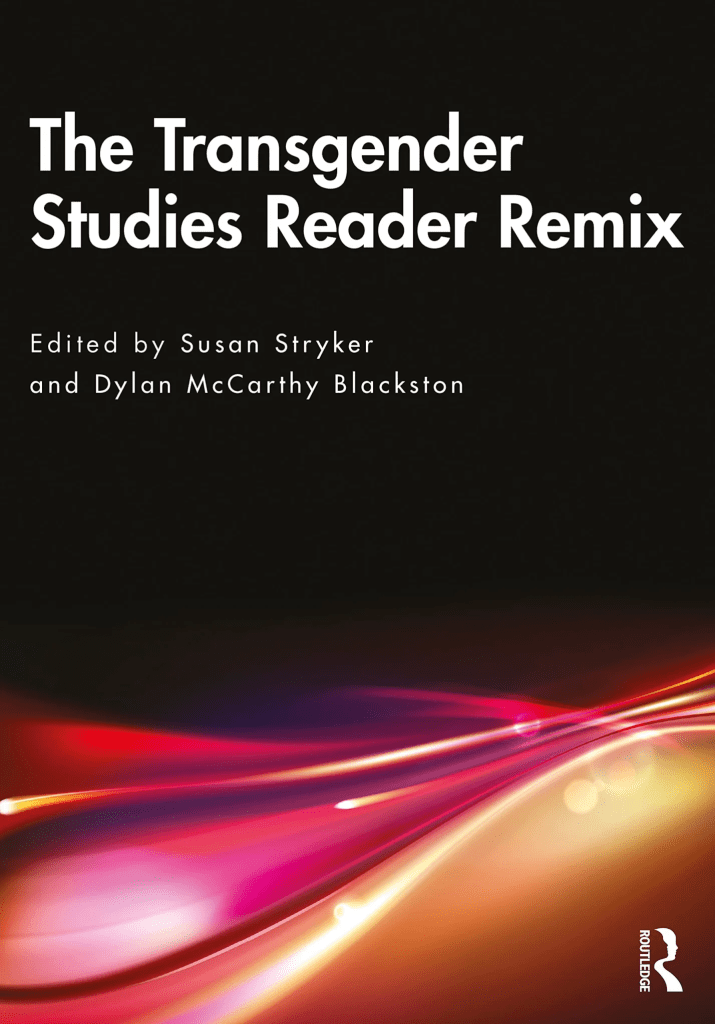
The Transgender Studies Reader Remix (2022) – Susan Stryker, Dylan McCarthy Blackston
What It’s About: Currently the best omnibus reading for current and relevant academic scholarship in trans studies, featuring keystone texts from Sandy Stone and Susan Stryker, along with many others
Why You Should Read It: While I perdietsonally find the original Transgender Studies Reader from 2006 to be a more useful set of texts when attempting to develop an academic grounding in the history of the field, the TSR Remix will be the best resource for getting a feel for current topics and themes within the discipline. Be warned: this is not light reading. It is, however, free in PDF on transreads.com, as are the original TSR and TSR 2. It would be my recommendation that you track down the PDFs for all three, along with the Black Queer Studies Critical Anthology, then pick and choose which of the articles from the four texts seem the most interesting to you. My recommendations would be to read “The Empire Strikes Back” by Sandy Stone, “My Words to Victor Frankenstein” by Susan Stryker, “Transgender Liberation” by Leslie Feinberg, “Fin du siecle, fin du sexe” by Rita Felski, “The Cyborg Manifesto” by Donna Harraway, and “Punks, Bulldaggers, and Welfare Queens” by Cathy Cohen for starters. About half of these articles weren’t written by transfemmes, but all of them are essential texts. Additionally, it’s not in any of these anthologies (for obvious reasons), but you should read “After Trans Studies” by Andrea Long Chu and Emmett Harsin Drager too, which can be found here. I would also strongly recommend that you read Black on Both Sides: A Racial History of Trans Identity by C. Riley Snorton, which will give you the most vigorous accounting of the historical development of racial discrimination pertaining to trans communities, and will be an invaluable guidepost for understanding transmisogynoir in the transfemme literary community.
TIER THREE: AROUND THE WORLD
In last year’s list, I included a few of these categories in the ‘Deep Cuts’ tier. But after reader feedback and a few of my own additions, I’ve decided to make a new tier for transfeminine fiction from beyond English-speaking North America and the United Kingdom!
The contemporary trans publishing movement may have originated in the US and Canada, but trans authors from around the world have been publishing and organizing right alongside them. In many places, American trans history is a poor roadmap for understanding local literatures; and part of our mission here at TFR is to recognize global transfeminine publishing, which means looking beyond what’s easily accessible from an American or Canadian point of view.
This section will include both English-language books from less-represented countries and foreign language books that have receieved English translation. Unlike last year’s list, I’ve chosen to highlight books that can be read in the English language – but this is an exercise limited, once again, by access. Know that there’s a great diversity of foreign language work that’s yet to receive any sort of international attention!
Without further ado:
I’m Looking for Kiwi Fiction
I went back and forth on how I wanted to organize the English-speaking countries on this list. I mean, when was the last time that New Zealand took the top spot? But hey, that’s the whole point of this section :))
There’s an emerging transfeminine literary movement starting to come out of Aotearoa, with some really exciting new fiction and publishing activity. If you’re looking for a starting point, though, you can’t go wrong with Sascha Stronach.
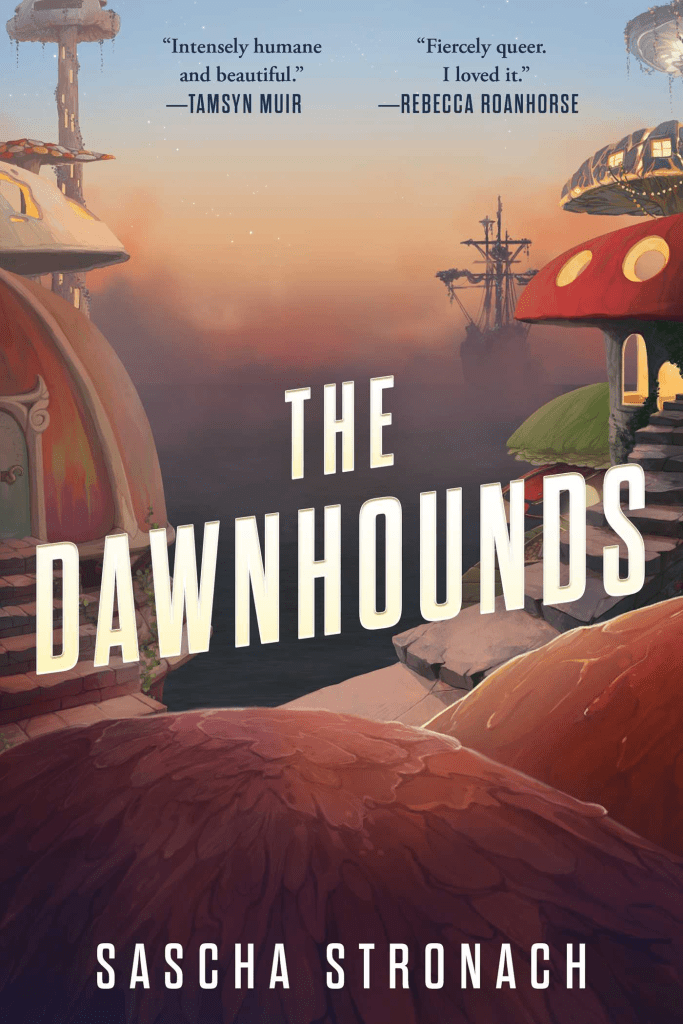
The Dawnhounds (2019) – Sascha Stronach
What It’s About: In a Māori-influenced apocalyptic future, a failing cop finds herself swept up in a cosmic fight to keep a plague from ravaging the city of Hainak.
Why You Should Read It: As someone with minimal exposure to Aotearoa culture, this is one of the most gorgeously rendered and profoundly alien fantasy worlds I’ve ever read (this becomes much more pronounced in the excellent sequel The Sunforge (2024), but it goes here too). It’s queer and fast-paced, and never slows down to explain Māori culture to clueless Americans like myself. If you love Tamyn Muir’s Locked Tomb series, you’ll probably love this too.
I’m Looking For Irish Fiction
Even smaller than the New Zealand scene, Irish trans fiction has only recently begun to emerge from the underground and cosmopolitan contexts. A central community institution is the Small Trans Library, based in Dublin and Glasgow, which maintains a small list of published Irish trans authors. For a long time, ‘Irish Trans Fiction’ was essentially limited to just the work of Caitlín R. Kiernan, but a more recent entry has blown the gate wide open for future publishing. I read this book a while ago and haven’t talked about it much, but it’s a really wonderful statement of literary intent for what someday can hopefully become a tradition of its own.
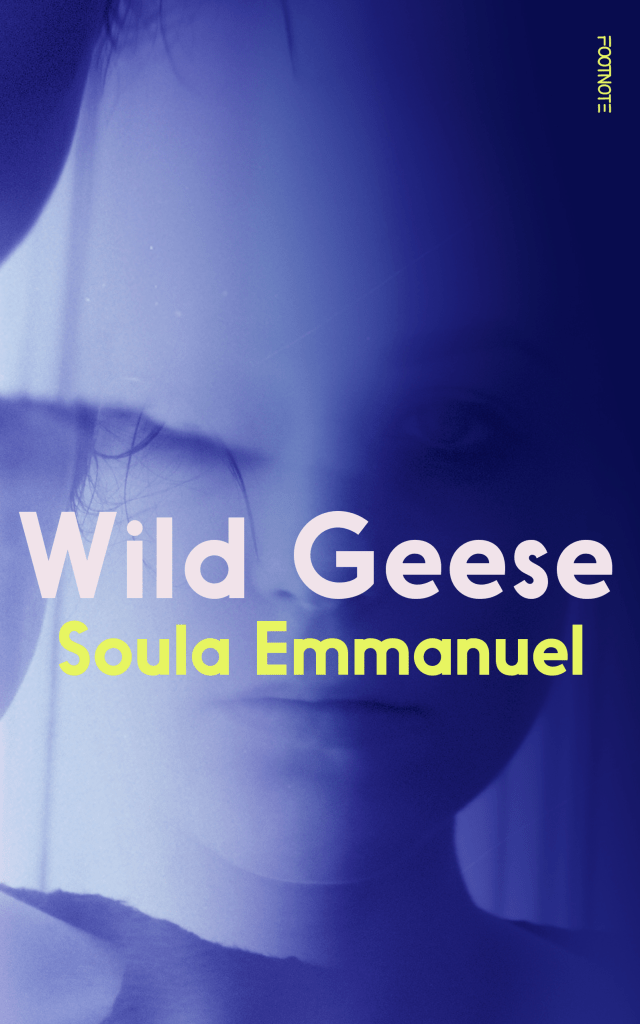
Wild Geese (2023) – Soula Emmanuel
What It’s About: A trans Irish ex-pat living in Denmark recieves a surprise visit from an old lover, reigniting both a lost flame and the lingering question of her place in the world.
Why You Should Read It: There’s a lot to love about this book, but what I remember the most two years after reading it is the prose style, which is dense and gorgeous. Wild Geese has a contemporary plot fit for any literary novel of the 2020s, but it’s the slow, methodical pacing and the consistently unexpected prose work that really makes the book shine. It also sets the novel apart from other trans fiction – I’ve never read anything quite like it. A book to linger on.
I’m Looking For Australian Fiction
There’s a really strong history of transfeminine science fiction in Oceania, but since I’ve already rec’d The Dawnhounds, I wanted to highlight a novel in a different genre for my Aussie pick. While Australian trans fiction lacks the central organizing of the Western hemisphere, there’s a surprising bulk of it once you start doing the research, giving plenty of options to choose from. My pick here might seem somewhat obscure, but I also wanted to take the time this year to champion fiction from transfemmes who transitioned later in life. The nebulous boundaries of ‘trans fiction’ are always in flux, and I think it’s really important to bring our entire literary community into the conversation, even if that means cutting deep into the back catalog. I also think that my pick here showcases that there is a lot of Australia trans literature to be yet uncovered, and plenty of work to be done in identifying it. Ergo:
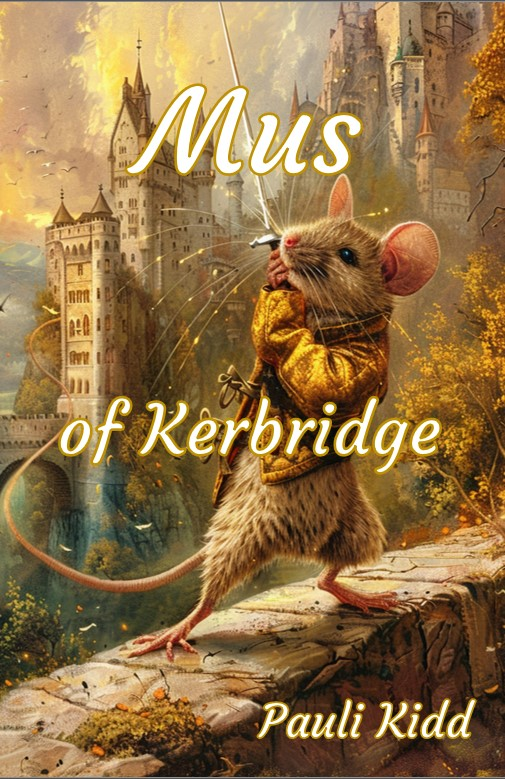
Mus of Kerbridge (1995) – Pauli Kidd
What It’s About: A young centaur maiden makes friends with a talking mouse, feuds with a dark and handsome colonel, and saves her kingdom along the way.
Why You Should Read It: This is a romance in the most formal and historical sense of the term. The book has a fable-esque tone, almost Charles Perrault levels of classical; it masterfully deploys the Singular 2nd and other verbal anachronisms; and it’s deeply Austenian romance that strikes closer to the heart of books like Pride and Prejudice. With a charming fantasy setting that reads both Narnia or Redwall, Mus of Kerbridge is a genuine delight to read.
I’m Looking for South African Mixed Media
This was by far the most frustrating category to research on the entire list. Transfeminine literature in South Africa remains in a fragmentary and undocumented state – there are hints of underground traditions, but very little has made it onto the internet at large. So, I’ve chosen to highlight a book that, while I haven’t personally been able to get a copy, looks incredibly cool and hopefully can gesture toward the start of a bigger conversation about what documenting trans literature in the region might look like. Thank you so much to everyone who helped me research for this category, especially the wonderful South African trans authors who I did manage to connect with, Xan van Rooyen and Dev Nyuki Moretti. Sorry I wasn’t able to dig up that goldilocks novel this year, guys, I’ll be back on the case next year.
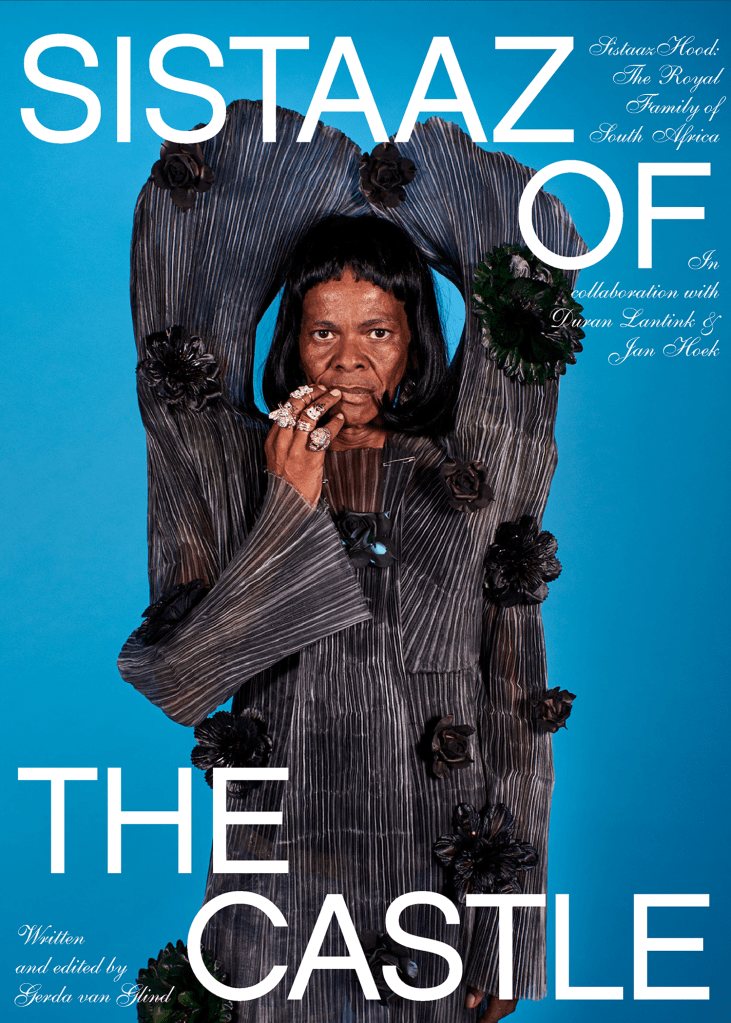
Sistaaz of the Castle (2016) – Sistaazhood, Jan Hoek, and Duran Lantink
What It’s About: The final magazine/artbook of a multi-year project between Cape Town trans sex worker collective Sistaazhood and a pair of Dutch artists, featuring art, interviews, and other miscellany.
Why You Should Read It: After weeks of research and networking, this is the most interesting piece of literature I’ve found from the region. Unfortunately, I wasn’t able to acquire a copy of the book in time for this article to go live, but I’m hoping to read it as soon as I get a chance!
I’m Looking for Spanish-Language Fiction
As we move into the foreign language section of this list, I’m going to be making an effort to choose mostly books that have an English translation. I want to acknowledge again, however, that choosing to frame the list like this comes with inherent limitations – the question of what receives a translation is fraught, and can be hard to separate from global issues of class and race. Being mindful of this, I still want to make sure that my English audience can dip their toes into the water; just be mindful that the books I’m sharing here are only a small sliver of the transfeminine literature of other languages, many of which remain far beyond the Anglosphere’s purview.
Spanish transfeminine fiction is by far the most developed outside of the Anglosphere; there’s a rich and diverse history across Latin America and Spain, so if you’re a Spanish speaker I would absolutely encourage you to dive headfirst into that world. While the options in translation are somewhat more limited, there’s enough phenomenal material that you should never be wanting for great books. I’ve recommended my two favorites here.
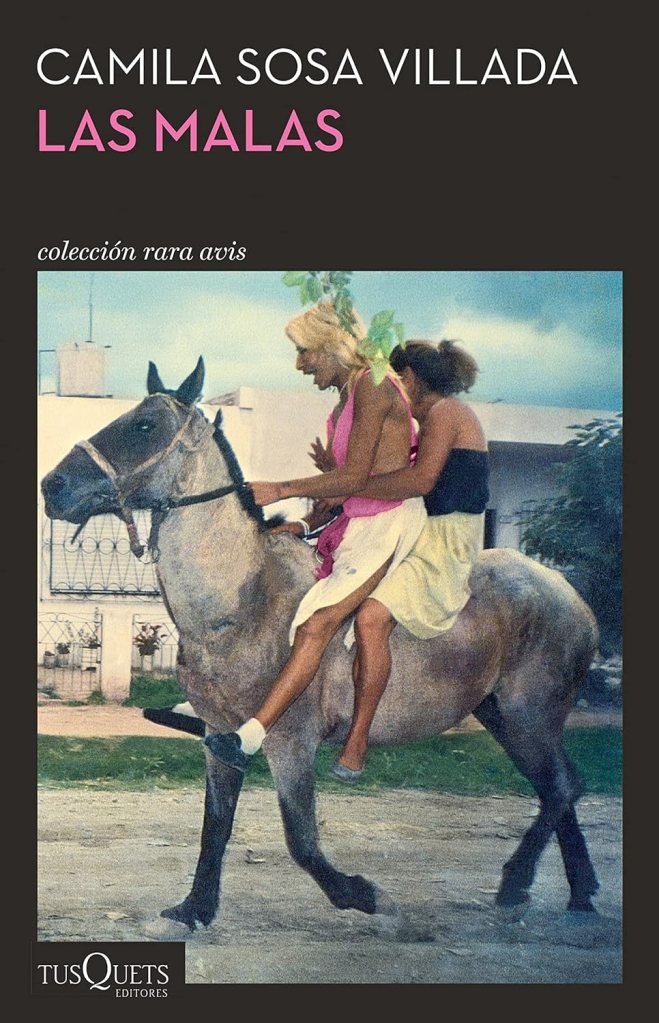
Las malas [Bad Girls] (2019) – Camila Sosa Villada
What It’s About: A gaggle of travesti prostitutes working in Sarmiento Park, Cordoba adopt a young boy abandoned on their doorstep. The story follows their lives and hardships, diving deep into the textural fabric of Argentina’s travesti communities.
Why You Should Read It: Sosa Villada’s pen is razor sharp, and her characteristic dark nihilism takes on an incredible depth here. She’s an actor and a superstar in the Latin world, and more people in the Anglophone sphere should appreciate her work and impact, especially given the fact that she’s got an English translator now.
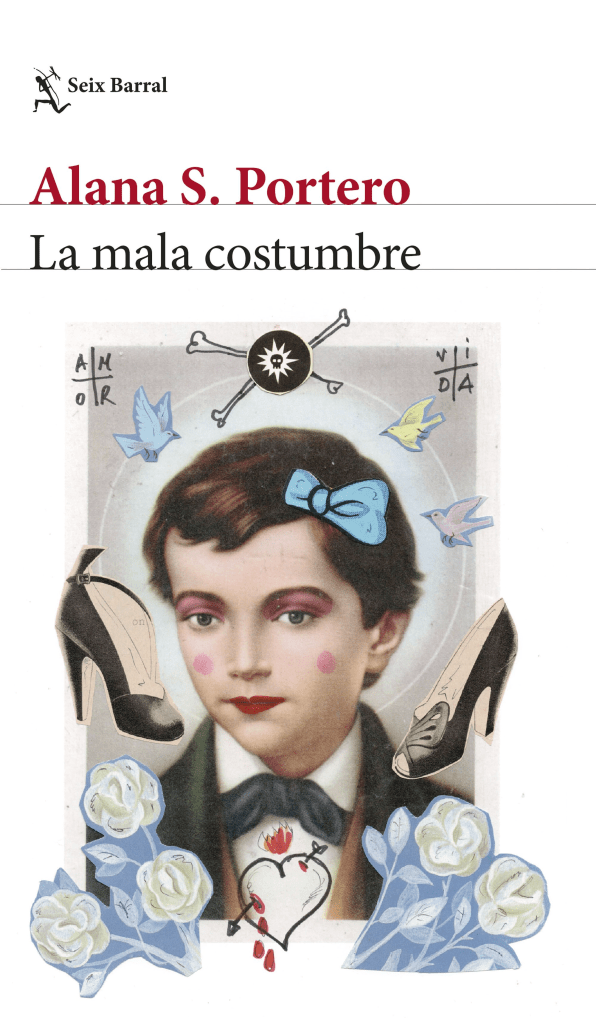
La Mala Costumbre [Bad Habit] (2023) – Alana S. Portero
What It’s About: An aching bildungsroman about intergenerational queer kinship and growing up trans in 1980s poverty-stricken Madrid.
Why You Should Read It: With a sweeping commitment to mimetic environment and realism, Portero paints her reader a painfully vivid image of lostlorn childhood trapped in the middle spaces. It’s painful and delicate and commands the small nuances of literary fiction to perfection. The translation, Bad Habit, is equally excellent, and does a really wonderful job of capturing the quality of the original prose.
I’m Looking for French-Language Fiction
French is my second language, so I’ve had the pleasure of reading the original text for some of these books. My rec here is the only translated book on this list I’ve gotten to read in the original text, but damn if it’s not a goodie. For all my French speakers out there, you’re in for a treat.
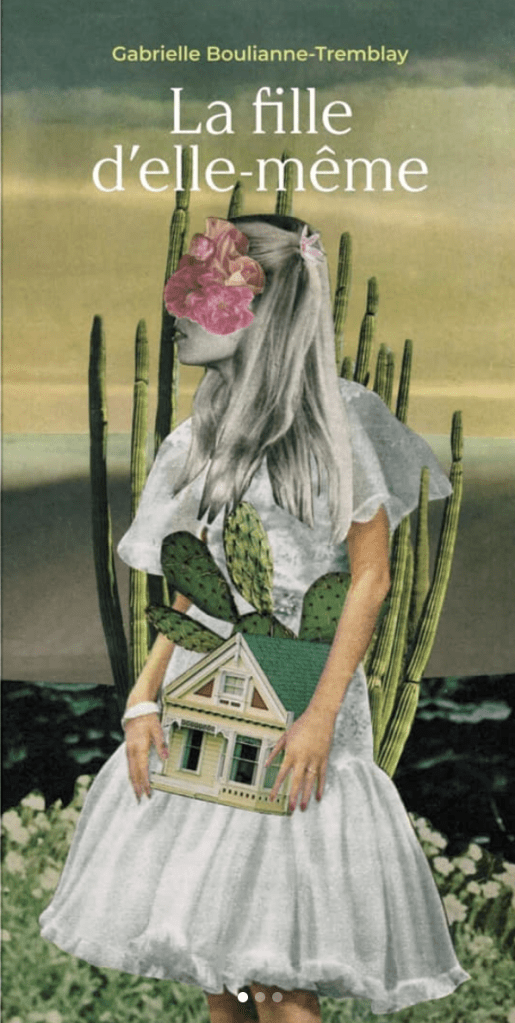
La fille d’elle-même [Dandelion Daughter] (2022) – Gabrielle Boulianne-Tremblay
What It’s About: A young trans woman grows up in the remote Québécois countryside, navigating a haunting family history of mental health issues and social ostracization on her journey to self.
Why You Should Read It: There aren’t many books that I would describe as genuinely heartwrenching, but this is one of them. Some of the things that the heroine goes through, both with her family and her village, left me on the brink of tears – it’s hard to read at times, but done in such a compassionate and artful manner that it grounds the portrait as a masterclass in literary lived experience. This book gets touted as a standard-bearer of contemporary Québécois literature for a reason.
Last Year’s Rec: Une autobiographie transsexuelle (avec des vampires) (2014) by Lizzie Crowdagger
I’m Looking for Japanese-Language Fiction
Let me preface this – if you speak Japanese, French, or Italian, then I would highly recommend that you start with the work of Fujino Chiya, who is without competition the prestige novelist of the Japanese transfemme literary circuit. Regrettably, only one of Fujino’s books has ever received an English translation, and that translation has already been lost. I’m in the process of trying to dig up a copy, but in the meantime, we’ll highlight another prolific Japanese transfeminine author in translation instead.
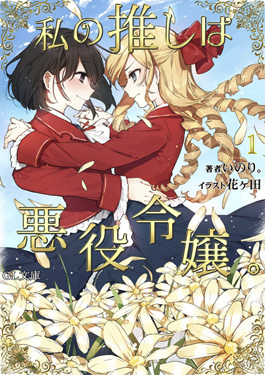
私の推しは悪役令嬢。[I’m in Love with the Villainess] (2019) – Inori
What It’s About: After getting Isekai’d into her favorite Otome romance video game, Rei finds herself bucking the game’s scripted male love interests in favor of its prickly lead antagonist, Claire.
Why You Should Read It: I’m in Love with the Villainess is some of the best yuri romance comfort food on the market. If you’re looking to cozy up on the couch with a blanket and a book that’ll make you feel gooey inside, this is an excellent choice. Wonderful characters and openly queer themes complete the package.
Last Year’s Recs: 夏の約束 (Natsu no yakusoku) (1999) by Fujino Chiya
I’m Looking for German-Language Fiction
As the former home of the Weimar Republic, Germany has a really interesting history of transfeminine publishing – one largely bifurcated by the genocide of their trans population during the Holocaust. While there are texts from the Weimar era I could recommend here, I’ve decided to go with something a little more contemporary.
Unlike some of the other books in this section, this novel was originally written in English, then later translated into German! But since the author herself is German, I do think it belongs here.
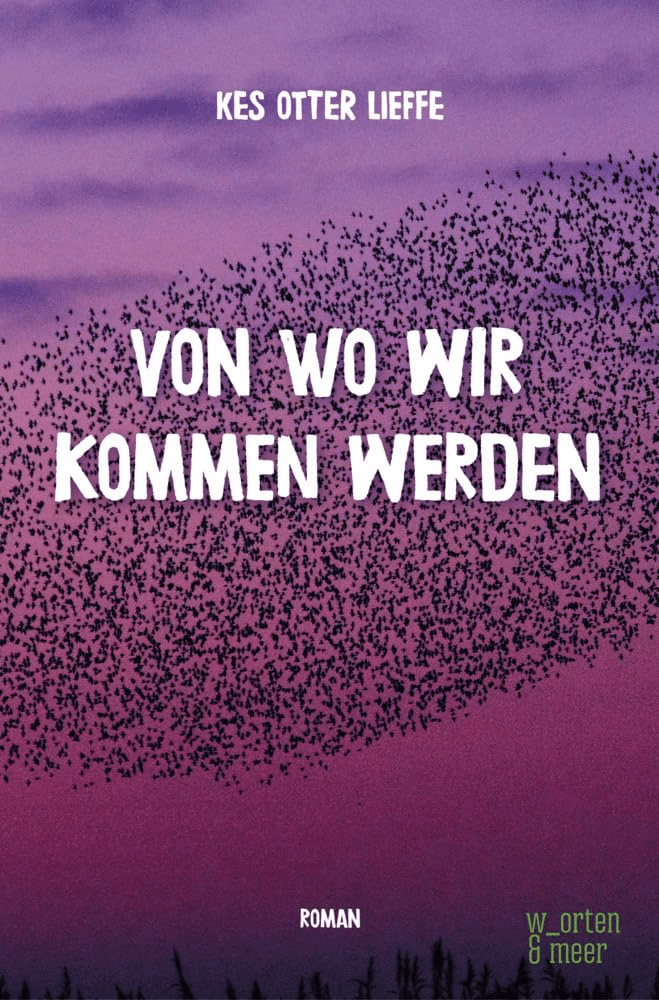
Von wo wir kommen werden [Margins and Murmurations] (2017) – Kes Otter Lieffe
What It’s About: In a climate-ravenged totalitarian state, a ragtag group of sex workers, leftists, and queer people organize and struggle for a better future.
Why You Should Read It: Lieffe’s signature novel is a triumph of both leftist and climate fiction, featuring an invaluable wealth of insight about organizing, class struggle, resistance, and the violent risks of living in solidarity. As a self-published book, it’s phenomenally well-edited and presented. The novel also offers a delicate portrait of ecosystems after catastrophe – both what’s been lost, and what might yet be born anew.
I’m Looking for Italian-Language Fiction
While less developed than some of the other foreign literatures on this list, there’s a small but growing group of transfeminine authors working out of the Italian peninsula, foremost among them Zoe Storm, who last year released her first book in Italian!
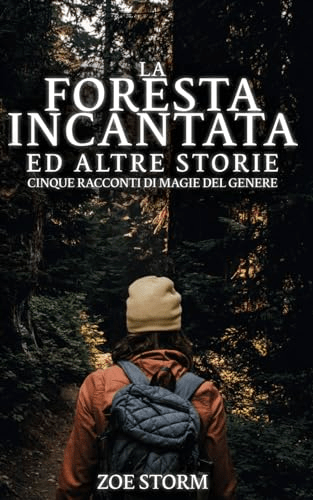
La Foresta Incantata ed Altre Storie: Cinque Racconti di Magie del Genere [The Enchanted Forest and Other Stories] (2024) – Zoe Storm
What It’s About: Five vignettes of magical gender bending featuring a classic cast of fantastical creatures: vampires, selkies, fae, time travel, and so on.
Why You Should Read It: La Foresta Incantata feels like a cozy storytelling session with friends and delicious food on a sleepy summer night around a campfire. The tales are warm and supportive – if you’re a fan of comfort fiction, this is an absolutely wonderful way to spend a few hours in the evening.
I’m Looking for Portuguese-Language Memoir
There is no contemporary transfeminism without a celebration of sex work and its rich history in transfeminine communities around the world. Celebrated Brazilian putafeminista Amara Moira has just recently had her work translated into English, so it’s my delight to share it with you now.
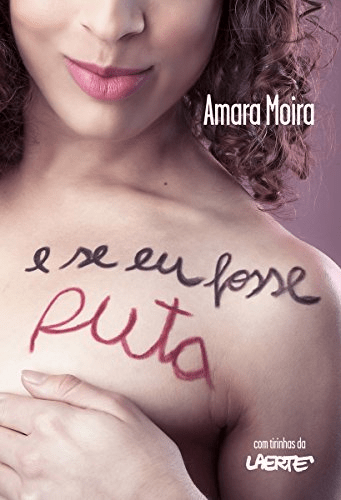
E se eu fosse puta [(So What) If I’m a Puta] (2016) – Amara Moira
What It’s About: A bawdy and unapologetic travesti sex work diary that asks provocative questions about sex work, consent, and transfeminized labor in the modern world.
Why You Should Read It: Moira’s wit and irreverence are a playful delight on the page. Aside from being an excellent feminist perspective on sex work, the memoir is just plain fun to read. It’s hot and messy and grimy, with a fast pace that keeps you flipping chapters. It is very NSFW though – I will confess that I read part of this on the public bus, and had to hide my phone from the nosy old lady sitting next to me.
I’m Looking for Tamil-Language Nonfiction
India has one of the largest and best-established trans communities on the planet, with a rich cultural tradition in hijra communities and an ongoing fight for legal equality that’s both similar and completely disjunct from the trans liberation movement in the west. The most important transfeminine author from the subcontinent is A. Revathi, who has been working for legal rights for hijra and Indian trans people for several decades now. She also has two memoirs translated into English, but I wanted to highlight her first ethnography here, which was originally published in 2004 and wasn’t translated into English until 2011.
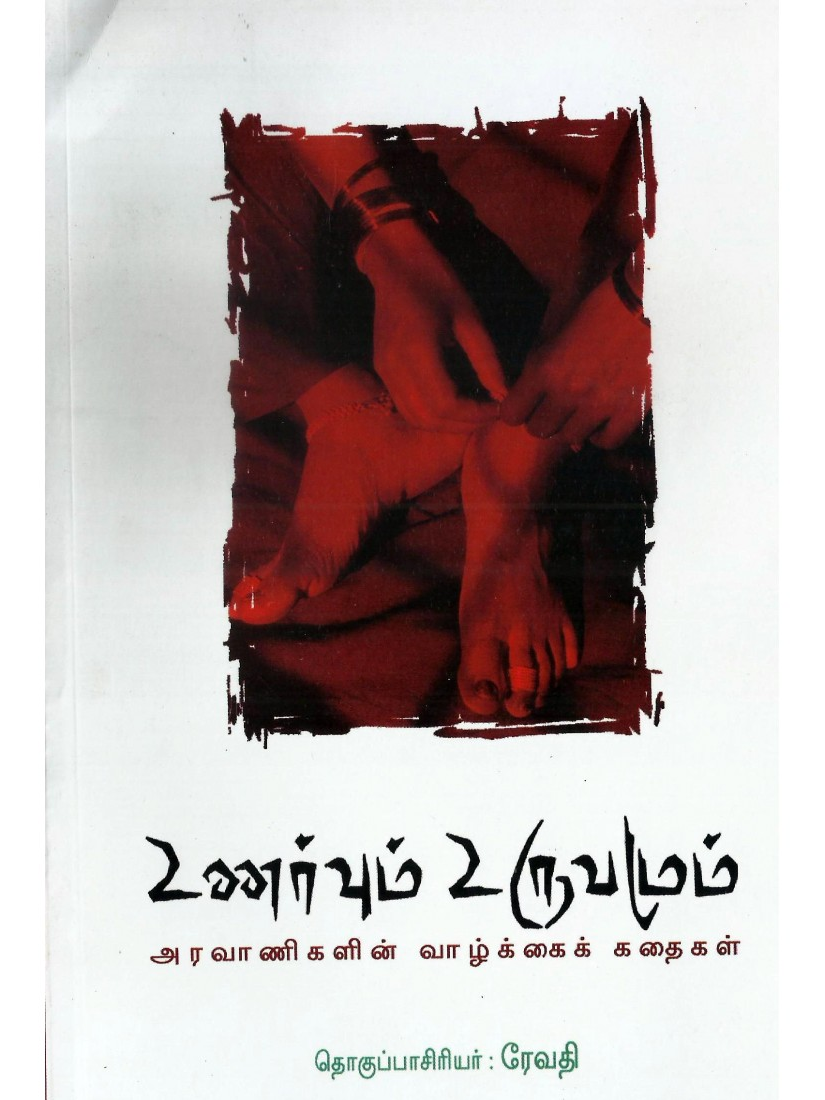
உணர்வும் உருவமும் [Our Words Our Lives] (2004) – A. Revathi
What It’s About: A written record of dozens of firsthand life stories from Aravani across South India at the turn of the century, loosely structured around various aspects of everyday life.
Why You Should Read It: This text was completely groundbreaking when it was published – Revathi has recounted on multiple occasions how nobody had ever attempted to do written documentary work like this before in the Tamil language. It’s also a local watershed text, one which has since sparked other Tamil-language trans folks to write about their experiences and lives.
Toward a Global Indigenous Poetics
I have only scraped the outermost surface of the publishing activities of transfeminine authors in languages around the globe. Only a small fraction of foreign-language works have been translated into English – there are thousands of texts out in the world yet unknown to an Anglophone audience, many of which I’ll likely never be able to seek out myself due to only speaking English and French.
I also want to recognize that translation itself is an exercise of power – that proximity to an international English-language audience is by nature constrained by structural oppression and hierarchy around the globe. I have done my absolute best to try and open up new possibilities and imaginations for my readers with this list, but at the end of the day, there’s only so much I can do working as an English-speaking white settler critic living in North America on stolen land.
I wanted to end this section by sharing works of indigenous poetry from around the world, both to share the wealth of indigenous transfeminine poetics and as an open question to the transfeminine literatures yet to be introduced to the global audience. This list is, by nature, incomplete, and I can’t wait to watch it grow in years to come.
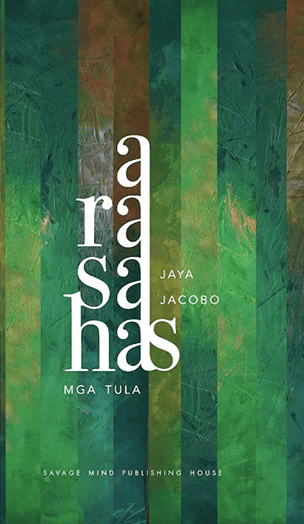
Arasahas (2023) – Jaya Jacobo
What It’s About: A collection of poems from the Philippines exploring temporal experience in the tropics, written in Jacobo’s native Bikolano with a new English translation in 2024.
Why You Should Read It: Arasahas is regrettably one of the few books on this year’s rec list that I haven’t gotten the opportunity to read myself yet. It was, however, nominated for the 2025 Lambda Literary Award for Transgender Poetry! While it’s not easy to get a copy of this book if you’re outside of the United States, I would strongly recommend checking this one out if you can, as it looks phenomenal.
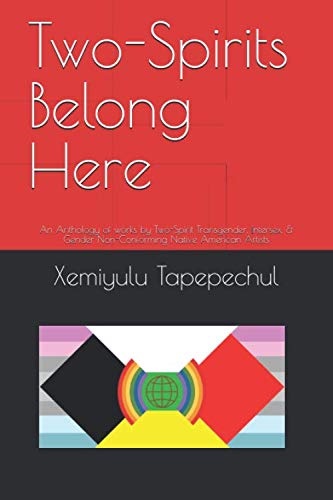
Two-Spirits Belong Here (2019) – Xemiyulu Manibusan Tapepechul
What It’s About: A mixed media anthology containing poetry, short essays, short fiction, and photography from indigenous artists across North America.
Why You Should Read It: Since I included it blind on last year’s list, I had the chance to read this collection, and I’m pleased to say that it’s a really cool experience. There is a fantastic variety and breadth of creative expression in this volume, and while you might not resonate with every poem or artwork, the anthology is designed to capture a broad spectrum of culture and life!
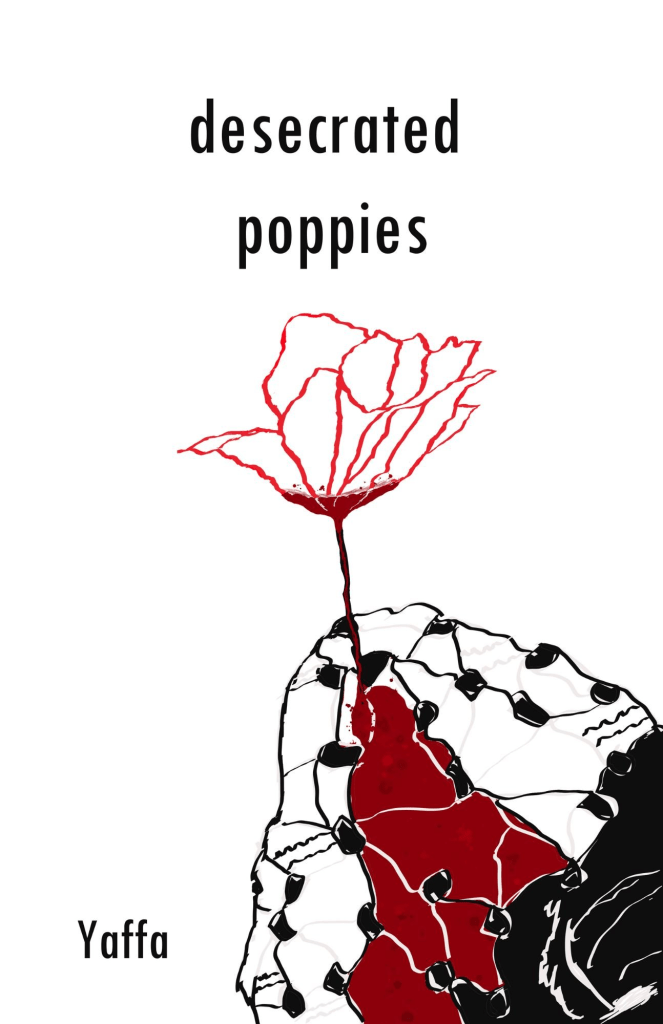
Desecrated Poppies (2024) – Yaffa As
What It’s About: Written in the shadow of an eclipse, Mx. Yaffa meditates on the ongoing genocide in Palestine.
Why You Should Read It: This is one of the most powerful pieces of poetry that I’ve ever read. Yaffa does such a tender and heartbreaking job at capturing the queer Palestinian experience, and their essay interludes are equally riveting. This collection also won the Best Transfeminine Poetry award at the TFR Awards last year, so the community agrees with me! I cannot think of a more fitting title to end this section of the list – a poetics in the face of unimaginable violence, a nascent blossom that clamors for freedom.
TIER FOUR: DEEP CUTS
The Internet Cult Classic
If you’ve made it this far down the list, congratulations! You are exceptionally well read in this obscure subculture of the literary world (or you’re curious, and reading ahead to see what’s really out there). If you’ve already read all of the standard recommendations, and you’re still hungry for more, here’s a few suggestions for where you might be able to take your reading next, starting with a book very near and dear to my heart.
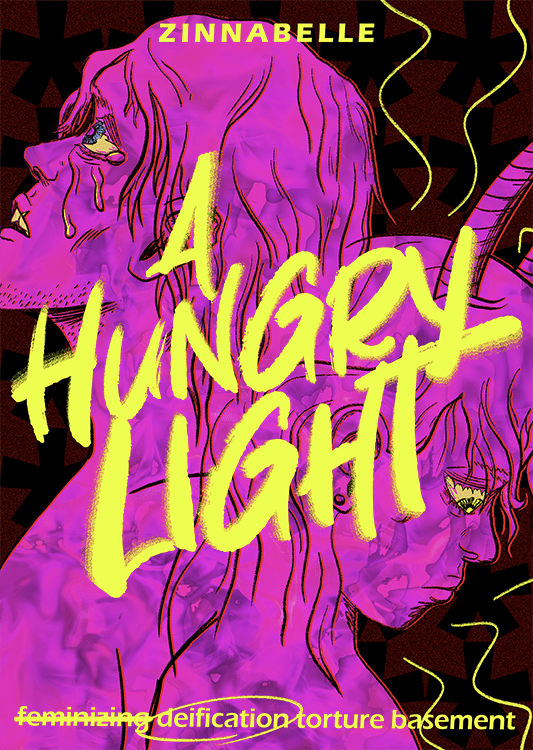
A Hungry Light (2025) – Zinnabelle
What It’s About: A young man is kidnapped by a cruel cultist who claims he’s the reincarnation of a goddess, and promptly begins to turn him into one.
Why You Should Read It: Zinnabelle’s weird trans extremity lit romp is the deliciously fucked bastard child of Dorley and Heartscape’s Serious Weakness, and it’s absolutely phenomenal. The characters are dark and vile and deeply human, the prose is experimental and daring, and there’s an incredibly satisfying deployment of device and color that elevates the narrative immensely. If you’re looking for a book at the bleeding edge of trans underground publishing, this is one of the best offerings on the market.
The Post-Modern Masterpiece
This is probably the most difficult book on the entire list. I don’t necessarily know if I would recommend it unless you have at least a little experience with reading classic literature, but if you’re looking for a book that you can truly sink your teeth into, this is probably the one. You will get a lot more mileage out of this one if you have at least a passing familiarity with both the Bible and Sumerian mythology. I would recommend the works of Enheduanna if you want to get a sense of the mythological figure of Inanna. For more information about the history of Inanna within the trans literary canon, read Rachel Pollack’s article “Archetypal Transsexuality” or look into the scholarship of Sophus Helle.
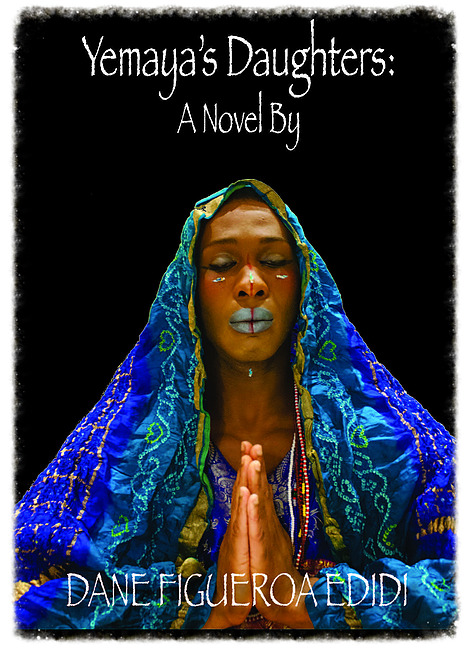
Yemaya’s Daughters (2014) – Dane Figueroa Edidi
What It’s About: The goddess Inanna emerges from the cradle of humanity in Africa, only to fall from Eden’s grace after interacting with human men. Weaving together life in New York City, temporally disjunct memories of past lives, a kaleidescopic network of trans goddesses and priestesses, and a mysterious connection to the Virgin Mary, Edidi presents a tapestry in all of its post-modern glory.
Why You Should Read It: This book is like reading a self-published edition of Ulysses or Mrs. Dalloway. It is challenging on so many axes – both its non-linear storytelling, the dizzying amount of comparative mythology and spiritual ingenuity on display, and the rough shape of the prose itself, which is definitely more challenging to parse for its lack of a traditional editor. This book needs and deserves an Oxford edition that can footnote all of the references and moves for the layman. But if you’re willing to dive into it headfirst with an open mind, the more you read this book, the more it will reward you.
The Original TG/TF Story
Okay, it’s hardly an original story. In fact, this one might be the closest thing we have to a folktale on this list, told and retold until its retellings all blur into a single tale of high school cheerleaders and coerced cross-dressing. Virginia Prince neither wrote the original text of this story, nor did she produce the version which is currently still available for sale, which I believe was edited pretty heavily by Sandy Thomas. However, if you’re interested in historical mid-century trans fiction, this one is a serious cornerstone that’ll open the door to the whole world of underground trans fiction from the 60s, 70s, and 80s.
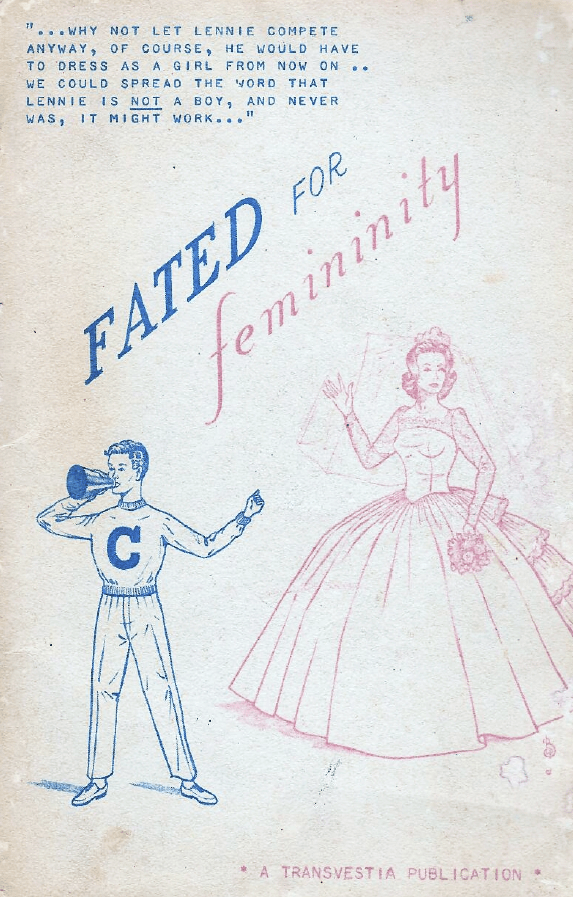
Fated for Femininity (1960) – Virginia Prince†
What It’s About: In this classic cross-dressing romp, Lennie goes out for his school’s cheerleading team, where everyone from the other girls, the school principle, and his parents become heavily invested in turning him into a girl.
Why You Should Read It: This book is wild, and at least fifty years ahead of its time. It’s got shockingly progressive gender politics (especially coming from Virginia McFucking Prince, the queen bee of historical trans conservatism), a wild poly vibe, t4t, and it honestly reads like it could have been published on TGStorytime in the 2010s or Fictionmania in the 00s (it’s similar to O2bxx’s 2003 classic For A Girl for those in the know). If you’re gonna read one of the Transvestia novellas, this is the one I would recommend.
Your Favorite Author’s Favorite Author
One of the most striking things about the 2025 Grammys was how there seemed to be a popular consensus that British contemporary artist Raye was the consensus “favorite artist’s favorite artist.” That got me thinking – who would that be for transfeminine literature? At the end of the day, though, this was one of the most obvious picks on the list.
Oleander Grip (2023) – frog kosaric
What It’s About: A collection of four years of short fiction exploring cyberpunk, dystopia, apocalypse, and everything in between.
Why You Should Read It: One of the marquee texts of the avant-garde Weird Trans Extremity Lit genre, Oleander Grip features some of the most sprawling and dizzying transfeminine storytelling on this entire list. The satire cuts like a whip; it’s overstimulating and relentlessly original. An extremely difficult text with a wealth of storytelling and prosaic ingenuity within.
The Pre-Topside Digital Counterculture
Before Nevada, before the 2012 creation of Topside Press revolutionized the field of trans literature, trans novelists were still writing and publishing in the quiet margins of the early internet. While the transfeminine literature of the 1990s and 2000s was far less organized, it still has a lot to offer us two decades later. Here are two of the early antecedents to the contemporary transfemme publishing movement!
Nearly Roadkill (1996) – Kate Bornstein, Caitlin Sullivan
What It’s About: Winc and Scratch are the quintessential gender outlaws, blazing a trail of illicit identities, terrible sex scenes, and apropos quips across the early internet.
Why You Should Read It: There are so many awful sex scenes in this book that it circles back around to being hilarious. Like, they’re so fucking bad. This was written back when ‘cybersex’ meant uwu textscreed chatlogs, not OnlyFans. It has aged so, so, so poorly that it’s almost like a shock to the system when, suddenly, at about the halfway point of the book, all of the masks come unveiled and a really gripping emotional core emerges out of all of the terrible 90s textspeak. When they go back to having cringy sex chats in the last act of the book, it almost circles back around to being nostalgic. A true fossil of its time.
Supervillainz (2006) – Alicia Goranson
What It’s About: After accidentally bearing witness to the murder of a mysterious masked superhero, trans delinquents Bit and Devon find themselves on the wrong side of the law and a supervigillante group’s wrath. With no superpowers save their ingenuity, they find their own ways to survive and thrive.
Why You Should Read It: This book was way ahead of its time. There’s one scene where the protagonists sneak into a suburban funeral service that reads like a prototype for scenes with Reese in Detransition, Baby fifteen years later. Goranson is a brilliant observer of relationships between trans men and trans woman, and her cutting social commentary is still relevant today.
The Black Literary Trailblazers
One of the most important – and least remarked-upon – movements in contemporary transfeminine literature comes from the underground publishing efforts of novelists documenting the experiences of Black trans women. In contrast to the prestige publishing of the Topside movement, the Black transfeminine literature largely organized around the Trans Griot blog run by Monica Roberts during the aughts, which did crucial work documenting the experiences of trans women in the carceral system and the murders of racialized trans women around the US.
Sasha (2002) – Roberta Angela Dee
What It’s About: A short epistolary novella documenting a fictional correspondence between the author and a white cross-dresser.
Why You Should Read It: Sasha is a fine entry into the time-honored tradition of English epistolary fiction, with a pacing and sensibility that resembles the classic fiction of the 1700s and 1800s. Roberta Angela Dee is almost completely unknown to a modern audience, but she was one of the most important activists in the Black trans community at the turn of the century. A classic and an essential read.
Sex and the Single Transsexual (2004) – Pamela Hayes
What It’s About: A wonderfully grounded look at black queer life in the mid 00s, with a focus on the romance between Julie and her imperfect yet steady beau. The book examined DL (down-low) blaqueer sexuality with an interesting and perceptive lens, and it’s also plotted in a very interesting way that really brings out Hayes’ unique voice as a novelist.
Why You Should Read It: Pamela Hayes is one of the unsung pathfinders of transfeminine literature, and her work deserves so much more attention between her three novels, of which this one is the best, and her work as a columnist on TransGriot, where she produced some seriously high quality material. If you’ve never heard of Hayes, love a good romance novel, or if you’re searching for more black trans authors to add to your repertoire, definitely give this one a shot.
What Even Is a “Trans” Book?
The next book pushes the envelope on ‘trans’ as a stable identity category, critiquing the nature and form of transfemininity and offering new possible futures for the direction of the genre. It features a male protagonist who gets read as or interpellated as feminine and poses the question: why do we want them to be trans? Why do we need them to be trans? What does that say about our communities?
Darryl (2021) – Jackie Ess
What It’s About: Darryl is a cuck who lives in Eugene, Oregon, and he likes it. This might actually be the most Eugene book ever written about Eugene, Oregon. In between all of the time spent watching other men fuck his wife, Darryl gets into fights with his one trans woman friend, questions his gender, and has an exceptionally uncomfortable relationship with an man who either wants to fuck him or murder him, and it’s entirely ambiguous as to which.
Why You Should Read It: Jackie Ess has made it no secret how much she dislikes the idea that she should write a “trans” novel, and in that sense, this novel arrives almost as a rebuttal to those sorts of expectations placed upon the trans woman writer to write nothing but transition narratives or trauma porn. Darryl’s identity is fundamentally unstable; he has no godly idea who or what he is, and Ess takes a near-sadistic delight in punishing the reader for trying to make up his mind for him.
But What about the Memoirs?
How about a shockingly relatable account of trans life originally written in 1899?
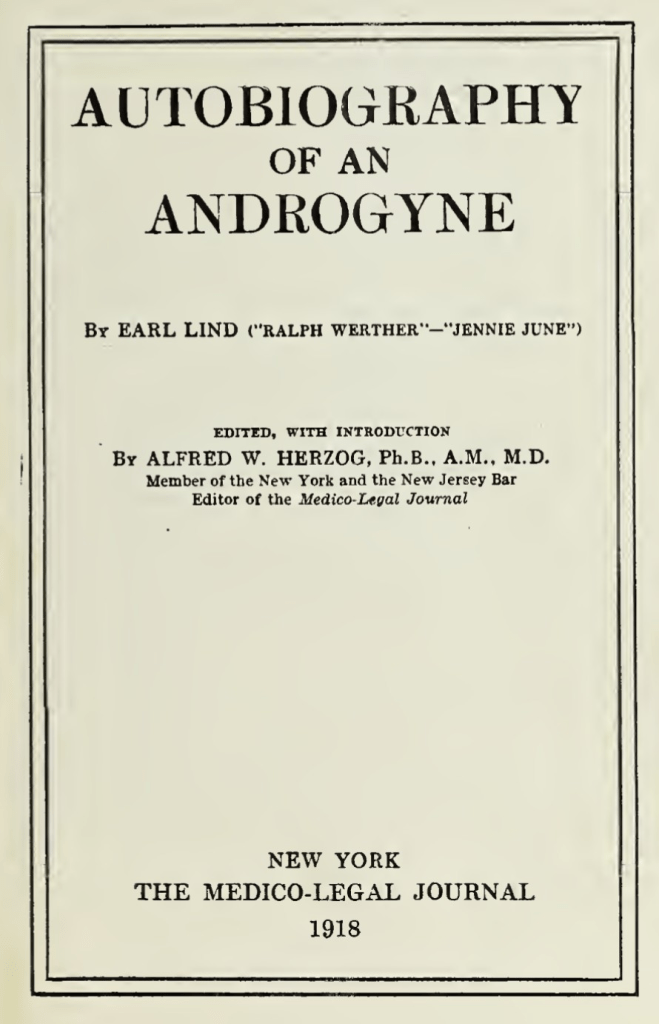
Autobiography of an Androgyne (1918) – Jennie June
What It’s About: Jennie describes her personal experiences with sexuality, gender norms, and the acceptable roles for trans people in her era.
Why You Should Read It: The fact that this book somehow made it unredacted past the censors is astonishing – Jennie recounts how her book was personally read by Anthony Comstock, and yet somehow we have it fully unredacted in 2025! This is a one-of-its-kind treasure trove of insight into trans life from the Progressive Era in the United States. Despite the peculiarity of archiac trans vocabulary, this book is most remarkable for how little has changed in the trans psyche in the last 130 years.
Last Year’s Rec: The Third Person (2022) by Emma Grove
Left-of-Center Theorycrafting
Not feeling progressive enough? Annoyed at the complacency and liberalism of your anarcho-communist catgirl co-op? Here are two radical theory books that might blow your socks off.

Essays Against Publishing (2020) – Jamie Berrout
What It’s About: A systemic dismantling of the publishing industry and its various instruments as tools of power and death – the death of racialized trans bodies, of poor trans bodies, of sex working trans bodies, of trash bodies. Berrout critiques not only the cisheteropatriarchal systems that have implemented these systems within publishing, but also the trans publishing apparatus which has evolved out of it over the last decade; the presses, the communities, and assuredly blogs like this too.
Why You Should Read It: Otros valles might be Berrout’s magnum opus, but this is, in my opinion, her most important work. To fully understand what Berrout is talking about here, I would direct prospective readers to also check out Snorton and Haritaworn’s “Trans Necropolitics” and Ferreira da Silva’s “On Difference Without Separability,” which were the two critical pieces that helped me make sense of these essays. Death-marking within trans publishing occurs not just within the texts – read any portion of the books on this list, and you’ll find that murder, suicide, violence, abuse, all of them are inescapable in transfeminine literature. They are baked into the very fabric of the endeavor. And the authors are not spared either – suicide and suffering plague the list of trans authors. It’s not uncommon for an author to drop off the face of the earth. There are barely any texts from the 20th century on this list because many of the people who would have written them were killed. Their words were inscribed on hand-written zines, too often lost to time. Books can disappear entirely within a year or two of their publication. That is the truth and reality of this industry, this field, this subgenre, and I have read nothing else which captures it as well as this book. As the times change, and circumstances improve for the transfeminine author, it’s all too easy to let that traumatic reality of that past fade into the background like white noise; but this reality continues for those most marginalized: poor, non-white, sex working, non-Western trans people who have so many stories to tell, and so few resources to tell them with. Jamie Berrout never stopped fighting for those writers and their perilous situation, and we shouldn’t either.
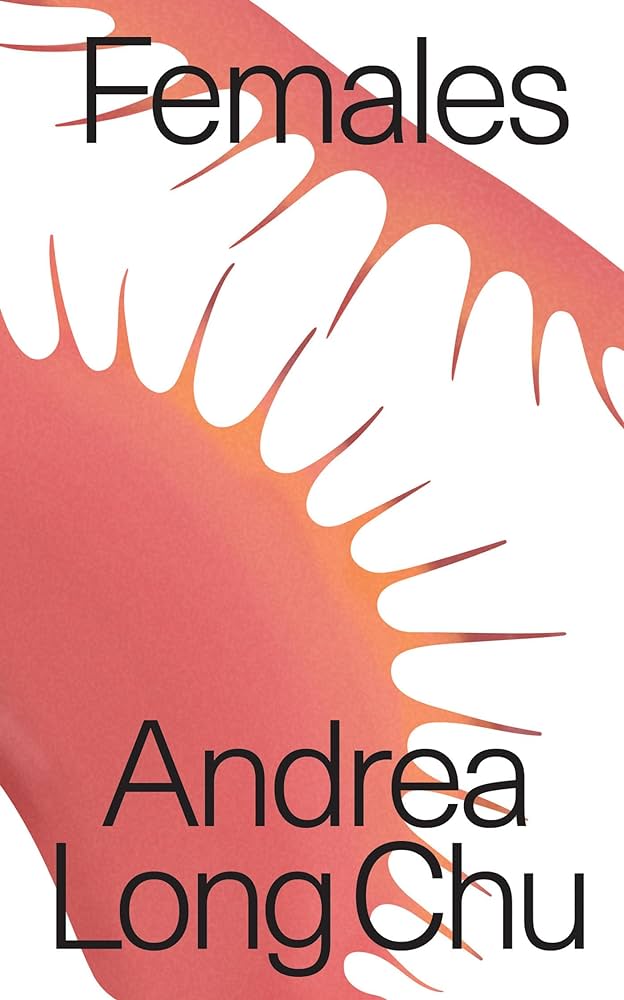
Females (2019) – Andrea Long Chu
What It’s About: Andrea Long Chu in her most pugilistic form – a book about what it means to be ‘female,’ and how we’re all constantly trying to escape it, men and women alike.
Why You Should Read It: The entire sentiment of this book can more or less be summed up in a single line: ethics is nothing more than commitment to the bit. Cynical, nihilistic, and hostile? Absolutely. But when juxtaposed against gender, it brings up some interesting questions about identity, society, and the lies we tell ourselves to survive. Not for everyone, but if you don’t mind tangling with one of our community’s most notorious firebrands, you might find it more rewarding than appears at first glance.
Groundbreaking Shortform Collections
No, we’re not talking about The Collection. We’re looking for the short story authors who you’re not gonna find anywhere else, those on the true margins of the field of transfeminine literature.
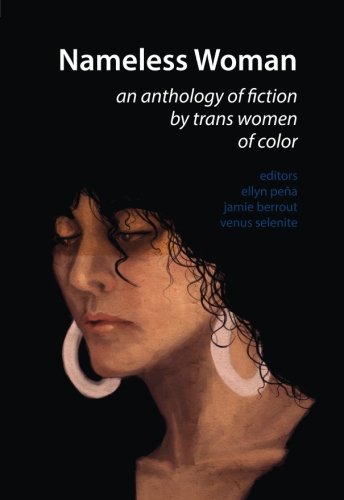
Nameless Woman (2018) – Ellen Peña, Venus Selenite, Jamie Berrout
What It’s About: Collected short stories from trans women of color, most of whom were never published previously. The anthology is split into two parts, the first finished in 2015. You can read a full PDF of the final edition here.
Why You Should Read It: The lone full-length book from the Trans Woman Writers Collective, Nameless Woman stands as a testament to one of the most important movements in trans publishing of the 2010s. If you enjoy this, I would highly recommend also checking out the TWWC’s Booklet Series, which featured longer individual releases from underpublished TWOC authors.
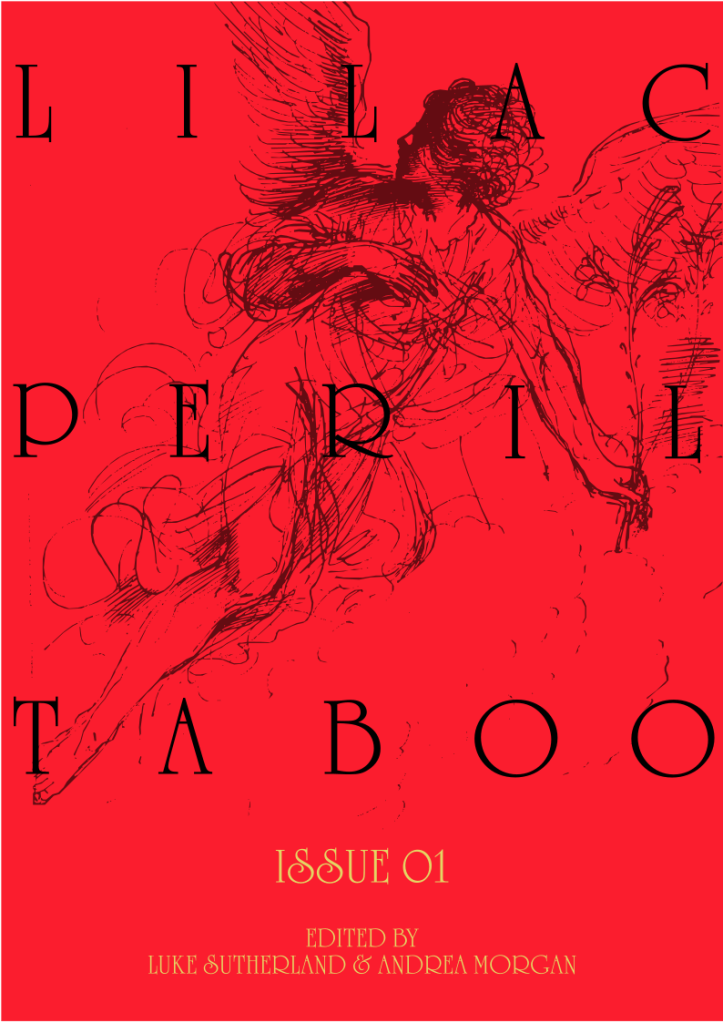
TABOO (2025) – Lilac Peril
What It’s About: A collection of stories primarily from authors local to the Washington, DC area, compiled by one of the most important community publishing and organizing efforts in the underground trans lit scene right now.
Why You Should Read It: TABOO pushes the boundaries of the trans shortform anthology and does its title proud, from some of the best avant-garde prose of 2025 to zine-style underground theory, accompanied by a wonderful medley of poetry and art. Championing debut authors, deeply grounded in a local literary scene, Lilac Peril is paving a path for indie trans publishing in the 2020s.
Last’s Year’s Recs: The Trans Women Writer’s Collective Booklet Series (2018-2020) by Various Authors
One More Poetry Collection
As a critic, I’ve only started to scratch the surface of the vast world of transfeminine poetry! There is so much cool experimental work out there – here’s just one collection pushing the boundaries of the English language that wowed me this past year.
love poems / smallness studies (2022) – Ava Hofmann
What It’s About: An interactive poetry collection featuring mind-bending shape poetry in the form of a square with margins meant to be written in.
Why You Should Read It: It’s rare to find a book that comes with instructions at the beginning, but I had an absolute blast doodling and annotating my copy of this book! My personal review copy is filled with my thoughts (my review was a series of pictures of my annotations), and I really can’t emphasize enough how much a pencil and some highlighters, maybe even markers, can add to the reading experience here.
A Bone for the Philosophers
Last year’s pick for this category was a book from 2010 that, while interesting, did feel like a dated choice for this list. Luckily for all of my fellow ex-philosophy majors, one of the best books of 2025 is a fantastic new treatise from Talia Mae Bettcher, one of the most important trans academics working in the philosophy space!
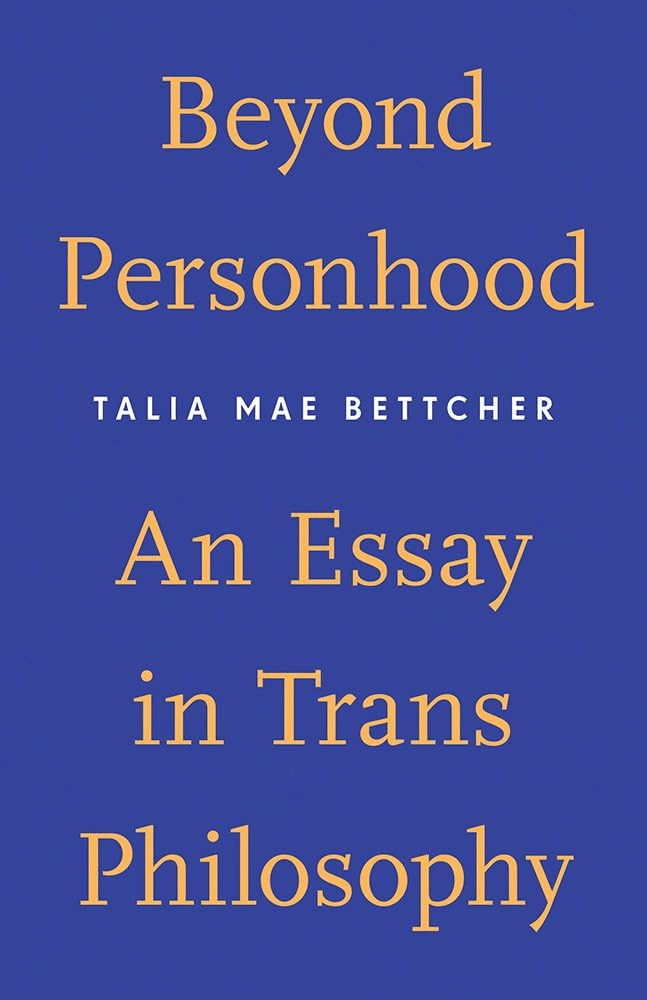
Beyond Personhood: An Essay in Trans Philosophy (2025) – Talia Mae Bettcher
What It’s About: Bettcher introduces ‘interpersonal spatiality theory’ as an alternative explanation for trans identity and embodiment to the classic ‘wrong body’ and ‘beyond the binary’ theories, offering a cogent new framework for critiquing systems of gendered oppression.
Why You Should Read It: Let’s be very clear – this is not for the faint of heart. It’s dense, provocative analytic philosophy. But if you’re willing to fasten your seatbelt and dive headfirst into one of the most challenging theory texts I’ve ever read from a trans author, there is an immense wealth of cutting edge material to take forward into your own life and work.
Last Year’s Rec: Assuming a Body: Transgender and Rhetorics of Materiality (2010) by Gayle Salamon
Just For Shits and Giggles
Phew. That was a whole lot, wasn’t it? If you’ve gotten this far and you’re still looking for something to read, here’s a few random recommendations that are good trans fun, even if some of them have their flaws.

My Boyfriend is Hotter as a Girl (2025) – Detective Red
What It’s About: Silly breakup drama! Trashy gender bending nonsense! A girl who’s just really, really into her trans girlfriend!
Why You Should Read It: Aside from being a slutty good time, Australian author Detective Red’s breakout TG/TF romp is a shockingly cohesive novella with well-rounded and interesting characters, and a melodramatic plot that never overstays its welcome. If you’re as much of a penny dreadful lover as I am, this is the good stuff.
Trolls and Tribulations (2021) – Rooibos Chai
What It’s About: An edgelord hacker convinces a baby trans to start transitioning, only to become far more invested in the process than intended.
Why You Should Read It: One of the great classic ‘eggfic’ serials to come out of the Scribblehub online fiction movement, Trolls and Tribulations is heartwarming light reading for a more casual literary audience. It’s also got a real emotional heart that carries through into the ebook medium. If you’re looking for a quality entrypoint into the Scribblehub world, this is a great place to start (Dorley is the obvious marquee title, but this is more representative of the genre as a whole).
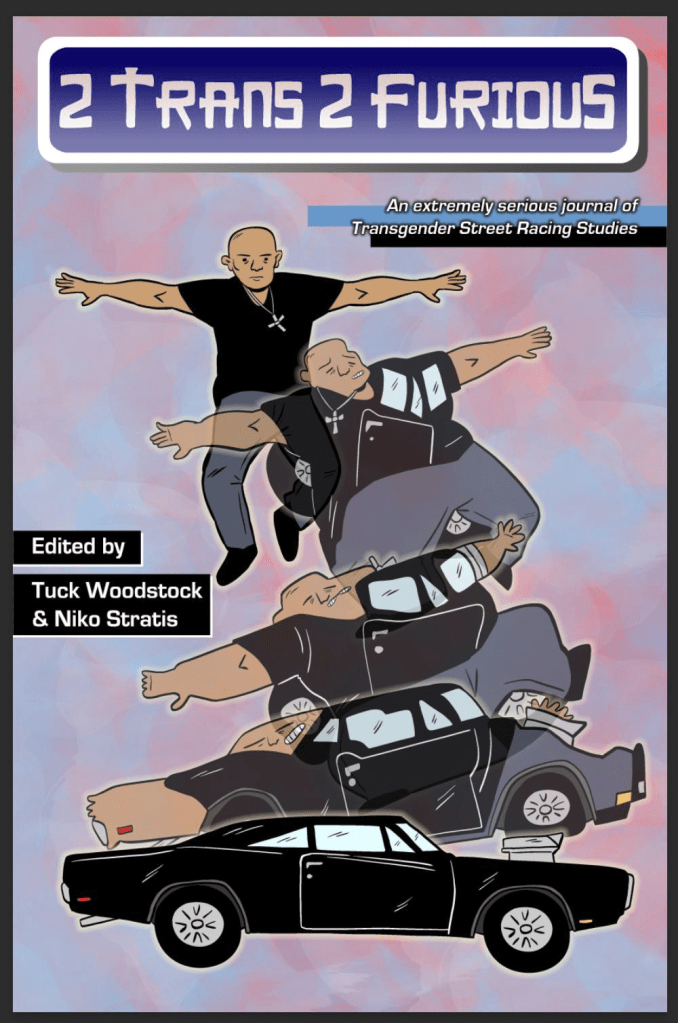
2 Trans 2 Furious (2023) – Tuck Woodstock and Niko Stratis
What It’s About: A collection of short stories, poetry, art, comics, and criticism about the acclaimed media franchise Fast and the Furious, done in the classic style of the underground trans zine.
Why You Should Read It: As the editors put it in the introduction, “It’s been a joy to collaborate with nearly 50 trans people on a project that has absolutely zero stakes.” 2 Fast 2 Furious is the ultimate pleasure read – fun, extremely queer, and surprisingly deep when it wants to be. A fabulous leisure read for action flick enthusiasts and gay smut fans alike.
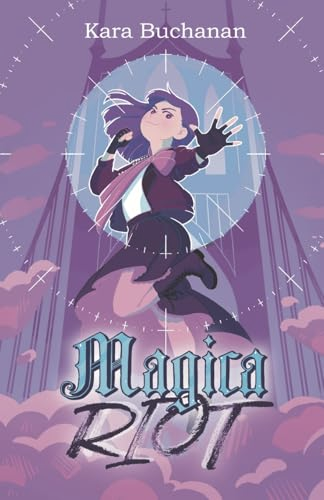
Magica Riot (2024) – Kara Buchanan
What It’s About: A closeted trans girl becomes a magical girl and joins a punk rock band to save the world.
Why You Should Read It: A fan favorite among the online trans literature community, Magica Riot is brimming with Portland cool and glittery trans chic. It’s sweet and euphoric and comforting, and strikes a perfect balance between trans joy and trans rebellion. I’ve been conflicted for a while about what genre to describe this as – ultimately it’s a magical girl story first and foremost, and adheres to most of those genre conventions. Western shoujo fans will love this too!
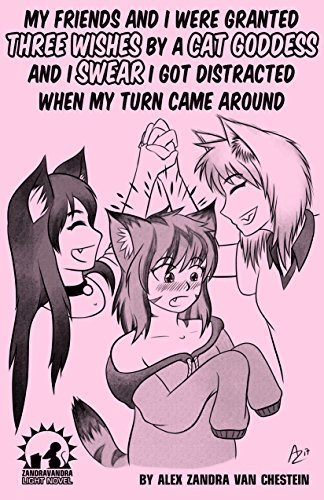
My Friends and I Were Granted Three Wishes by a Cat Goddess (2018) – Alex Zandra van Chestein
What It’s About: Three friends who get turned into catgirls – one of whom was decidedly not a girl beforehand. The cat part is fine, though.
Why You Should Read It: Let’s be honest – there’s a lot of doom and gloom on this list. The majority of these books are hard to read because of how emotionally brutal they can be for their trans audience. Alex Zandra van Chestein’s wonderful writing feels like getting a warm hug; it’s the perfect way to unwind after a long and brutal read, and I know I still return to these books myself after a particularly tough session. If you’re looking for a palate cleanser after reading a book like Las malas, this is silly gay fun at its best.
Last Year’s Recs: Short Stuff (2021) by Diane Woods; She Comes Out (2023) by Nikki Crescent; The Downfall of an Arrogant DL Brotha (2013) by Daneisha Gordon; The Harem Protagonist Was Turned Into A Girl!!! (2023) by Fern V. Bedek
TIER FIVE: WHAT NOW?
Congrats! You made it to the bottom! Wondering what you should do next? Here’s a couple good options.
Bethany’s Masterlist is a complete spreadsheet of every book by a trans woman that Bethany Karsten has personally read. It also contains short review, ratings, author information, purchase information, and a whole bunch of other things. If you’re looking for more book recs, that’s the place to go! Remember that Beth is one person, and that her opinions are subjective. Frankly, she thinks you should just ignore them completely.
If you want to stay up to date with my criticial work, I publish a full review for every book I read on my Patreon. This isncludes a ton of the books from this list! If you want to hear more detailed thoughts on some of my recs here, you can subscribe to my Patreon for just $4/mo and get access to every book review I’ve ever written. I try to keep my main website a space for bigger projects like this one, so it’s a really wonderful space for me to share my smaller-scale thoughts. It took me hundreds of hours of research, networking, and reading to put this list together, so your support would mean the absolute world to me.
Check out the past winners of the TFR Reader’s Choice Awards! Every year, my readers get together to vote for their favorite books of the past twelve months. Don’t wanna be biased by my opinions? Take your book recs from them!
Looking for more specific recommendations? Over the last year, I’ve published a couple of rec lists focused on individual genres and topics, with more to come!
- Black Transfeminine Literature – “15 Black Transfeminine Novelists You Should Read,” “Black Transfemme Literary Springtime”
- Transfeminine Horror – “12 Spooky Books by Transfemmes to Read This Halloween”, “12 Chilling Books by Transfemmes to Read This Halloween”
- Best Of Lists – “Bethany’s Top Ten Transfeminine Novels of 2024”
Dive deeper into an author’s work. There are very few authors where I have read their entire body of work – but that doesn’t mean you shouldn’t! Fell in love with a book on this list? Go see if they’ve written anything else. They haven’t? Why not follow them on Twitter, or subscribe to their Patreon! Publishing is a brutal industry, and 99% of trans authors are working class, if not struggling. Direct support for your favorite authors is the best way to see more from their fiction down the line.
Read our critical essays. Want to learn more about transfeminine literature? You’ve come to the right place. Head on over to our blog and check out what we’re working on these days!

 The Transfeminine Review