Welcome back. It’s been a quiet few rest days on my end, but I hope that you’ve all been enjoying your end of year reading. New Years is coming up fast, which means that awards season is almost upon us ❤
We’ve already broken the Year One goal for the TFR Reader’s Choice awards! We’ve gotten over a hundred votes, and having just hit that milestone, I wanted to take a moment to reflect on prestige – what it is, how it’s generated, why self-published books so rarely receive it.
In his book The Field of Cultural Production, French sociologist Pierre Bourdieu talks at length about cultural capital and the economics of art, and his work was a big inspiration behind my practical approach to creating this website. I’m gonna quote him here, but know that this passage is A) post-modernist word salad and B) translated from French, so don’t worry; I’ll translate:
The space of literary or artistic positions takings, i.e. the structured set of the manifestations of the social agents involved in the field – literary or artistic works, of course, but also political acts or pronouncements, manifestos or polemics, etc. – is inseparable from the space of literary or artistic positions defined by possession of a determinate quantity of specific capital (recognition) and, at the same time, by occupation of a determinate position in the structure of the distribution of this specific capital. The literary or artistic field is a field of forces, but it is also a field of struggles tending to transform or conserve this field of forces.
Bourdieu argues that our determinations of the “quality” of art, what is the “best” art, is determined by the position of that art within a system of capital. In other words, in a capitalistic publishing economy ruled by five mega-conglomerate publishers, literary merit and recognition is weighed as much (if not more) by proximity to traditional publishing economies as it is by the content of the work.
He continues:
It goes without saying that […] change in the space of literary or artistic possibles is the result of change in the power relation which constitutes the space of positions. When a new literary or artistic group makes its presence felt in the field of literary or artistic production, the whole problem is transformed, since its coming into being, i.e., into difference, modified and displaces the universe of possible options; the previously dominant productions may, for example, be pushed into the status either of outmoded […] or of classic work.
What’s key to understand about this is that these shifts in cultural capital, while often organic and accidental, can be manufactured through the collective action of a group who generate through their literary/artistic organizing their own field and constraint. In Bourdieu’s thought, a field is a specific area of cultural organization which, through its self-replication and authority, produces its own rules and normativities that govern the actors of cultural production within it.
So, for example, when we talk about the “publishing industry,” we’re talking about a field of publishing governed by the rules and norms of the big name publishers, agents, editors, gatekeepers, etc. who control the levers of capital within it. And for a long time, one of the normative principles of the broader field of publishing was that overtly transsexual authors couldn’t get publishing deals, much less nominations for major awards. They were too shocking. Bad business.
(The one notable outlier here is Jan Morris’ 1985 novella Last Letters from Hav, which was published at Random House and nominated for the Booker Prize – but Jan Morris’ career is an entirely separate can of worms).
Bourdieu notes, however, that within big fields like “sports” or “publishing,” there develop subfields with their own rules and normativities who can take on some degree of autonomy from their original structures. So, for example, “publishing” is a field, but “speculative publishing” is also a field, one that exists within “publishing” but that has carved out some space for its own determination within it.
We can look at this historically. For most of literary history, speculative fiction has been considered to be “genre fiction,” which could not possess the same literary prestige as “literary fiction” no matter how good it was. Speculative authors could not win major literary awards or get mentioned on “Best of” lists. While today we consider books like The Lord of the Rings to be among the most important of the 20th Century fiction, fantasy fans in the 1970s would have needed to strenuously argue to even suggest the books as “serious fiction.” To put this in Pierre Bourdieu’s language, in the hierarchy of the cultural production of capital, the field of publishing held a norm that speculative fiction possessed less cultural capital than literary fiction, no matter its quality.
However, within the field of speculative publishing, there are structures of valuation which, until recently, largely existed autonomously from the broader field of publishing. For example, the Hugo and Nebula Awards are both extremely prestigious awards in the field of science fiction, but many of the books who win them never get nominated for prestige awards in the broader field of publishing like the Pulitzer.
What I immediately latched onto, however, when I first studied the sociology of art, was how these structures of production and valuation within subfields could influence the broader field of publishing which subsumed them. The Hugo and the Nebula are the highest honor in the field of science-fiction publishing, yes – but in 2024, if you tell anyone who’s well informed about publishing that a book or author won a Hugo, they’ll probably be suitably impressed. The popularization and cultural rise of speculative fiction is a huge topic that I won’t pretend I have the expertise to adequately cover – the key point that I want to underline is that when subfields produce their own cultural capital, it is the nature of a dominant system of capital to seek to extract it. The production of cultural capital within a subfield can have the power to reorder the hierarchies of the field of its domination.
This is a simple principle, and one that ought to be relatively self-evident. I used speculative fiction because it’s an example less linked to real-world oppression, but another really good example of how this can happen is with African-American culture in its various subfields. Think about the way that the rap industry has reshaped the landscape of popular music over the last thirty years (or disco and jazz before it). When the economies of those fields proved lucrative, big name music labels and industry gatekeepers came in and swooped up their works like vultures. It comes in stages, too. Rap albums were almost never nominated outside of the “Best Rap Album” category at the Grammys, and even then, it was the Macklemores of the world who won, not the Kendricks.
Now Kendrick Lamar has a Pulitzer Prize.
Economies of cultural capital are malleable. They are, by definition, designed to be exploited, and the spoils almost always go to the victor. But that does not mean that marginalized people are automatically the passive consumers or hapless victims of those confluences of power. When we talk about the political power of art, it arises from the submerged economies of marginalized peoples creating and organizing their way to their liberation. While it is neither a panacea or virtue, the production and instrumentalization of cultural capital can be an enormously powerful tool toward that end, or forcing entry into the “field of struggles” which Bourdieu mentioned above.
Again examining the history, we can see clear examples of this process at work with trans literature. Let’s take the Lambda Literary Awards as a case study:
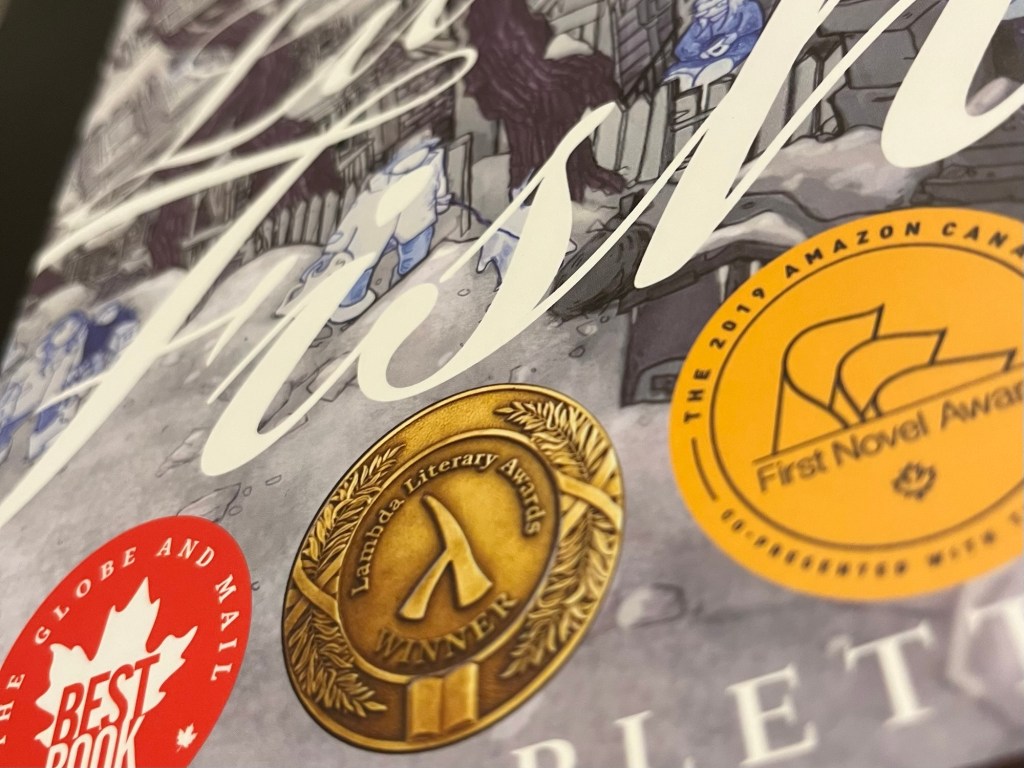
The Lambda Literary Award for Transgender Fiction was created in 1997 to recognize excellence in trans publishing, or more specifically, publishing about trans issues. There was no distinction between fiction, nonfiction, and poetry like there is now. Inexplicably, the first year nominated Lieutenant Nun by Antonio de Erasuo as one of its five nominees, a novel that was written in the 1600s and published first in 1829. Many of its early nominees were memoirs and theory texts. When transfeminine fiction was recognized, it was almost always Gender Novels written by cis people: The Danish Girl by David Ebershoff (Winner 2001), Trans-Sisters Radio by Chris Bohjalian (Nominated 2001), and Middlesex by Jeffery Eugenides (Nominated 2003) are the most blatant offenders. In 2002, the category was briefly renamed “Bisexual/Transgender Literature,” and half the books weren’t even trans!
In 2006, the wonderful Charlie Jane Anders won the award for Choir Boy, the first transfeminine-authored novel to receive any sort of Lambda recognition since Rachel Pollack’s Godmother Night for science-fiction in 1997. Then, aside from a 2007 nod for Alicia Goranson’s novel Supervillainz, there would not be a single novel by a transfemme nominated for the “transgender literature” category until Dana De Young’s novel The Butterfly and the Flame in 2012 and Being Emily by Rachel Gold in 2013. (Random aside, but you can still find De Young’s posts about the book on BigCloset, which I found amusing while researching this article; her extremely dark 2006 short story “If I Stop Breathing” is also an interesting historical read). Lambda Literary didn’t even have a separate category for trans fiction until 2011, where it nominated only three books, one of which was titled Glamazonia: The Uncanny Super Tranny, which should tell you a lot about where the field was at back then.
What changed? Trans people began to organize the cultural production of their own books. When Topside Press emerged onto the scene in late 2011, the Awards had for the first time a publisher that obviously focused on the fiction they were ostensibly trying to recognize. Lambda Literary would go on to recognize The Collection ed. Tom Léger in 2013, Nevada by Imogen Binnie in 2014, and A Safe Girl to Love by Casey Plett in 2015, along with several awards in other categories. The Collection and A Safe Girl to Love both won the Transgender Fiction category. By the time the press folded in 2017, all three of the Transgender categories at the Lambda Awards had been decisively taken over by trans authors, and they have largely remained as such ever since.
When “trans publishing” developed as a distinct subfield through the efforts of presses like Metonymy and Topside and their various authors, it completely shifted the import of what the “Lambda Literary Award for Transgender Literature” was even meant to recognize in the first place. Before, it had been largely a symbolic pennant for recognizing books about trans lives in the broader publishing industry, not even just queer publishing. It was a marginal award in an awards ceremony already centered around marginalized people. Middlesex won the Pulitzer Prize – I guarantee you Jeffery Eugenides did not care that he was only nominated for the Lambda Award in Transgender Literature. The award was, in a word, mostly irrelevant, or only relevant insofar as Lambda Literary had prestige for recognizing excellence in gay and lesbian fiction. It was scraps under the table – again, no distinction between fiction and nonfiction until 2011, plus Trish Salah’s classic poetry collection Wanting in Arabic won the “fiction” award in 2014 – and even then, actual trans authors only got recognition half the time.
With the emergence of “transgender fiction” as a distinct subfield of publishing, however, the Lambda Award suddenly found itself repositioned in hierarchies of cultural capital. No longer did it have to be the forgotten child of its organization, an award so tangential that the organizers barely saw a point in distinguishing it from bisexual literature. No – in the post-Topside field, suddenly the Lambda Literary Award for Transgender Fiction was the prestige award for an entire micro-industry. There was competition because trans people had begun to struggle for capital and position within the field; there was an active market and a proliferating number of presses, agents, editors, and other organizations who sought to take advantage of it.
Lambda Literary did not start reliably recognizing fiction by trans authors off of “merit” or “quality” or even “quantity.” They did so because a grassroots network of trans authors, editors, and activists took control of the production of their own cultural capital and set the rules and boundaries for a new field of trans publishing within which trans people would reliably be able to get published, and the definition of “trans fiction” would not apply to trans books by cis people.
It is not a historical accident that Casey Plett lambasted the “Gender Novel” written by cis people mere weeks before she won the award for Transgender Fiction. Two of the four books she discussed in that article – For Today I Am a Boy by Kim Fu and Moving Forward Sideways Like a Crab by Shanti Mootoo – were also nominated for the same award. In 2015, Casey Plett gave voice to a choice that Lambda Literary was already facing – either you can be the prestige award for our subfield and retain relevance with the trans community, or you can give it to one of these cis authors and lose trans publishing’s goodwill entirely.
Lambda Literary hasn’t nominated a Gender Novel for the Transgender Fiction pennant since.
So there is power in the cultural production of marginalized communities – real power, power that has the ability to reshape industries. Lambda’s a pretty scummy organization, but their shift to actually recognizing trans novelists had a huge impact on the commercial viability of trans authors in the mainstream. The Transgender Fiction award was suddenly highly competitive, and other awards organizations took note. Trans books started making traditional industry lists. By 2021, Torrey Peters was longlisted for the Women’s Prize in Fiction. You look at the spate of traditional book deals for transfeminine authors coming in the Spring of 2025, Peters’ Stag Dance, Jeanne Thornton’s A/S/L, Denne Michelle Norris’s When the Harvest Comes, and plenty more, and it’s insane to think that “Rise of the Gender Novel” was published less than a decade ago.
But as with all power, the cultural capital of the field of trans publishing operates upon its own hierarchy and axes of struggle.
In the months since I began this website, I’ve received a fair amount of skepticism about “trans publishing” as a stable field or category or object of study, and I have found it a little telling that it almost always comes from traditionally published trans authors. By my token, the Lambda Awards remain now for trans authors what they’ve always been for gay and lesbian authors – a certification process for authors already within the publishing industry, albeit with more attention paid to small presses than most awards ceremonies. At the core of this rests a fundamental disagreement about the purpose of a field of trans publishing. Is it nothing more than a minoritized and discriminated subsector of the broader publishing industry meant to be transcended, or is it a field and an industry in its own right? There’s not a concrete answer to this question. One of the reasons many intellectuals dislike Bourdieu is because his theory tends to be squishy. A field isn’t a “thing,” it’s a vague conglomeration, it’s an unnameable historical force. Like all fields, trans literature exists for the people who want and need and ascribe to it, and it doesn’t for the people who don’t. Even at its apex, trans publishing can only harness a small isolate of the cultural capital available to many cis authors, and I can’t blame anyone who disdains that and strives for more.
Just because the books recognized by Lambda Literary have changed, however, does not mean that the organization has changed with it. It merely morphs itself to articulate the forces of the moment. The Awards recognize trans authors, but their fundamental purpose is still to legitimate queer authors, characters, and topics in the mainstream publishing industry, and their book choices reflect it. The Lambda Awards are not a meritocracy insomuch as an induction ceremony; how the book (and its author by extension) would fare and valuate within the broader publishing industry matters just as much, if not more, than the content (or authorship) of the work itself.
The vast majority of trans authors and readers still need a collective mode of production for cultural capital. By articulating our field as a coherent entity with its own normativities, we give young and underprivileged trans authors room to grow and develop apart from the discrimination of the broader publishing industry. We give credence to self-published authors, we have the room and ability to center the author, not just the monetary valuation of their work. If the trans publishing boom of the 2010s was only ever an audition for book deals with the Big Five, then it’s working-class and self-published trans authors who’ll get left behind. There is no such thing as a “trans midlist.” Trans authors, especialy transfeminine authors, tend not to have the option of steadily churning out novels with imprints at major publishers. This isn’t a universal truth – Tor is a great example of a publisher that actively cares about and maintains its trans authors, and they’ve been doing it since the 80s – but it’s a common one. Either we excel, or we disappear.
One of the reasons I created both The Transfeminine Review and the TFR Reader’s Choice Awards was out of a recognition that even though there’s now a proliferation of presses who have placed the production of trans cultural capital into the hands of trans authors, most of the avenues of distribution and legitimation for those books and their authors still rests in the hands of the cis gatekeepers of the traditional publishing industry. Most trans authors are still self-published and profoundly obscure. The innovation of trans publishing in the 2010s was one of access, not necessarily of production or, crucially, reproduction in its own right. It granted entry to publishing at-large for the authors caught up in the whirlwind, but Topside as an institution barely lasted for six years. And while it’s undeniable that trans authors everywhere are still benefiting second-hand from that brilliant flurry of organizing and activity, the Topside movement didn’t leave behind coherent structures or tools to give other trans authors, especially those furthest from traditional publishing, the power to make those same advances.
What I’m trying to say is that trans people still need trans publishing – not as a coherent entity or a centralized industry, but a locus for the collective production of cultural capital, a locus that carries with it the potential for action. The situation of trans authors is directly, measurably improved when we take collective action to legitimate and uplift our own work without waiting for cis gatekeepers to do it for us, and that’s the ethos behind these awards. The beauty of the Reader’s Choice model is that there is no slate of nominees or secret committee to put the ballot together. Rather, it’s a question of trans authors and readers coming together to share what work they found the most significant for the year. While I can’t promise it to be free of hierarchy – nothing is, after all, and you are reading this on my website – I’ve done as much as I can to try and democratize the process and make it transparent. I’ll be releasing a full results tally with the final list as well, so if a book gets even one vote, you’ll be able to hear about it.
The cultural capital of a subfield relies upon that power of collective organizing and action, and the corollary prestige of the award rests upon the magnitude thereof. The more people who vote, the greater potential the TFR Awards have to make a real material impact on the careers of the trans authors who receive them. It’s recognition, it’s publicity, it’s what is so often denied to a transfeminine authorship.
Anyway, the original purpose of this article before I went off on the whole tangent about the industry was to let you know that there are two weeks left to vote for the 2024 Awards! Voting will close on December 27th, 2024 at 11:59pm EST, so make sure you get your vote in before then.
I also wanted to share how many votes each category has gotten so far to give you a sense of which ones are the most competitive, and which ones need more love. As motioned above, the prestige of each category is directly linked to the number of people who vote for it, and I am going to be releasing a complete and unredacted vote tally – if a book wins a category with only two votes, the public will know that. Hitting the 100 vote threshold is already a huge accomplishment for the first year of a new award! But the vast majority of those votes are concentrated around a few categories, and I want to do my best to see everyone getting their due.
Over 50 ballots:
- Best Transfeminine Fiction: 92
- Author of the Year: 65
Over 20 ballots:
- Best Debut: 45
- Indie Press of the Year: 42
- Outstanding Science Fiction: 35
- Breakout/Debut Author: 30
- Pillar of the Community: 30
- Best Character: 27
- Outstanding Contemporary: 24
- Best Nonfiction: 22
- Outstanding Horror: 22
- Up-and-Coming Author: 20
Over 10 ballots:
- Outstanding Collection or Anthology: 19
- Outstanding Fantasy: 19
- Outstanding Web Serial or Fanfiction: 18
- Outstanding Theory: 17
- Best Technical Craft: 17
- Outstanding TG/TF: 15
- Outstanding Romance: 15
- Outstanding Short Story: 14
- Best Representation: 12
- Best Poetry: 11
- Funniest Book: 10
Under 10 ballots:
- Outstanding Academic: 9
- Outstanding Graphic Fiction: 8
- Outstanding Translated/Foreign Language: 8
- Outstanding Erotica: 7
- Outstanding YA/Children: 7
- Outstanding Memoir: 6
- Outstanding Reviewer: 6
- Outstanding Mystery/Thriller: 5
- Outstanding Historical: 3
- Outstanding Publication: 3
- Outstanding Agent/Editor: 2
Is your genre getting the love it deserves?
I’ve had a couple people ask me how to edit and/or add to their response, so here’s the deal: if you would like to add to your response for categories you overlooked, then you can send me an email at thetransfemininereview@gmail.com from the email address you put down in your submission and I’ll manually go and update it for you. If you used a proxy, then email me anyway and we can talk about it.
If you haven’t voted yet, the link is right here:
Thank you so much to everyone who’s already voted – now let’s shoot for 200 ballots! I will be releasing the shortlists for Best Fiction, Best Nonfiction, Best Poetry, Best Debut, and Author of the Year a week from today on December 22nd, so if you want to have a say on any of those, make sure to get your votes in before 11:59pm EST on the 21st.

 The Transfeminine Review
Leave a reply to clear95217f6ad8 Cancel reply